L´AWID est une organisation féministe mondiale qui consacre ses efforts à la justice de genre, au développement durable et aux droits humains des femmes
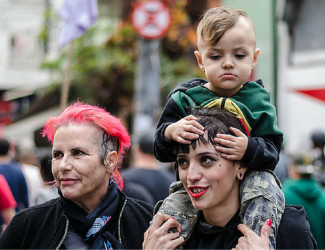
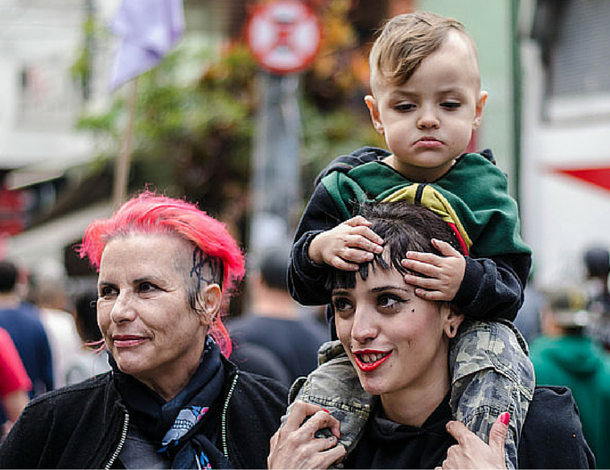
Au cours des dernières années, nous avons observé une nouvelle tendance inquiétante dans les espaces internationaux consacrés aux droits humains. Les discours axés sur « la protection de la famille » sont en effet utilisés pour défendre des violations des droits de membres de la famille, pour renforcer et justifier l’impunité des auteurs de ces violations et pour restreindre l’égalité des droits au niveau de la vie familiale.
La campagne en faveur de la « Protection de la famille » est motivée par une volonté conservatrice d’imposer des conceptions « traditionnelles » et patriarcales de la famille et de priver les membres de la famille de leurs droits pour les transférer à « l’institution familiale ».
Les initiatives visant à la « Protection de la famille » reposent sur :
la montée du traditionalisme,
la montée du conservatisme culturel, social et religieux,
l’existence d’une hostilité vis-à-vis des droits humains des femmes, des droits sexuels, des droits des enfants et enfin des droits des personnes dont l’identité de genre et l’orientation sexuelle ne sont pas conformes aux normes.
Depuis 2014, un groupe d’Etats travaille de front dans les espaces dédiés aux droits humains sous le nom de « Group of Friends of the Family » (Groupe des ami-e-s de la famille) ; des résolutions sur la « Protection de la famille » ont été adoptées chaque année depuis 2014.
Ce programme s’est propagé au-delà du Conseil des droits humains. Nous avons observé l’introduction d’un discours régressif autour de la « famille » à la Commission sur la condition de la femme, ainsi que des tentatives d’introduction dans les négociations sur les Objectifs de développement durable.
Notre approche
L’AWID travaille avec des partenaires et des allié-e-s pour s’opposer ensemble à la « Protection de la famille » et à d’autres programmes régressifs et défendre l’universalité des droits humains.
En réponse à l’influence croissante d’acteurs régressifs au sein des espaces dédiés aux droits humains, l’AWID a rejoint des allié-e-s afin de créer l’Observatoire sur l'Universalité des droits (OURs) (site en anglais). L’OURs est un projet de collaboration qui surveille, analyse et diffuse les informations concernant les initiatives anti-droits telles que la « Protection de la famille ».
Le premier rapport de l’OURs, Nos droits en danger, trace une cartographie des acteurs et actrices qui constituent le lobby mondial anti-droits et identifie leur réthorique et stratégies clés ainsi que leur impact sur les droits humains.
Le rapport précise que le programme de « Protection de la famille » a développé une collaboration entre un large éventail d’acteurs régressifs aux Nations Unies, qu’il décrit comme « un cadre stratégique abritant des positions anti-droits et patriarcales multiples, où le cadre vise entre autres à légitimer et institutionnaliser ces positions. »
Contenu lié
Snippet - CSW69 - Feminist Solidarity Space - FR
Espace de solidarité féministe
✉️ Sur inscription pour les grands groupes. Espace ouvert pour les petits groupes. Inscrivez-vous ici
📅 Mardi 11 mars 2025
🕒12.00h-14.00h et 16.00h-18.00h EST
🏢 Chef's Kitchen Loft with Terrace, 216 East 45th St 13th Floor New York
Cynthia Cockburn était une sociologue, écrivaine, universitaire, photographe et militante pour la paix féministe.
Elle a étudié les aspects genrés de la violence et du conflit et fait d’importantes contributions au mouvement pacifiste en explorant les thèmes de la masculinité et de la violence, ainsi que par son activisme local et international.
Ayant introduit une analyse féministe aux questions de militarisation et de guerre, Cynthia figurait parmi les universitaires dont les écrits et analyses illustraient la manière dont la violence basée sur le genre joue un rôle essentiel dans la perpétuation de la guerre. Travaillant en étroite collaboration avec des activistes pacifistes dans des pays en conflit, ses conclusions portaient sur des contextes aussi divers que l’Irlande du Nord, la Bosnie-Herzégovine, Israël et la Palestine, la Corée du Sud, le Japon, l’Espagne et le Royaume-Uni. Sa recherche et ses écrits universitaires ont permis d’éclairer le fait que la violence soit vécue selon un continuum de temps et d’échelle, et perçue très différemment lorsque l’on y applique le prisme du genre.
Elle disait que « [l]e genre nous aide à voir la continuité, la connexion entre les évènements de violence ».
Cynthia a pu mettre ses recherches en pratique grâce à son activisme local et international auprès de mouvements pour la démilitarisation, le désarmement et la paix. Elle a aidé à lancer le camp de femmes pour la paix de Greenham Common, qui prônait le désarmement nucléaire universel en Grande-Bretagne, ainsi que participé à la mise en place de la branche londonienne des Women in Black. Au fil des ans, Cynthia a organisé et participé à des veillées hebdomadaires locales et à la chorale politique Raised Voices, interprétant et écrivant certaines des paroles des chansons. Elle fut également active au sein du groupe Women’s International League for Peace and Freedom (WILPF), du Forum des socialistes féministes européennes et de Women Against Fundamentalism.
« Cynthia émettait une lumière féministe, tissait les communautés féministes entre elles, entonnait des chants de paix, écoutait, écoutait, écoutait, observait les oiseaux – et suspendait le flot de circulation. Je lui serai toujours reconnaissante et redevable, l’« autre » Cynthia. » – Cynthia Enloe
Cynthia est née en juillet 1934 et s’est éteinte en septembre 2019, à l’âge de 85 ans.
FRMag - Between Two Worlds
Between Two Worlds: The Double Consciousness of Women in The Gambia
by Haddy Jatou Gassama
The Mandinka tribe of The Gambia has a custom of measuring the first wrapa used to carry a newborn baby on its mother's back. (...)
Yannia Sofía Garzón Valencia: Je suis une femme noire et une tisserande communautaire. Je vis à Santander de Quilichao dans le Cauca, en Colombie. Je m’intéresse aux processus créatifs autour desquels s’organise une vie collective durable. J’aime échanger des idées et cuisiner, faire des recherches et analyser, planter des graines et apprendre des plantes, lire et jouer. Je coordonne actuellement l’Observatoire des violences fondées sur le genre à l’encontre des communautés afro-descendantes en Colombie (@VigiaAfro).
Nous « partagions » toutes les trois l’après-midi dans un quartier du sud de Bogotá.
Il y avait une aire de jeux verte particulièrement grande, et nous étions assises sur de petits tabourets de bois sous un grand sureau. Nous faisions enfin l’expérience de cette autre forme d’amour – ce plaisir d’être ensemble et de s’écouter les unes les autres. Pour moi, ce genre de discussion compte parmi les expressions d’amour dont la vie me permettait de profiter depuis peu. Je ne savais pas que cette autre forme d’amour – que l’on trouve en dehors d’ateliers de formation, d’espaces d’activisme, de classes ou de lieux de travail – était possible. Mais nous trois, amies, avons passé l’après-midi entre nous, sans prétendre ne pas remarquer nos couleurs de peau respectives. C’était, au contraire, un facteur vécu qui nous permit de discuter de manière très intime des similitudes et des différences de nos expériences d’enfance et de jeunesse.
Ces discussions n’avaient aucun lien avec les prochaines activités du mouvement noir en Colombie, mais elles m’ont néanmoins nourrie et ont acquis de nouvelles significations. Notre intimité découlait de notre rapprochement, notre reconnaissance mutuelle et la perception de nos libérations uniques et individuelles. Et par la prise de conscience qu’il n’y a pas une, mais bien plusieurs voies vers la libération – ces voies que nous incarnions chaque fois que nous disions « non » et nous nous rebellions. Loin de tout malaise, nous nous sommes rencontrées avec une réelle authenticité empreinte de faiblesse et de force, qui nous rapprochait plus qu’elle ne nous séparait.
Notre objectif en ce bel après-midi était simplement d’être – d’avoir la conscience d’être simplement entre nous. Nous avons cheminé dans nos passés afin que nos mémoires conservées soient celles que nous avions décidé de garder en nous, et non celles que la peur avait fait entrer et inscrites en nous. Nous nous sommes remémoré des extraits très précis d’émissions de télé et avons chanté des chansons d’artistes qui nous avaient appris à bien aimer, à bien haïr, à jurer comme les pires brigands et à souffrir comme de vraies dames.
Nous nous sommes raconté nos mauvais coups à l’école, et ce qui demeurait dans notre subconscient d’avoir été exposées aux nombreuses manières qu’ont les médias de répéter la même chose – et après que les enseignantes et les nonnes à l’école nous aient abreuvées d’histoires nous incitant à nous identifier et à nous approprier les aspirations de Cendrillon pour nos propres vies. Cela donnait le ton pour le reste de notre histoire : le drame de la fille pauvre et affaiblie qui ne s’accomplira entièrement que par un acte qui la sauvera de sa condition. Et cet acte ne pourra que prendre la forme du regard d’un homme qui est, au minimum, blanc, méritant ainsi ce qui est entre nos cuisses – sa « principale aspiration » – et « la réalisation parfaite de nos rêves », ce qui nous était alors enseigné comme étant notre principale aspiration à nous aussi.
Nous étions trois, cet après-midi-là. Nous avions chacune été élevée dans une région différente du pays, mais il était absolument fascinant de néanmoins pouvoir citer des extraits de chansons et des situations de séries télévisées, qui – comme nous l’avons compris en apprenant à nous connaître – partageaient des codes ou des symboles répétés, à quelques différences près, dans nos maisons, dans nos premières relations et dans nos quartiers et nos écoles. Élevées par des « drames » (n’est-ce pas ainsi que l’on appelle ce genre si populaire?) dans lesquels plus on souffre plus on est méritante, la question de « comment et dans quelles situations est-il acceptable ou légitime de souffrir » devient un étalon important de la manière dont la personne qui souffre devrait être considérée, ce qu’elle devrait faire et qui elle devrait être. Certaines d’entre nous étions parvenues à nous libérer et à « apprendre » une définition de l’amour qui ne pouvait être apprise qu’à l’âge adulte, brisant toute illusion et acceptant le péché naturel. Et prenant conscience de la production industrielle d’une vierge, à qui nous pouvions refuser de ressembler car elle n’avait pas sa place dans notre entendement, et de la déception qu’apporte cette aliénation.
Après avoir chanté, nous avons examiné nos premières explorations sexuelles. Je n’avais jamais pensé que la plupart des gens en faisaient l’expérience avant l’âge de neuf ans et que, même à l’âge adulte, ces expériences et ces mémoires demeurent un fardeau encombrant. Même aujourd’hui, dans des milliers d’endroits, des millions de filles et de garçons voient leur innocence mise à mal par un manque de confiance et l’ignorance que nous affichons lorsqu’elles et ils tentent d’explorer leur corps. Blâmer la curiosité est un mécanisme de contrôle radicalement efficace. Nous sommes revenues sur les brèves conversations que nous avions eues lorsque nous avons changé l’histoire de nos vies, passant de Noires maudites à une perspective qui nous a permis de renaître. Nous avons évoqué le souvenir du nombre conséquent de tantes et de cousines qui avaient quitté leur maison, leur centre, leurs racines, à la recherche d’un avenir à l’extérieur, ailleurs.
« Elle apprit qu’il fallait qu’elle prenne soin de son ventre en gardant ses tissus au chaud, pour éviter le froid qui entre par cette partie plus souple sur le dessus de la tête, par les pieds, par les oreilles, afin de ne pas avoir mal, et particulièrement lorsque l’on a ses règles. Pour ce faire, il faut prêter attention à ce que l’on mange, à la manière dont on s’habille et à la manière dont on marche, car tout cela est en lien avec la santé des filles. »
L’avenir a un coût : il exige que les relations qui ont marqué notre enfance soient refaçonnées et jetées dans l’oubli. Ce sont nos fondations, mais elles ne sont pas pertinentes si nous voulons continuer à avancer. Pour nous, avancer était synonyme d’apprendre par cœur ce que nous nous faisions à nous-mêmes avec les occasions que nous trouvions ailleurs. Parce que c’est ailleurs, et non en nous, que se trouvent ces occasions, que nous sommes disponibles, que nous devons être à l’extérieur. Cependant, pour beaucoup de nos tantes et de nos cousines, le coût des rares occasions de s’inscrire et d’assister à des cours du soir ou de prendre un congé sabbatique du travail domestique était celui de devenir la première expérience sexuelle de proches qui vivaient dans l’avenir. Un avenir pour lequel d’autres avant elles avaient également payé, et dont elles avaient déjà oublié le prix. Cette exigence de paiement arrivait avec la même ponctualité que celle de la facture d’électricité. Nous n’accepterons pas cet héritage.
Il y avait, en Colombie et en Amérique latine, un manuel de bonnes manières intitulé La urbanidad de Carreño (Le manuel de bonnes manières de Carreño). Sa lecture était obligatoire dans les écoles publiques et privées jusque dans les années 1990. Ce manuel conditionnait la manière dont les corps étaient perçus et ma mère, accueillie et élevée par des nonnes carmélites, le connaissait par cœur. La première fois que je l’ai lu, j’ai dû m’arrêter à plusieurs reprises pour me frotter le ventre qui me faisait mal tant je riais. Il contient des instructions ridicules telles que : prenez une douche les yeux fermés et éteignez la lumière lorsque vous enfilez votre chemise de nuit. Différents chapitres traitent de la manière de se comporter à la maison, dans la rue, et lors d’un dîner ou d’un déjeuner public – soit les normes du bon goût et du savoir-vivre. La base éthique pour les bons citoyens était l’urbanité qui leur permettait de s’éloigner de la ruralité. Ce même manuel précisait que de saluer un proche de l’autre côté de la rue en criant n’était pas acceptable; les bonnes manières nous dictaient de traverser la rue. De la même manière, les hommes doivent retirer leur manteau et le mettre sur des flaques d’eau lorsqu’ils sont accompagnés par une femme, afin qu’elle ne mouille pas ses chaussures. Je pensais à la manière de saluer quelqu’un de l’autre côté d’une rivière, et au fait qu’il fait si chaud où nous vivons que nous ne portons pas de manteau.
L’auteur de ce manuel, Monsieur Carreño, est le contraire du grand-père d’une dame âgée née à Turbo. Elle me raconta un jour que son grand-père était un homme sage, qui lui avait parlé de l’accouchement et de la manière de prendre soin de son corps. Elle apprit qu’il fallait qu’elle prenne soin de son ventre en gardant ses tissus au chaud, pour éviter le froid qui entre par cette partie plus souple sur le dessus de la tête, par les pieds, par les oreilles, afin de ne pas avoir mal, et particulièrement lorsque l’on a ses règles. Pour ce faire, il faut prêter attention à ce que l’on mange, à la manière dont on s’habille et à la manière dont on marche, car tout cela est en lien avec la santé des filles. La femme âgée ajouta que son grand-père dévoué lui avait également enseigné que les crampes étaient plus fréquentes depuis que les sols des maisons n’étaient plus en terre battue ou en bois. Depuis le béton et le carrelage, ces matériaux qui permettaient au froid d’entrer dans la maison par les pieds, les tensions dans les tissus du ventre augmentaient également.
Encore une surprise. Il y avait une telle distance entre Don Carreño et le sage grand-père en termes de conscience de la vie – aussi grande que les injonctions à bien se comporter qui brident nos impulsions et nos sens, même le bon sens commun qui valorise la santé. C’est alors que je compris une des manières selon lesquelles le béton empêche la terre de respirer, et nous en empêche également par le fait même. Je n’avais pas réalisé qu’il y avait, et qu’il y a toujours, une architecture et des matériaux pour prendre soin de nos corps. En Colombie, et dans d’autres pays, les matériaux utilisés pour faire des maisons sont des indicateurs d’une pauvreté multidimensionnelle. Une maison construite avec du béton nous éloigne de la perception de la pauvreté. C’est là un simple exemple décevant de la manière dont le progrès nous incite à délaisser la relation entre notre environnement et notre corps. Le bon goût et l’urbanité nous poussent à l’extérieur : pour avancer, mentent-ils, il faut aller là-bas.
« Je compris une des manières selon lesquelles le béton empêche la terre de respirer, et nous en empêche également par le fait même. Je n’avais pas réalisé qu’il y avait, et qu’il y a toujours, une architecture et des matériaux pour prendre soin de nos corps. »
Nous étions embêtées par la prise de conscience que ni nos mères ni nos pères ne nous avaient parlé des menstruations, sauf quand la tache brune avait déjà sali nos culottes. Ils avaient échoué à nous protéger contre la honte qui était supposée être un sentiment naturel lorsque nos menstruations avaient commencé. Et avec les menstruations venaient les crampes souvent supportées en silence, parce qu’il y avait du travail à faire; certaines de ces crampes étaient dues à des kystes, des hématomes ou des fibromes qui avaient tué les grands-mères qui avaient découvert et oublié les traitements de soins, puis s’était oubliées elles-mêmes. L’haleine de nos mères et de nos pères devenait de plus en plus froide, mais l’Extérieur frigorifiait la familiarité et, au lieu de réchauffer nos ventres, exprimait des jugements avec des conseils qui semblaient être des avertissements à propos de la seule chose qui importe aux hommes. Ceci s’appliquait à tous les hommes – légitimant ainsi le rôle de pillage du phallus, comme si sa seule option était de prendre ce que nous avions entre nos cuisses. Les nombreuses versions de cette vérité étaient remplacées par une naturalisation inamovible et fortement ancrée : dire à toutes les femmes que nous devions nous préserver pour l’un d’entre eux, pour celui qui introduira le premier son pénis en nous, pour celui qui nous donnera quelque chose en échange, et que nous sommes des femmes uniquement car nous aspirons à, et nous le laissons le mettre en nous. Quand j’étais une petite fille, j’ai exploré des petits pénis et des petits clitoris et, entre les séances de jeux entre filles, la question chuchotée était : à qui le tour de jouer l’homme et à qui le tour de jouer la femme? Et la réponse : les débuts de petits orgasmes, peu importe avec qui. Je suppose que la même chose doit se passer entre les corps de garçons.
Les expériences et les explorations de nos tantes, nos cousines et nos proches portaient essentiellement sur le corps et sa nudité en tant que tabou. Elles évitaient de l’exprimer et de le nommer, au point de le couvrir, de donner de nouveaux noms à ses excrétions, ses expulsions, sa procréation et, juste entre nous les femmes, ses fonctions de réception. J’ai entendu un jour une femme âgée dans un atelier de formation dire que lorsqu’elle vivait avec sa grand-mère, son souvenir était que cette vieille femme dormait en gardant un œil ouvert, avec un fusil posé sur son matelas. Le bruit le plus ténu dans la nuit suffisait à ce qu’elle empoigne son arme et vise. C’est là une situation courante en Colombie Pacifique, où certains comportements très néfastes sont normalisés. Des hommes mariés ou célibataires qui aiment bien une jeune femme pénètrent dans sa chambre la nuit – on appelle ça la gateada. Et cela n’est pas sans risque : si les tenant·es de l’autorité dans la famille réalisent ce qu’il se passe, qu’il s’agisse d’un abus ou non, l’homme peut être blessé, voire tué.
Cette habitude de faire sa propre loi n’a cependant jamais mis un terme aux gateadas, même encore aujourd’hui. Lors de ce même atelier – comme je le répétais à mes sœurs – d’autres participantes dirent que ni elle ni leur mère ne laisserait leur fille seule avec leur père à l’heure du bain, à moins que les filles ne portent un sous-vêtement. Je me suis alors souvenue de la voix de mon père me disant, lorsque j’avais sept ans, ta mère ne m’a jamais laissé te donner le bain. Après avoir parlé de cela, une autre femme répondit que, au contraire, son père l’a baignée toute nue dans la cour de sa maison d’enfance jusqu’à ses sept ans, puis son frère aîné le fit jusqu’à ses neuf ans. Elle ne sentit jamais quoi que ce soit de bizarre à la manière dont ils la regardaient; pour eux, c’était là simplement une autre tâche consistant à prendre soin de l’enfant la plus gâtée de la maison. Elle se souvient avoir été vue pour ce qu’elle était : une enfant fille, une enfant sœur, qui n’aimait pas l’eau.
Les enfances, à nouveau, hier comme aujourd’hui. Nous avons été surprises par cette histoire qui nous a réconfortées. Même moi j’avais vu que les choses étaient différentes ailleurs; le père de ma fille lui a donné son bain dans la baignoire jusqu’à ce qu’elle soit âgée d’environ deux ans. Même avant ses deux ans, il lui donnait de légères tapes sur les fesses, vers le haut, pour les faire grossir, disait-il. Nous pourrions ici parler de dimensions supplémentaires de la manière dont nous construisons nos corps, mais c’est là une tout autre histoire. Pour moi, il s’agissait d’une tâche de soins, parmi les nombreuses autres, que nous avions décidé d’un commun accord de répartir entre nous, avant même la naissance du bébé. Et la décision de ne pas considérer chaque homme comme un violeur en embuscade ne signifie pas que ce ne sont pas des violeurs, mais plutôt qu’ils peuvent arrêter de l’être. Il y a également des hommes et des corps masculins qui ont été élevés à ne jamais être des violeurs.
Cela a toujours cours. C’est arrivé à une de nos amies et à ma propre fille. Je me suis dit : comment se fait-il que certaines femmes soient en couple avec des hommes à qui elles ne peuvent pas faire confiance pour prendre soin de leur fille? Je suis sûre que ma mère aimait mon père. Et, bien qu’on ne parle que rarement de la femme qu’elle était avant de devenir ma mère, je sais que ces expériences d’abus ne peuvent être comparées à la brutalité et à la tolérance exagérée envers celles d’aujourd’hui. Mais cela demeure une décision que de nombreuses femmes dans de nombreux lieux prennent, ce qui entraîne d’autres questions. À quelle fréquence, combien de fois, ont eu lieu les cas d’abus dans nos familles élargies pour que les femmes interdisent de manière ouverte, ou de manière imperceptible, à leurs partenaires de donner le bain à leur fille? Est-ce que cela est en lien avec la surexposition médiatique à laquelle nous sommes soumises et soumis dès notre naissance? Qu’est-ce qui délite les liens familiaux et les transforme en simples échanges de satisfaction corporelle? Est-ce que cela tient à la proximité des valeurs urbaines qui portent tant d’attention aux bonnes formes des corps des femmes en tant qu’objets de désir, et poussent les corps masculins à se comporter comme des propriétaires et des conquérants, remplissant la mission de mimétisme des représentations médiatiques pour être rassurés dans leur identité? Est-ce le béton et d’autres codes, comme les bonnes manières de Carreño, qui les font perdurer? Est-ce encouragé par le besoin d’oublier certaines relations comme prix du progrès, cette insistance à « faire pour l’extérieur »? Que se passe-t-il avec ce que nous avons appris à notre époque, celles et ceux qui, en secret ou non, se sont adonné·e·s à des explorations sexuelles en tant qu’enfants? Cela a-t-il été effacé par la culpabilité? S’agissait-il des graines de méfiance et de honte en nous-mêmes? En effet, ne s’agit-il pas là de possibilités d’apprentissage dans lesquelles avoir confiance, comprendre la nudité des corps comme faisant partie du respect de soi-même et des autres? Ces questions émergent dans des espaces de confiance, où la peur de dire ce que l’on pense et ce que l’on ressent est chassée par l’intention de l’accompagnement. J’imagine combien nous sommes, dans tous les coins de cette planète, et je suis certaine que ce ne sont pas de nouvelles questions, que les messages qu’elles contiennent sont répétés, et que l’on se trouve à vivre dans les réponses.
Continuez à explorer Incarnations transnationales
Cette édition du journal, en partenariat avec Kohl : a Journal for Body and Gender Research (Kohl : une revue pour la recherche sur le corps et le genre) explorera les solutions, propositions et réalités féministes afin de transformer notre monde actuel, nos corps et nos sexualités.
نصدر النسخة هذه من المجلة بالشراكة مع «كحل: مجلة لأبحاث الجسد والجندر»، وسنستكشف عبرها الحلول والاقتراحات وأنواع الواقع النسوية لتغيير عالمنا الحالي وكذلك أجسادنا وجنسانياتنا.
The AWID Forum is the world’s largest event that wholeheartedly centers feminist and gender justice movements in all their diversity. It is a transformative space created by and for the movements - where Global South feminists and historically marginalized communities take centerstage, strategize to shift power, and connect with allied movements, funders and policy-makers. And so it is with full and fiery hearts that we share…
The 15th AWID International Forum will take place from December 2-5, 2024 in Bangkok, Thailand!
We hope to gather 2,500 in-person and 3,000 online/hybrid participants. When thousands of feminists come together, we create a sweeping force of solidarity that has the power to change the world! We’re excited, and we know you’re excited too - so stay tuned for more
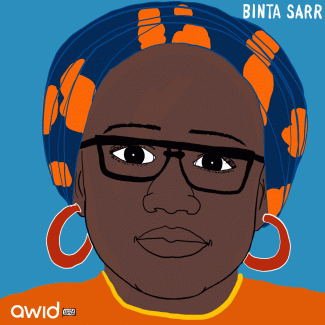
Binta Sarr was an activist for social, economic, cultural and political justice, and a hydraulic engineer in Senegal. After 13 years in civil service, she left this path to work with rural and marginalized women.
Out of this engagement grew the Association for the Advancement of Senegalese Women (APROFES), a grassroots movement and organization Binta founded in 1987. One of her main approaches was leadership training, relating not only to economic activities but also to women's rights and access to positions of decision-making.
“Grassroots populations must organize, mobilize, assume citizen control and demand democratic governance in all sectors of public space. The priority of social movements must go beyond the fight against poverty and must be focused on articulated and coherent development programs in line with human rights principles, while taking into account their needs and concerns both at the national and sub-regional levels and from a perspective of African and global integration.” - Binta Sarr
Rooted in Binta’s conviction that fundamental change in women’s status requires transformation in male attitudes, APROFES took an interdisciplinary approach, using radio, seminars and popular theatre, as well as providing innovative public education and cultural support for awareness-raising actions. Its popular theatre troupe performed original pieces on the caste system in Senegal, alcoholism, and conjugal violence. Binta and her team also looked at the crucial connection between the community and the broader world.
“For APROFES, it is a question of studying and taking into account the interactions between the micro and the macro, the local and the global and also, the different facets of development. From slavery to colonization, neocolonialism and the commodification of human development, most of the resources of Africa and the Third World (oil, gold, minerals and other natural resources) are still under the control of financial cartels and other multinationals that dominate this globalized world.” - Binta Sarr
Binta was one of the founding members of the female section of the Cultural and Sports Association Magg Daan. She received commendations from the Regional Governor and the Minister of Hydrology for her "devotion to rural people."
Born in 1954 in Guiguineo, a small rural town, Binta passed away in September 2019.
Tributes:
“The loss is immeasurable, the pain is heavy and deep but we will resist so as not to mourn Binta; we will not mourn Binta, we will keep the image of her broad smile in all circumstances, to resist and be inspired by her, maintain, consolidate and develop her work…” - Aprofes Facebook page, September 24, 2019
"Farewell Binta! We believe your immense heritage will be preserved." - Elimane FALL, president of ACS Magg-Daan
Film club - swana
Ya puedes mirar el programa «Feminist Embodiments of Hope and Power» [«Corporizaciones feministas de esperanza y poder»] del Club de Cine Feminista de AWID, una serie de películas sobre realidades feministas de la región del Sudoeste Asiático y África del Norte, curada por Esra Ozban.
Speaking on behalf of the Board, I write to express our deepest gratitude, appreciation, and respect for Hakima Abbas and Cindy Clark, our extraordinary Co-Executive Directors during the past five years who will be stepping aside to refresh the AWID leadership as we move into a new strategic plan and phase of our organizational life. They have consistently practiced the best principles of feminist organizational leadership and ethics of care as they navigated us through one of the most unpredictable, turbulent times in recent history of the world, the COVID-19 syndemic, and the subsequent downward global political spiral. They held AWID, our Staff, and Board firmly, gently, and lovingly as all of us experienced various impacts. They also held steadfastly to AWID vision and mission as they responded respectfully and strategically to various changes, not least the cancellation of the AWID Forum.
Going forward… we expect to continue with the co-directorship model given the nature, scope, and weight of the responsibilities of the executive role at AWID. Our first experience with co-leadership was a success in a multitude of ways, as you all have seen.
The Board decided to prioritize an internal recruitment process first, fully recognizing the great potential that exists within the current team. We expect to complete the transition by the end of 2022. Hakima and Cindy will stagger their departure, and will facilitate a smooth transition to the new leadership.
Seeing Cindy and Hakima leave AWID is difficult for the Board as well as others who have worked closely with them and love them. Nonetheless, rest assured the AWID Board is leading the transition process in a way that fully recognizes the beautiful and inspiring indelible marks Hakima and Cindy will be leaving as part of our 40-year history, that embraces the next step of on-boarding and supporting new leadership, and that inspires us to do better at this moment in AWID's life.
Major organizational transitions are neither simple nor easy. Sometimes they are forced, beyond anyone’s control, fraught, or even destructive. I, and many of you, have seen examples of those kinds of transitions. At other times, the staff’s needs and aspirations are aligned with those of the organization. Although we did not choose or wish Cindy and Hakima to leave AWID, their decision and AWID moving into the next strategic plan and new decade of existence are aligned. Best of all, we are in the wonderful, super competent, creative, and feminist hands of the Staff and Board.
We thank you, dear Feminist Movements, for your confidence in AWID. We also ask you to support our leadership transition in the coming months. Let’s continue to build, deepen, and strengthen our connections, as we have done for the past 40 years.
Please stay tuned for more concrete developments and updates. You will be hearing from us in the coming weeks.
In feminist solidarity and love, Margo Okazawa-Rey
President, AWID Board
Laurie Carlos fue una actriz, directora, bailarina, dramaturga y poeta estadounidense, una artista y visionaria extraordinaria que tenía un poderoso don para hacer surgir el arte en otras personas.
«Laurie entraba en una habitación (cualquier habitación/todas las habitaciones ) con clarividencia arremolinada, con genio artístico, rigor corporizado, con un realismo feroz— y con la determinación de ser libre... y de liberar a otrxs. Una hacedora de magia. Una vidente. Alguien que cambiaba de formas. Laurie me dijo una vez que entraba en los cuerpos de las personas para descubrir qué necesitaban.» - Sharon Bridgforth
Combinaba estilos de actuación tales como gestos rítmicos y texto. Laurie era mentora de nuevxs actorxs, performers y escritorxs, y ayudaba a difundir su trabajo a través de «Naked Stages», una beca para artistas emergentes. Integraba el Penumbra Theater, con el que colaboraba mediante guiones que produjeran identificaciones, a fin de «traer más voces femeninas al teatro». Laurie integraba también Urban Bush Women, una compañía de danza contemporánea prestigiosa que relata historias sobre mujeres de la diáspora africana.
En 1976, como Lady in Blue, hizo su debut en Broadway, en la producción original galardonada del drama poético de Ntozake Shange For colored girls who have considered suicide / when the rainbow is enuf. La obra de Laurie incluye White Chocolate, The Cooking Show y Organdy Falsetto.
«Cuento las historias en el movimiento (las danzas internas que surgen espontáneamente, como en la vida), la música y el texto. Si escribo una línea, no necesariamente tiene que ser una línea que es hablada; puede ser una línea que es movida. Una línea a partir de la cual se crea música. El gesto se convierte en la oración. Gran parte de quienes somos como mujeres, como personas, tiene que ver con los gestos que hacemos entre nosotrxs todo el tiempo, y en particular, durante momentos emotivos. El gesto se convierte en una oración o una declaración de hechos. Si pongo en un guión “cuatro gestos”, eso no quiere decir que no estoy diciendo nada; significa que lo he abierto para que algo sea dicho físicamente.» - Laurie Carlos
Laurie nació y creció en la ciudad de Nueva York, trabajó y vivió en Twin Cities. Falleció el 29 de diciembre de 2016 a la edad de 67 años, luego de una batalla contra el cáncer de colon.
Tributos:
«Creo que esa era exactamente la intención de Laurie. Salvarnos. De la mediocridad. Del ego. De la pereza. De la producción de arte a medias. De estar paralizadxs por el miedo. Laurie quería ayudarnos a Brillar plenamente. En nuestra producción artística. En nuestras Vidas.» - Sharon Bridgforth para Pillsbury House Theatre
«Nadie que conociera a Laurie dejaría de definirla como una persona original. Era su propia persona. Era su propia persona, su propia artista; ponía en escena el mundo tal como lo conocía, con verdadero estilo y comprensión, y vivía su arte.» - Lou Bellamy, fundador de Penumbra Theater Company, para Star Tribune
Dans le cadre de l’aventure de l’AWID sur les Réalités féministes, nous vous invitons à explorer notre tout nouveau Club de cinéma féministe : une collection de courts et longs métrages sélectionnés par des programmateurs·rices et narrateurs·rices féministes du monde entier, dont Jess X. Snow (Asie/Pacifique), Gabrielle Tesfaye (Afrique/diaspora africaine) et Esra Ozban (Asie du Sud-Ouest, Afrique du Nord). Alejandra Laprea est responsable du programme Amérique latine et centrale, que nous lancerons en septembre dans le cadre de Crear, Résister, Transformer : un festival pour les mouvements féministes porté par l’AWID. En attendant, surveillez les annonces sur les projections de films spéciaux et les discussions avec les réalisateurs·rices!
Nominación de feministas audaces para sumarse a la Junta Directiva de AWID
Cada año, en AWID buscamos renovar y enriquecer las perspectivas y la experiencia reflejadas en nuestra Junta Directiva a través de la incorporación de nuevxs afiliadxs.
Por favor, ayúdanos a identificar a feministas audaces y dedicadxs a fin de incluirlxs en la lista de nominaciones para la elección a la Junta Directiva de AWID, a realizarse el 29 de julio de 2022.
Las personas elegidxs se sumarán por un período de 3 años, a partir de principios de 2023. Esta es una oportunidad para contribuir a la gobernanza de nuestra organización y formar parte de un grupo increíble de feministas de todo el mundo
Por favor, también comparte esta invitación a candidaturas entre tus redes.
¿A quién estamos buscando?
Ante todo, estamos buscando candidatxs comprometidxs con la misión de AWID, capaces de establecer conexiones entre las luchas locales y globales, y que puedan ayudarnos en la reflexión sobre cómo optimizar el posicionamiento y las fortalezas de AWID en un contexto en constante evolución. Además, lxs candidatxs deben estar dispuestxs a cumplir con los deberes y las responsabilidades legales de la Junta Directiva de AWID en beneficio de la organización.
La participación en la Junta de AWID es una función voluntaria que requiere compromiso y dedicación durante todo el año. Se espera que lxs integrantes de la Junta se comprometan a dedicar un mínimo de 10 a 15 días al año para asistir a reuniones presenciales y virtuales, y contribuir con otras comunicaciones.
En AWID, aspiramos a que nuestro Consejo refleje la diversidad en todas sus formas, especialmente, en términos de identidad de género, orientación sexual, edad, geografía y origen. Además, buscamos integrantes de la Junta con experiencia relevante para las áreas de trabajo prioritarias de AWID.
Si bien consideraremos todas las candidaturas recibidas, teniendo en cuenta la composición actual de la Junta, daremos prioridad a los siguientes aspectos:
Candidatxs con experiencia de trabajo en las intersecciones de los derechos de las mujeres / justicia de género y
Financiamiento
Justicia climática
Justicia para personas con discapacidad, y/o
Tecnología
Candidatxs de las siguientes regiones:
África
Sudamérica
¿Qué aportan a AWID lxs integrantes de la Junta Directiva?
La Junta Directiva es clave para orientar la dirección estratégica de AWID y apoyar a nuestra organización para que cumpla su misión en coherencia con el mundo en el que vivimos y las necesidades de nuestros movimientos.
Lxs integrantes de la Junta Directiva contribuyen al día a día de la organización de muchas maneras: aportando su experiencia en gobernanza en otros espacios, como también perspectivas de diversos sectores de los movimientos feministas y experiencia sustantiva en áreas relevantes para la estrategia de AWID.
Lxs candidatxs que finalmente resulten elegidxs se incorporarán a la Junta Directiva de AWID en 2023, acompañándonos en el lanzamiento de nuestro nuevo plan estratégico liderado por lxs nuevxs Codirectorxs Ejecutivxs de AWID, y en la planificación de nuestro próximo Foro internacional.
(Puedes nominarte a ti mismx o a alguien que conozcas, con su consentimiento
Por favor, ayúdanos a difundir este llamado a candidaturas compartiéndolo en tus redes.
Si bien cualquier persona puede presentar una nominación, solo lxs afiliadxs de AWID pueden votar en las elecciones para nuestra Junta Directiva - ¡Únete a AWID hoy mismo!
¡Gracias, desde ya, por ayudarnos a encontrar a lxs próximxs maravillosxs integrantes de la Junta Directiva que apoyarán a AWID en su camino hacia el futuro!
Fadila M. était une activiste “tribale” Soulaliyate d’Azrou, dans la province marocaine d’Ifrane. Elle s'est battue contre une forme spécifique de discrimination à l'égard des femmes “tribales” liée à la propriété foncière.
Dans le cadre du Mouvement en faveur des droits fonciers des femmes Soulaliyates, elle a travaillé pour la révision de la législation-cadre relative à la gestion des biens communautaires, avec l'adoption en 2019 de trois projets de lois garantissant l'égalité des femmes et des hommes.
Selon le droit coutumier en vigueur, les femmes n'avaient pas le droit de bénéficier de la terre, surtout celles qui étaient célibataires, veuves ou divorcées. Au Maroc, les droits à la terre collective se transmettaient traditionnellement entre les membres masculins de plus de 16 ans issus d’une même famille. Depuis 2007, Fadila M. faisait partie du mouvement des femmes, à savoir la première mobilisation populaire nationale de revendication de leurs droits fonciers. Parmi leurs victoires, citons le fait qu'en 2012, les femmes Soulaliyates ont pu, pour la première fois, s'inscrire sur les listes de bénéficiaires et disposer d'une indemnisation liée à la cession des terres. Le mouvement a également réussi à faire modifier le dahir de 1919 (décret du roi du Maroc) de façon à garantir aux femmes le droit à l'égalité.
Fadila M. s’est éteinte le 27 septembre 2018. Les circonstances de sa mort, survenue alors qu’elle participait à une marche de protestation sur la question des terres collectives, ne sont pas claires. Si les autorités déclarent que sa mort est accidentelle et qu'elle a fait un arrêt cardiaque sur le chemin de l'hôpital, la section locale de l'Association marocaine des droits de l'homme (AMDH), affirme quant à elle que Fadila a été étouffée par un membre des forces policières arborant un drapeau marocain. Sa famille a demandé qu’une enquête soit menée mais les résultats de l'autopsie n'ont pas été communiqués.
Veuillez noter: Nous n'avons pu trouver aucune photo de Fadima M. C'est pourquoi cette illustration (au lieu d'un portrait) représente ce pour quoi elle s'est battue et a travaillé : la terre et le droit d'y vivre et d'avoir accès à cette terre et ce qui y pousse.