L´AWID est une organisation féministe mondiale qui consacre ses efforts à la justice de genre, au développement durable et aux droits humains des femmes
Forum de l'AWID : Co-créer nos horizons féministes
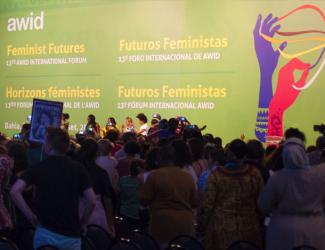
En septembre 2016, 1800 féministes et défenseur-e-s des droits des femmes venu-e-s des quatre coins de nos mouvements se réunissaient sur les côtes de Bahia à l’occasion du 13ème Forum international de l’AWID.
Cette section met l’accent sur les victoires, les enseignements et les ressources qui ont couronné nos conversations. Nous vous invitons à l’explorer, la partager et laisser vos impressions.
L’un des principaux éléments à retenir de ce Forum a été la nécessité d’élargir et d’approfondir notre travail de collaboration entre mouvements pour faire face à une montée des fascismes et des fondamentalismes, une exacerbation de la cupidité des entreprises et un changement climatique en progression.
L’AWID a donc travaillé avec plusieurs allié-e-s pour ériger ces semences de résistance :
Les mouvements peuvent aussi bénéficier d’une nouvelle méthodologie pour envisager nos horizons féministes. (à venir bientôt !)
A travers son prochain plan stratégique et le processus de son Forum, l’AWID s’engage à poursuivre et approfondir les rapports, les apprentissages et les processus amorcés lors du Forum 2016, tout en s’inspirant de l’actualité.
Et maintenant ?
Le monde est bien différent de celui qu’il était l’an dernier et il continuera à changer dans les années à venir.
Le prochain Forum de l’AWID se tiendra dans la région Asie-Pacifique (les dates et le lieu exacts seront annoncés en 2018). Nous attendons avec impatience de vous y retrouver !
A propos du Forum de l’AWID
Les Forums de l’AWID ont vu le jour en 1983, à Washington DC. Depuis, ils revêtent de nombreux aspects et incarnent, selon les personnes, tantôt un processus itératif visant à affiner nos analyses, notre vision et nos actions, un évènement clé galvanisant les féminismes des participant-e-s et leurs organisations ou un espace politique offrant refuge et solidarité aux défenseur-se-s des droits humains.
"No era una persona. Era una potencia". - Así recuerda unx compañerx activista a Navleen Kumar.
Nacida el 15 de octubre de 1994, Navleen Kumar fue una ferviente activista por el derecho a la tierra y la justicia social de la India.
Con integridad y compromiso, trabajó durante más de una década para proteger y restaurar las tierras de los pueblos indígenas (adivasi) en el distrito de Thane, un área arrebatada por los propietarios y promotores inmobiliarios a través de medios como la coerción y la intimidación. Luchó contra esta injusticia y estos crímenes a través de intervenciones legales en diferentes tribunales, y descubrió que la manipulación de los registros de las tierras era una característica recurrente en la mayoría de los casos de adquisición de terrenos. En uno de los casos, el de los Wartha (una familia tribal), Navleen descubrió que la familia había sido engañada con la complicidad de funcionarixs gubernamentales.
Así, a través de su trabajo, ayudó a restituir la tierra a la familia Wartha, y siguió dedicándose a otros casos de transferencias de tierras adivasi.
"Su artículo sobre el impacto de la alienación de la tierra en las mujeres y las niñas y niños adivasi traza la historia y las complejidades de la alienación tribal desde la década de los 70, cuando las familias de clase media comenzaron a trasladarse a los suburbios de Mumbai, que se extendían mientras el valor de la propiedad en la ciudad aumentaba de forma exponencial.
Los complejos de viviendas proliferaron en estos suburbios, y lxs integrantes de las comunidades tribales, que eran analfabetxs, pagaron el precio por ello. El costo de las tierras de primera, cerca de las líneas de ferrocarril, alcanzó un precio elevado y los constructores se abalanzaron sobre este cinturón como buitres, arrebatando de forma ilegal las tierras a las comunidades tribales y otrxs residentes locales ". - Jaya Menon, Comisión de Justicia y Paz.
Durante el curso de su activismo, Navleen recibió numerosas amenazas y sobrevivió a varios atentados contra su vida. A pesar de ello, siguió trabajando no sólo en lo que era importante para ella, sino que además contribuyó a cambiar la vida y la realidad de las muchas personas a las que apoyó en su lucha por la justicia social.
Navleen murió apuñalada el 19 de junio de 2002 en su edificio de departamentos. Dos gánsteres locales fueron arrestados por su asesinato.
Snippet FEA Title Main (ES)
Las Economías Feministas
QUE AMAMOS
FRMag - Freeing the Church
Liberar a la Iglesia, descolonizar la Biblia para las mujeres de Papúa Occidental
por Rode Wanimbo
«Señor, somos indignas. Somos las que pecaron, porque Eva comió el fruto en el Edén. Solo somos mujeres que cultivan batatas, cuidan cerdos y dan a luz niñxs. Creemos que tú moriste en la cruz para liberarnos. Gracias, en el nombre de Jesús, amén». (...)
Claudia es Maestra en Igualdad y Equidad para el Desarrollo, psicóloga feminista, activista por la defensa de los derechos humanos desde hace 30 años y por los derechos de las mujeres desde hace 24 años.
Trabajando en El Salvador, Claudia está cofundadora y directora Ejecutiva de la Asociación Mujeres Transformando, desde hace 16 años es defensora de derechos laborales de las trabajadoras del sector maquila textil y confecciones. Ha colaborado en la formulación de iniciativas de Ley, propuestas de políticas públicas e investigaciones tendientes a mejorar la calidad del empleo para las trabajadoras de este sector, además de trabajar incansablemente en el fortalecimiento organizativo y empoderamiento de las obreras de la maquila textil y bordadoras a domicilio.
Participa activamente en acciones de incidencia a nivel nacional, regional e internacional por la defensa y reivindicación de los derechos laborales de la clase trabajadora del Sur Global desde una perspectiva, feminista, anticapitalista, antipatriarcal y desde la toma de conciencia de clase y de género. Es parte del Consejo Directivo de la Iniciativa Spootlithg y del Grupo Nacional de Referencia de la minsma. Tambien es parte del Grupo Asesor de la Sociedad Civil de ONUMujeres.
Position
Copresidenta
Add to stories
Off
The Crear, Résister, Transform Story by Coumba Toure
A magical experience of feminist story telling led by pan-African feminist Coumba Toure, performing in the age old tradition of West African griots.
And we gathered again
We gathered our stories our strength
our songs
our tears
our rage
our dreams
our success
our failures
And we pull them all together
In one big bowl to share
for a moon of thoughts
And we stay in touch
We shake each others minds
we caress each other souls
While our hands still are tied
And our kisses and hugs are banned
Yet we grow stronger by the hour
Weaving together our voices
Crossing the sound barriers
as we speak in tongues
We are getting louder and louder
We know about differences from others
and from each other so we are stitching our beauties into patchwork or thoughts
From our deepest learnings from our powers
Sometimes we are surrounded by terror
by confusions by dishonesty
But we wash out in the Ocean of love
We are weavers of dreams
To clothes or new world
Thread after thread
As small as we are
Like little ants building our movement
Llike little drops building our rivers
We take steps forward and steps backward
Dancing our way back to sanity
Sustain to the rhythm of our hearts keep
Beating please don't not stop
And we are here transmitter of forgotten generosity
drop after drop growing like the ocean
growing like the river flowing from our souls .
showing our strength to be the water
that will clean this world
and we are gathering again can you feel us
I would lie if I say I said I am
Ok not to see you I do miss my people
I miss your touch and
You unfiltered and unrecorded voices
I miss our whispers and our screams
Our cries of the aborted revolution
We only want to give birth to new worlds
So fight to erase the borders between us
And we gathered again
We gathered our stories our strength
our songs
our tears
our rage
our dreams
our success
our failures
And we pull them all together In one big bowl to share
For a moon of thoughts
And we stay in touch
We shake each others minds
we caress each other souls
While our hands still are tied
And our kisses and hugs are banned
Yet we grow stronger by the hour
Weaving together our voices
Crossing the sound barriers
as we speak in tongues
We are getting louder and louder
We know about differences from others
and from each other so we are stitching our beauties into patchwork or thoughts
From our deepest learnings from our powers Sometimes we are surrounded by terror by Confusions by dishonesty
But we watch out in the Ocean of love
We are weavers of dreams
To clothes or new world
Thread after thread
As small as we are like little ants building our movements
like little drops building our rivers We take steps forward and steps backward
dancing our way back to sanity
Sustain to the rhythm of our hearts
keep beating please don't not stop
And we are here transmitter of forgotten generosity
Drop after drop growing like the ocean
growing like the river flowing from our souls
showing our strength to be the water
that will clean this world
and we are gathering again can you feel us
I would lie if I I said I am Ok
not to see you
I do miss my people
I miss your touch and
You unfiltered and unrecorded voices
I miss our whispers and our screams
Our cries over the aborted revolutions
We only want to give birth to new worlds
So fight to erase the borders between us
Please don’’t stop
« Le privé est politique » - tel est le mantra féministe que personnifiait la fougueuse et courageuse Nadyn Jouny. Nadyn avait personnellement vécu la douleur de la violence structurelle des systèmes juridiques qui refusent aux femmes de jouir de leurs droits.
Lorsqu’elle décide de demander le divorce, les tribunaux religieux chiites – conformément aux lois relatives au statut personnel du Liban – lui refusent la garde de son jeune fils Karam. Comme tant d’autres femmes au Liban et d’autres pays, Nadyn s’est retrouvée dans la situation douloureuse et insoutenable de devoir abandonner ses droits sur son enfant pour pouvoir quitter une relation abusive et non voulue. Mais Nadyn s’est battue, jusqu’au dernier jour.
Elle s’est servie de ses compétences médiatiques pour devenir la voix de celles qui n’en ont pas dans leur combat contre un droit de la famille discriminant, tant au Liban qu’à l’étranger. Nadyn a cofondé le groupe autofinancé « Protecting Lebanese Women » (PLW) et s’est alliée à d’autres mères libanaises vivant des situations similaires. Ensemble, elles ont cherché à sensibiliser la société en manifestant pour leurs droits devant les tribunaux religieux et attirant l’attention des médias sur les très grandes injustices qu’elles subissaient.
Nadyn a également collaboré avec ABAAD – Resource Center for Gender Equality, une autre organisation libanaise pour les droits des femmes, à l’occasion de campagnes pour la défense des droits des femmes, l’égalité dans le droit de la famille et la garde des enfants, et contre le mariage forcé et précoce.
Nadyn a tragiquement perdu la vie dans un accident de voiture le 6 octobre 2019, alors qu’elle se rendait à une manifestation contre les augmentations de taxes injustifiées, dans un pays qui connaît déjà une crise financière croissante. Nadyn Jouny n’avait que 29 ans au moment de son décès.
Snippet - Podcast Intro (FR)
Nous sommes ravi.es d'annoncer le lancement du nouveau podcast de l'AWID, NOTRE FLAMME FÉMINISTE. Notre série narrative dévoile plus de 40 ans de mouvements féministes et réinvente une voie à suivre.
Dans notre saison pilote, vous entendrez cinq histoires captivantes qui font partie d'une constellation d'activisme féministe aujourd'hui. Animé par Gopika Bashi,notre directrice adjointe des programmes à l'AWID, chaque épisode explore des réalités féministes uniques mais interconnectées qui améliorent la justice de genre et les droits humains.
Produit par notre partenaire de podcast Webby Hueman Group Media, vous pouvez vous abonner à NOTRE FLAMME FÉMINISTE et écouter notre premier épisode ici.
Retrouvez-nous sur Apple Podcasts, Spotify ou partout où vous obtenez vos podcasts. Partagez avec votre réseau ! Aidez-nous à diffuser des histoires qui allument notre feu féministe et nous poussent à l'action.
Sanyu est une féministe panafricaine basée à Nairobi, au Kenya. Elle a passé la dernière décennie à soutenir les mouvements syndicaux, féministes et de défense des droits humains en faveur de la redevabilité des entreprises, de la justice économique et de la justice de genre. Elle a travaillé avec le Business & Human Rights Resource Centre, IWRAW Asia Pacific et la Commonwealth Human Rights Initiative. Elle est titulaire d’un master en droits humains et d’une licence en droit de l’Université de Nottingham. Ses écrits ont été publiés dans le Business and Human Rights Journal, Human Rights Law Review, Open Global Rights, Open Democracy et d’autres encore. Pendant son temps libre, elle adore se promener en forêt et chasser les papillons.
Position
Cheffe de l’Initiative de Construction d’Économies Féministes
Add to stories
Off
استنارة بضوء البدر: تجربة “بي دي إس إم” أفريقية
ترجمة مارينا سمير
أكوسوا هانسون، فنانة وناشطة مقيمة في أكرا في غانا. تشمل أعمالها على ميادين الإذاعة والتلفزيون ووسائل الإعلام المطبوعة والمسرح والأفلام ومعارض القصص المصورة والأعمال الفنية ثُلاثية الأبعاد والروايات المصورة. تتمحور نشاطية أكوسوا حول قضايا الوحدة الأفريقية والنسوية، مع اهتمام خاص بتقاطع الفن مع الثقافة الشعبية والنشاطية. حائزة على ماجستير في الفلسفة في الدراسات الأفريقية، مع التركيز على الدراسات الجندرية والفكر الفلسفي الأفريقي. أكوسوا مبتكرة مود جيرلز، وهي سلسلة روايات مصورة، تتابع مغامرات أربعة أبطال خارقين يقاتلون من أجل إفريقيا خالية من الفساد والاستعمار الجديد والأصولية الدينية، وثقافة الاغتصاب ورهاب المثلية الجنسية وغير ذلك. تعمل كمذيعة في Y 107.9 FM، غانا.
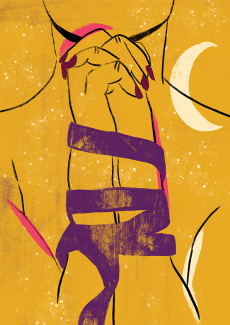
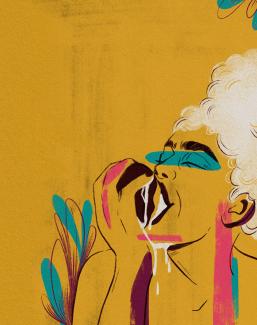
هل اختبرتم من قبل لحظات من الصفاء الذهني العميق أثناء أو بعد ممارسة الجنس؟
في هذه الرسومات، تنخرط فتاة القمر وادجيت في ممارسة حميمية مع شيطان ثنائي الجندر. من بين فتيات القمر الأربعة، وادجيت هي المُعالِجة والفيلسوفة ووسيطة العرّافة. هي تقوم بذلك من أجل إطلاق عملية علمية وروحية، تُطلِق عليها تسمية «الاستنارة بضوء البدر». خلال هذه العملية، تشكّل تسلسلاً زمنياً حيّاً بين ذكرياتها وحواسها ومشاعرها ورؤاها وخيالاتها. إنّها أحد أشكال السفر عبر الزمن من خلال الذبذبات، من أجل اكتشاف ما تُسميه «تجلّيات الحقيقة». أثناء التجربة، تتضمّن إحدى رؤى وادجيت الضبابية اقتراب نهاية العالم نتيجة تدمير الناس للبيئة في خدمة الرأسمالية الشرهة؛ وذكرى طفولة حول دخول المستشفى بعد التشخيص بمرض نفسي؛ ورؤية لأصل قصّة فتيات القمر يظهر فيها الرمز التوراتي نوح، كفتاة قمر سوداء من عصر قديم تحذّر من أخطار التلوث البيئي.
تمتدّ ممارسات الـ»بي دي إس إم» إلى أبعد من كونها كينك مرح يقود لاستكشافات حسّية، فبإمكانها أن تكون طريقة للتعامل مع الألم العاطفي والصدمات. لقد كانت وسيلةً للتعافي الجنسي بالنسبة لي، بتقديمها نمط للتحرّر الجذري. تطهيرٌ ما، يحدث، عند وقوع ألمٍ مادّي على الجسد. يقع هذا الألم في وجود تراضٍ، فيستخرج ألمًا عاطفيًا، كما لو كان «يستدعيه». نزول السوط على جسدي يسمح لي بتحرير مشاعر مكبوتة: توتّر، اكتئاب، شعوري بغياب دفاعاتي في وجه ضغوطاتٍ تُغرقني أحيانًا. عند الانخراط في الـ»بي دي إس إم» كسبيل للتعافي، على العشّاق أن يتعلّموا كيف يكونون شديدي الوعي ببعضهم البعض، ومسؤولين عن بعضهم البعض. فحتى لو كانت الموافقة قد أُعطيت في البداية، علينا أن نكون منتبهين لأيّ تغيّرات قد تطرأ أثناء الممارسة، خاصةً مع احتدام المشاعر. أتعامل مع الـ»بي دي إس إم» بفهمٍ لأنه ينبغي أن يكون الحبّ والتعاطف أساسًا لعملية الاستسلام للألم، وبذلك أخلق مساحة أو أنفتح للحبّ.
إن الاهتمام برعاية ما بعد وقوع الألم يُعَدّ استكمالًا للعملية. يمكن لذلك أن يحدث بطُرُقٍ بسيطة جدًا مثل الاحتضان، التأكّد ممّا إذا كان الآخر يرغب في شرب الماء، مشاهدة فيلمٍ معًا، مشاركة عناق أو حتى مشاركة سيجارة حشيش. يمكن لهذه الرعاية أن تمتثل لأيّ ما كانت عليه لغة حبّك المُختارة. مع إدراك أنّ جروحًا قد فُتِحَت، تُعَدّ هذه المساحة من الاحتواء ضرورية من أجل استكمال عملية التعافي. إنّه أكبر درسٍ في ممارسة التعاطف وتعلّم كيف تحتوي شريكك/ شريكتك حقًا، نظرًا لحساسية تمييع الحدود الفاصلة بين الألم والمتعة. بهذه الطريقة، يصبح الـ»بي دي إس إم» أحد أشكال أعمال الرعاية بالنسبة لي.
بعد ممارسة جنسية فيها ممارسات «بي دي إس إم»، أشعر بصفاء ذهني وهدوء يَضَعاني في مساحة إبداعية عظيمة ويمكّناني روحيًا. مشاهدة الألم يتحوّل آنيّاً لشيء آخر هي أشبه بتجربة سحرية. وبالمثل، تجربة الـ»بي دي إس إم» المحرِّرة على المستوى الشخصي تسمح لوادجيت بالوصول إلى المعرفة المُسبَقة والحكمة والصفاء الذهني مما يساعدها في واجباتها كفتاة قمر في مواجهة الأبوية الأفريقية.
وُلِدَت «فتيات القمر» أثناء عملي كمديرة لـ»دراما كوينز»، وهي منظمة فنّية شبابية ناشطة في غانا. منذ تأسيسنا في 2016، استخدمنا وسائط فنّية مختلفة كجزءٍ من عملنا الناشطي النسوي والبيئي والعموم- أفريقي. استخدمنا الشِعر والقصص القصيرة والمسرح والأفلام والموسيقى لمناقشة قضايا مثل الفساد والأبوية والتدهور البيئي ورهاب المثلية الجنسية. ناقَشَت أعمالنا المسرحية الافتتاحية مثل «خَيّاطة شارع سان فرانسيس» و»حتى يفيق أحدهم» مشكلة ثقافة الاغتصاب في مجتمعاتنا. كما يُزعم أن «مثلنا تمامًا» كانت من أوائل الانتاجات المسرحية في غانا التي تناقش بشكل مباشر قضية رهاب المثلية الجنسية المتغلغلة في البلد. كما ساهمت «جامعات غانا الكويرية»، وهي ورشة لصناعة الأفلام الكويرية لتدريب صنّاع الأفلام الأفارقة، في تدريب صنّاع أفلام من غانا ونيجيريا وجنوب أفريقيا وأوغاندا. وعُرِضَت الأفلام المصنوعة في الورشة في مهرجانات، مثل فيلم «فتاة رضيعة: قصة شخص بيني الجنس». ولذلك، فإنّ الانتقال إلى وسيط الروايات المصوّرة هو تطوّر طبيعي.
منذ حوالي سبع سنوات، بدأتُ بكتابة رواية لم أكملها أبدًا عن حياة أربع نساء. في عام 2018، فتحت «مبادرة المجتمع المفتوح لغرب إفريقيا» (OSIWA) فرصة مِنحة أطلقت إنتاج المشروع وتحوّلت روايتي غير المكتملة إلى فتيات القمر. هناك جزءان من فتيات القمر، يتكوّن كلّ منهما من ستّة فصول. الكُتّاب والمحرّرون المساهمون في الموسم الأول هم سوهايدا دراماني، وتسيدي كان تاماكلوي، وجورج هانسون، ووانلوف كوبولور. كتّاب الموسم الثاني هم يابا أرما ونادية أهيدجو وأنا. قام الفنان الغاني كيسوا وستوديو «أنيماكس إف واي بي»، وهو ستوديو رسوم متحرّكة وتصميمات وتأثيرات بصرية، بالرسوم التوضيحية للشخصيات وصياغتها مفاهيميًا.
لقد كانت كتابة فتيات القمر، بين 2018 و2022، عملَ حبٍّ بالنسبة لي، بل بالأحرى، عمل من أجل التحرّر. أهدف أن أكون مجدِّدة في الشكل والأسلوب: لقد اهتممت بتحويل أنماطٍ أخرى من الكتابة، مثل القصص القصيرة والشِعر، لتلائم بنية القصص المصوّرة. تستهدف فتيات القمر مناقشة القضايا الكبرى وتكريم النشطاء الموجودين في الحياة الحقيقية، من خلال إدماج الرسومات والنصوص، كما يحدث في القصص المصوّرة عادةً. قراري بمركزة النساء الكوير كبطلات خارقات، وهو أمر نادر الحدوث في هذا النوع من الفن، أصبح له معنى أكبر بكثير عندما بدأ يتطوّر أمر خطير في غانا في عام 2021.
شهد العام الماضي تصاعد في وتيرة العنف ضد مجتمع الميم عين في غانا، والتي بدأت بإغلاق أحد مراكز مجتمع الميم عين. أعقب ذلك اعتقالات تعسفية وسجن أشخاص مشكوك في انتمائهم للطيف الكويري، كذلك أشخاص متّهمين بالدفع بـ»أجندة مثلية». تُوِّج ذلك بتقديم مشروع قانون ضد الميم عين في البرلمان الغاني تحت إسم «حقوق الإنسان الجنسية اللائقة وقِيَم الأسرة الغانية». يُزعم أن هذا المشروع هو أكثر مشاريع القوانين توحشًا ضد الميم عين كان قد صيغ في المنطقة، وقد أتى لاحقًا على محاولات سابقة في بلاد مثل نيجيريا وأوغندا وكينيا.
أتذكّر بمنتهى الوضوح أول مرّة قرأت فيها مسودة مشروع القانون. لقد كانت ليلة جمعة، والتي عادةً ما أستريح أو أحتفل فيها بعد أسبوع عمل طويل. لحسن الحظ، سُرِّبت المسودّة وتمّت مشاركتها معي على مجموعة واتساب. أثناء القراءة، تسلّل إليّ شعور عميق بالخوف والتوجّس مما أفسد ليلة استراحتي.
اقترح المشروع معاقبة أيّة مناصرة للميم عين بالسجن من خمس لعشرة سنوات، وبتغريم وحبس أي شخص يُعرّف نفسه باعتباره مثلي أو مثلية أو عابر أو عابرة جنسيًا أو ينتمي لأية فئات جنسية أو/وجندرية غير نمطية، إلا إذا «تراجع» وقَبِل الخضوع لعلاج تصحيحي. في مسودة مشروع القانون، حتى اللاجنسيين جُرِّموا. انقضّ مشروع القانون على جميع الحرّيات الأساسية: حرّية الفكر وحرّية الوجود وحرّية أن يتمسّك الشخص بحقيقته ويعيش بها. انقضّ مشروع القانون أيضًا على منصّات التواصل الاجتماعي والفنّ. لو مُرِّر هذا المشروع، ستصبح فتيات القمر عملاً أدبياً محظوراً. ما تقدّم به مشروع القانون كان شرًا خالصًا وبعيد المدى، لقد صُدِمت لدرجة الاكتئاب من عمق الكراهية التي صُنِع منها هذا المشروع. أثناء تصفّحي موقع «تويتر» تلك الليلة، وجدتُ انعكاسًا للرعب الذي شعرت به بداخلي. لقد كان هناك بثًا مباشرًا للمشاعر، حيثُ كان يتفاعل الناس فوريًا مع ما يقرأونه: من عدم تصديق إلى رعب إلى خيبة أمل شديدة وشعور بالأسف عندما أدركنا المدى الواسع الذي رغب المشروع في الانقضاض عليه. البعض غرّدوا عن استعدادهم لجمع ما لديهم والرحيل عن البلاد. بعدها، وكعادة الغانيين، تحوّل الأسف والخوف لدعابة. ومن الدعابة أتى الحماس لتصعيد المقاومة.
لذلك، فالعمل مستمرّ. لقد صنعتُ فتيات القمر لتوفير شكلٍ بديلٍ من التعليم، ولتوفير المعرفة حيثُ قمَعَتها أبوية عنيفة، ولخلق مساحة ظهور لمجتمع الميم عين حيثُ تمّ محوه. من الضروري أيضًا أن يحصل الـ»بي دي إس إم» الأفريقي على منصّة لإظهاره حيثُ أنّ الكثير من الـ»بي دي إس إم» المُمثَّل أبيض. إن المتعة الجنسية، سواء من خلال الـ»بي دي إس إم» أو غيره، مثلها مثل أنماط الحبّ اللامغاير جنسيًا، تتخطى العرق والقارّة، فالمتعة الجنسية وتنوّع خبراتها قديمة بقِدَم الزمن.
Explore Transnational Embodiments
This journal edition in partnership with Kohl: a Journal for Body and Gender Research, will explore feminist solutions, proposals and realities for transforming our current world, our bodies and our sexualities.
نصدر النسخة هذه من المجلة بالشراكة مع «كحل: مجلة لأبحاث الجسد والجندر»، وسنستكشف عبرها الحلول والاقتراحات وأنواع الواقع النسوية لتغيير عالمنا الحالي وكذلك أجسادنا وجنسانياتنا.
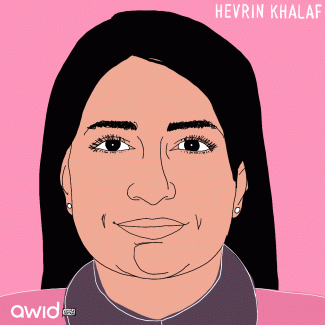
Hevrin Khalaf was a prominent Syrian Kurdish political leader in the autonomous region of Rojava where Kurdish women are risking their lives to resist the Turkish offensive and build a feminist system.
She was Secretary-General of the Future Syria Party (FSP), a group that aimed to build bridges, reconcile different ethnic groups and work towards a “democratic, pluralistic, and decentralized Syria.”
Hevrin was a symbol of this reconciliation effort. She also worked to promote equality between women and men and was a representative for visiting journalists, aid workers, and diplomats.
Hevrin was also a civil engineer from Derik, and was one of the founders of the Foundation for Science and Free Thought in 2012.
On 12 October 2019 she was tortured and murdered by the Turkish-backed militia, Ahrar al-Sharqiya during a military operation against Syrian Democratic Forces in Rojava.
“The killing of Khalaf is a turning point in Syria’s modern history. It once again demonstrated the old Kurdish proverb “no friends but the mountains.” I will always be a friend of Khalaf and her vision of a better world.” - Ahed Al Hendi
Snippet Forum Stories Gen Intro (ES)
¿Qué significa un Foro de AWID para las personas que estuvieron ahí? ¿Qué es esta magia que sucede cuando feministas de todo el mundo se reúnen para celebrar, elaborar estrategias, aprender y compartir la alegría?
AWID habló con más de cuarenta participantes del Foro para oír sus historias de las transformaciones que experimentaron ellxs mismxs como activistas, y que también cambiaron a sus organizaciones y a los movimientos a los que pertenecen. También aprendimos sobre qué cosas deberíamos mantener y desarrollar para que un Foro de AWID sea diferente, y de qué manera podemos mejorar.
Este informe contiene aprendizajes y consejos invaluables para cualquier persona que quiera organizar encuentros presenciales regionales y temáticos, y para nosotrxs en nuestro trabajo de planificación del 15° Foro Internacional de AWID.
¡Desliza para que descubras más!
FRMag - The Story of An Unhappy Tale
The Story of An Unhappy Tale
by Gabriela Estefanía Riera Robles
Juliana. How I would love to be called Juliana! The name is full of power and presence, full of force and vehemence. (...)
Eni Lestari is an Indonesian domestic worker in Hong Kong and a migrant rights activist. After escaping her abusive employer, she transformed herself from a victim into an organizer for domestic workers in particular, and migrant workers in general. In 2000, she founded the Association of Indonesian Migrant Workers (ATKI-Hong Kong) which later expanded to Macau, Taiwan, and Indonesia. She was the coordinator and the one of the spokesperson of the Asia Migrants Coordinating Body (AMCB) - an alliance of grassroots migrants organisations in Hong Kong coming from Indonesia, Philippines, Thailand, Nepal and Sri Lanka. She is also the current chairperson of International Migrants Alliance, the first-ever global alliance of grassroots migrants, immigrants, refugees, and other displaced people.
She has held important positions in various organizations including and current Regional Council member of Asia Pacific Forum on Women, Law and Development (APWLD), former Board Member of Global Alliance Against Traffic in Women (GAATW), spokesperson for Network of Indonesian Migrant Workers (JBMI), advisor for ATKI-Hong Kong and Macau as well as the Association of Returned Migrants and Families in Indonesia (KABAR BUMI). She has been an active resource person in forums organized by academics, interfaith groups, civil societies, trade unions and many others at national, regional, and international arenas.
She has actively participated in United Nations assemblies/conferences on development and migrants’ rights and was chosen as a speaker at the opening of the UN General Assembly on Large Movement of Migrants and Refugees in 2016 in New York City, USA. She received nominations and awards such as Inspirational Women by BBC 100 Women, Public Hero Award by RCTI, Indonesian Club Award, and Non-Profit Leader of Women of Influence by American Chamber Hong Kong, and Changemaker of Cathay Pacific.