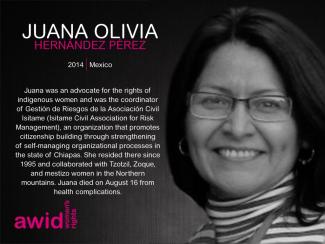
Juana Olivia Hernández Pérez
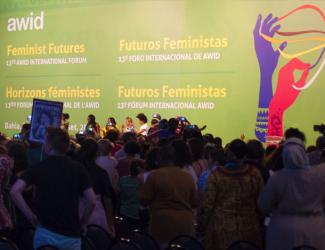
En septembre 2016, 1800 féministes et défenseur-e-s des droits des femmes venu-e-s des quatre coins de nos mouvements se réunissaient sur les côtes de Bahia à l’occasion du 13ème Forum international de l’AWID.
Cette section met l’accent sur les victoires, les enseignements et les ressources qui ont couronné nos conversations. Nous vous invitons à l’explorer, la partager et laisser vos impressions.
L’un des principaux éléments à retenir de ce Forum a été la nécessité d’élargir et d’approfondir notre travail de collaboration entre mouvements pour faire face à une montée des fascismes et des fondamentalismes, une exacerbation de la cupidité des entreprises et un changement climatique en progression.
Nos Initiatives Jeunes-pousses ont aidé 20 idées émérgées au Forum à évoluer en actions concrètes
La vidéo « Protéger les personnes et la planète » et le guide « Arrimer la résistance à l'action » mettent en lumière le courage des défenseur-e-s des droits humains et présentent des stratégies concrètes pour résister au pouvoir des entreprises
Avec nos animations L'état de nos mouvements féministes et La justice climatique et environnementale, les mouvements ont maintenant des outils créatifs pour appuyer leur travail de plaidoyer.
La compilation des expressions artistiques des mouvements continue d’inspirer une organisation plus forte et plus créative dans le monde entier.
Les mouvements peuvent aussi bénéficier d’une nouvelle méthodologie pour envisager nos horizons féministes. (à venir bientôt !)
A travers son prochain plan stratégique et le processus de son Forum, l’AWID s’engage à poursuivre et approfondir les rapports, les apprentissages et les processus amorcés lors du Forum 2016, tout en s’inspirant de l’actualité.
Les Forums de l’AWID ont vu le jour en 1983, à Washington DC. Depuis, ils revêtent de nombreux aspects et incarnent, selon les personnes, tantôt un processus itératif visant à affiner nos analyses, notre vision et nos actions, un évènement clé galvanisant les féminismes des participant-e-s et leurs organisations ou un espace politique offrant refuge et solidarité aux défenseur-se-s des droits humains.
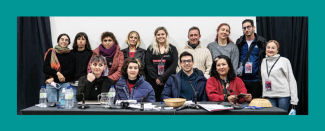
The AWID Forum is just one stop in the Feminist Realities journey. Let’s travel this path together and explore our power in action!
سنقوم بتحليل الردود على الاستطلاع للوصول للاستنتاجات الأساسية والنتائج خلال المنتدى العالمي ل AWID في بانكوك، وعن طريق الانترنت في ديسمبر (كانون الأول) 2024. الرجاء التسجيل هنا لحضور المنتدى.
Bessy était aussi membre d’Arcoíris, une organisation qui soutient la communauté LGBTI+. Elle était en outre la personne référente de la plateforme Derechos aquí y Ahora (les droits ici et maintenant) au Honduras et plaidait fermement en faveur d’une pleine citoyenneté pour les personnes trans, ainsi que pour l’adoption d’une loi sur l’identité de genre qui permettrait aux personnes trans de changer légalement d’identité de genre.
« Depuis le début de l’année [2019], la communauté trans a été victime d’une série d’attaques, parce qu’elle a défendu et demandé des droits. » Rihanna Ferrera (sœur de Bessy)
Bessy était une travailleuse du sexe qui a été tuée par balle par deux hommes, au début du mois de juillet 2019, alors qu’elle travaillait dans les rues Comayagüela. Ses assaillants ont par la suite été arrêtés.
Bessy fait partie des nombreux·ses activistes des droits LGBTI+ du Honduras, assassiné·e·s en raison de leur identité et de leur travail, parmi qui se trouvent : Cynthia Nicole, Angy Ferreira, Estefania "Nia" Zuniga, Gloria Carolina Hernandez Vasquez, Paola Barraza, Violeta Rivas et Sherly Montoya.
Le cas de Bessy incarne l’injustice, de même qu’un problème plus large de violence systémique à laquelle se confronte la communauté LGBTI+ au Honduras, puisque l’État ne parvient pas à garantir l’offre de droits ni à fournir une protection. Cela est à l’origine d’une culture de l’impunité.
Malgré les risques auxquels sont confronté.e.s les activistes LGBTI+ au Honduras, tous et toutes continuent leur travail pour défier et résister à la violence, ainsi que pour combattre la stigmatisation et la discrimination au quotidien.
« Si je meurs, il faut que ce soit pour quelque chose de bien, pas pour une futilité. Je ne veux pas mourir en fuyant, en étant lâche. Si je meurs, je veux que les gens disent que je suis mort·e en me battant pour ce qui m’appartient » - membre d’Arcoíris

We can have an intro here
And maybe a little bit more text here
Cette communauté est un endroit de connexions, où l’on comprend nos combats individuels comme faisant partie de luttes mondiales, et où l’on peut même parfois danser ! Il n’existe aucun endroit de la sorte en ligne, où être en contact avec des activistes de terrain, qui viennent du monde entier, et forger de la solidarité et de la sororité..- Paz Romero, Argentina
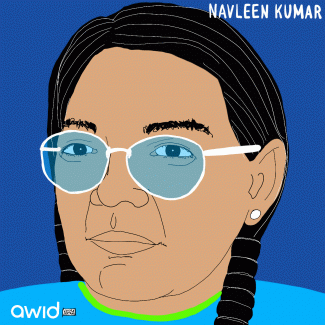
"She was not a person. She was a power."
- a fellow activist remembering Navleen Kumar
With commitment and integrity, she worked for more than a decade to protect and restore the lands of Indigenous people (adivasi) in Thane district, an area taken away by property and land developers using such means as coercion and intimidation. She fought this injustice and crime through legal interventions at different courts, realizing that manipulation of land records was a recurrent feature in most cases of land acquisition. In one of the cases, that of the Wartha (a tribal family), Navleen found out that the family had been cheated with the complicity of government officials.
Through her work, she helped restore the land back to the Wartha family and continued to pursue other cases of adivasi land transfers.
“Her paper on the impact of land alienation on adivasi women and children traces the history and complexities of tribal alienation from the 1970s, when middle class families began to move to the extended suburbs of Mumbai as the real estate value in the city spiralled.
Housing complexes mushroomed in these suburbs, and the illiterate tribals paid the price for this. Prime land near the railway lines fetched a high price and builders swooped down on this belt like vultures, to grab land from tribals and other local residents by illegal means.”
-Jaya Menon, Justice and Peace Commission
During the course of her activism, Navleen received numerous threats and survived several attempts on her life. Despite these, she continued working on what was not only important to her but contributed to changing the lives and realities of many she supported in the struggle for social justice.
Navleen was stabbed to death on 19 June 2002 in her apartment building. Two local gangsters were arrested for her murder.
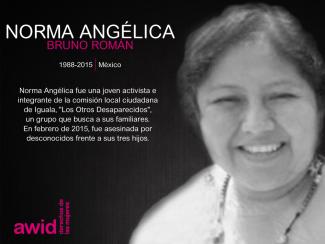
In a global picture of rising religious fundamentalisms, this ebook details the grave human rights violations, and violations of women’s rights in particular, caused by state-sponsored fundamentalism, as well as by fundamentalist non-state actors such as militias, religious community organizations, and individuals.
It is vital to promote intersectional feminist understandings of power and privilege, and to apply these to questions of religion and culture.

par Karina Ocampo
C’est dans un recoin caché du Chiapas, au Mexique, que nous sommes arrivées, femmes et dissidentes sexuelles, pour organiser nos actions. (...)
< illustration : « La muerte sale por el Oriente » [la mort se lève à l’Est], par Sonia Madrigal
#FreezeFascisms
A 30 años de la adopción de la Declaración y Plataforma de Acción de Beijing, existe una ola creciente de fascismos que ejercen gran poder e influencia en los espacios multilaterales, todo un retroceso para las conquistas de igualdad de género y la protección de los derechos humanos en el mundo entero.
En torno a la CSW69, estamos organizando, en conjunto y de forma horizontal, una serie de valientes espacios sobre el terreno y en línea a fin de compartir estrategias y forjar un poder feminista más allá de Beijing +30. Nuestra presencia colectiva trastorna las prácticas institucionales de exclusión en dichos espacios y, a la vez, apoya los procesos de organización de los movimientos en torno a las alternativas feministas a los sistemas de opresión.
Súmate a las conversaciones desde el 10 al 21 de marzo de 2025, mientras transformamos de forma colectiva la CSW69 en espacios para y sobre la resistencia y la solidaridad.
Lo personal es político, y la apasionada y valiente Nadyn Jouny personificó este mantra feminista. Nadyn experimentó de primera mano el dolor de la violencia estructural de los sistemas legales que despojan a las mujeres de sus derechos.
Cuando Nadyn decidió solicitar el divorcio, los tribunales religiosos chiítas, bajo las Leyes de Estatuto Personal Libanesas, le negaron la custodia de su joven hijo Karam. Nadyn, como tantas otras mujeres del Líbano y de otros países, se vio atrapada entre el dolor imposible de dejar una relación no deseada y abusiva y de perder a la vez los derechos sobre su hijo. Sin embargo, Nadyn se defendió, y lo habría de hacerlo hasta el último día.
Nadyn utilizó su habilidad con los medios de comunicación para convertirse en una voz franca a favor de las mujeres que luchan contra la discriminación en la legislación familiar, en el Líbano y a nivel internacional. Nadyn cofundó el grupo autofinanciado "Protecting Lebanese Women" [Protegiendo a las Mujeres Libanesas] (PLW, por sus siglas en inglés) y se unió a muchas otras madres libanesas que se enfrentaban a problemas similares de custodia. Juntas, trabajaron para crear conciencia sobre las injusticias extremas a las que se enfrentaban, a nivel nacional, protestaron ante los tribunales religiosos por sus derechos y, a nivel internacional, llamaron la atención de los medios de comunicación.
Nadyn también trabajó con ABAAD - Resource Center for Gender Equality [Centro de Recursos para la Igualdad de Género], otra organización por los derechos de las mujeres en el Líbano, para realizar campañas en favor de los derechos de las mujeres, la igualdad en la legislación familiar y relativa a las custodias y contra los matrimonios forzados y precoces.
Para muchxs de sus colegas, Nadyn llegó a "simbolizar la lucha de una madre libanesa contra la supresión y la misoginia de todo tipo" (en inglés), al utilizar "su experiencia personal y trayectoria individual de empoderamiento, dio a otras mujeres esperanza para que ellas también pudieran ser un catalizador para el cambio positivo" - ABAAD - Centro de Recursos para la Igualdad entre los Géneros, Líbano.
El 6 de octubre de 2019, Nadyn murió trágicamente en un accidente de automóvil cuando se dirigía a protestar por los injustos aumentos de impuestos en un país que ya se enfrentaba a una espiral de crisis financiera. Nadyn Jouny tenía solo 29 años en el momento de su muerte.
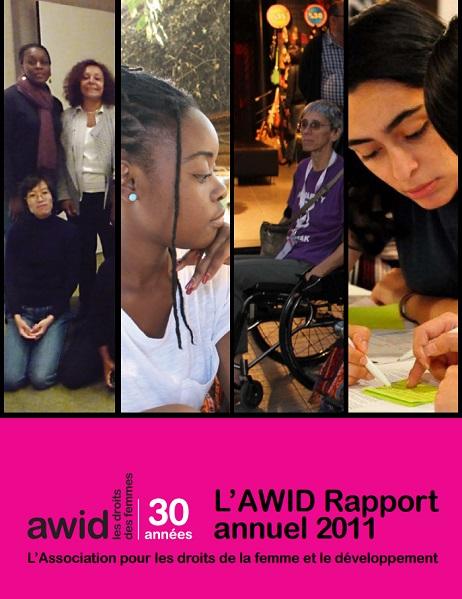
Chaque programme comporte plusieurs volets, y compris le développement et la diffusion de connaissances, la recherche-action, les plaidoyers, l’établissement d’alliances et l’organisation de dialogues stratégiques.
Notre Rapport Annuel 2011 vous proposent un sommaire des principales réalisations pendant l'année, dans le cadre de chacune des programmes de l’AWID.
We would like to thank the Amar.ela collective of women feminists activists and creatives who made this series possible, and especially Natalia Mallo (the team’s octopus) for her support and accompaniment throughout this journey.
We also extend our deepest gratitude and admiration to all the collectives and people who participated in this project, and we thank them for sharing their time, wisdom, dreams and hopes with us. We thank you for making this world a more just, feminist and sustainable one.
We hope the rest of the world will be as inspired by their stories as we are.