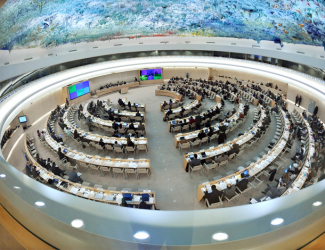
A general view of participants at the 16th session of the Human Rights Council in Geneva, Switzerland.
Analyses Spéciales
L´AWID est une organisation féministe mondiale qui consacre ses efforts à la justice de genre, au développement durable et aux droits humains des femmes
Le Conseil des droits de l'homme (CDH) est un organe intergouvernemental clé du système des Nations Unies, responsable de la promotion et la protection des droits humains autour du globe. Il se réunit trois fois par an en session ordinaire, en Mars, Juin et Septembre. Le Bureau du Haut-Commissariat des Nations Unies aux Droits de l’Homme (HCDH) constitue le secrétariat pour le CDH.
Le CDH :
Débat et adopte des résolutions sur les questions globales des droits humains ainsi que sur la situation des droits humains dans des pays particuliers
Examine les plaintes des victimes de violations des droits humains et des organisations activistes, au nom des victimes de violations des droits humains
Nomme des experts indépendants (que l'on connaît sous le nom de « Procédures Spéciales ») pour réviser les cas de violation des droits humains dans des pays spécifiques, ainsi que pour examiner et suivre des questions globales relatives aux droits humains
Prend part à des discussions avec les experts et les gouvernements sur les questions de droits humains
Évalue les bilans des États membres de l'ONU en matière de droits humains tous les quatre ans et demi, dans le cadre de l'examen périodique universel.
La prochaine session du CDH a lieu à Genève, en Suisse, du 30 juin au 17 juillet 2020.
AWID travaille avec des partenaires féministes, progressistes et du domaine des droits humains pour partager nos connaissances clé, convoquer dialogues et évènements avec la société civile, et influencer les négociations et les résultats de la session.
Avec nos partenaires, notre travail consiste à :
◾️ Suivre, surveiller et analyser les acteurs, discours et stratégies anti-droits et leur impact sur les résolutions du CDH.
◾️ Co-développer un plaidoyer collectif pour contrer les acteurs anti-droits et discuter plus en détails les résultats du Rapport de tendances 2017 du OURs
◾️ Soutenir, coordoner et développer de manière collaborative le Caucus féministe qui émerge au CDH.
Contenu lié
FRMag - Armenians
Armenians, Feminism is our Past and Future
by Sophia Armen
Like it or not fierce ungerhouis have been part and parcel to our histories of resistance and are here to stay. (...)
AWID ofrece una amplia gama de recursos para ayudarte en tu investigación
AWID proporciona una gran cantidad de recursos que pueden ayudarte en tu investigación. Te invitamos a explorar las Áreas Prioritarias y la sección «Infórmate» de nuestro sitio web, o que utilices la función de búsqueda para encontrar información sobre los temas específicos que estás investigando. .
Recomendamos especialmente que explores nuestro manual «¿Dónde está el dinero para los derechos de las mujeres» (WITM). Este manual es una demostración política y práctica de los recursos y procesos necesarios para llevar a cabo una sólida investigación-acción.
« Mais quand le maître
s’est-il laissé éloigner du pouvoir?
Quand un système a-t-il jamais été brisé
par l’acceptation?
Quand le CHEF te remettra-t-il le pouvoir avec amour?
À Jobourg, à Cancun, à l’ONU? », Molara Ogundipe.
Dans un entretien à la Foire internationale du livre du Ghana en 2010, Molara Ogundipe s’est présentée avec ces mots : « ... Je suis une Nigériane. J’ai vécu absolument partout, sauf en Union soviétique et en Chine ».
À travers les continents et les pays, la professeure Ogundipe a enseigné la littérature comparée, l’écriture, le genre et les études anglaises, se servant de la littérature comme outil de transformation sociale, de même que pour revisiter les relations de genre.
Penseuse, écrivaine, rédactrice, critique sociale, poète et activiste féministe, Molara Ogundipe est parvenue à allier le travail théorique et l’action créative et la créativité. Elle est considérée comme l’une des principales voix critiques du(des) féminisme(s) africain(s), des études de genre et de la théorie littéraire.
Molara est connue pour avoir créé le concept de « stiwanisme », à partir de l’acronyme STIWA, pour Social Transformations in Africa Including Women (transformations sociales en Afrique incluant les femmes), reconnaissant la nécessité de « s’éloigner de la définition du ou des féminismes en lien avec l’Euro-Amérique ou avec toute autre région, et de la déclamation de loyautés ou déloyautés ».
Avec son ouvrage fondateur « Re-creating Ourselves » de 1994 (publié sous le nom de Molara Ogundipe-Leslie), Molara Ogundipe a laissé derrière elle un immense éventail de connaissances qui ont décolonisé le discours féministe et « recentré les femmes africaines sur leurs récits entiers et complexes... menées par une exploration de la libération économique, politique et sociale des femmes africaines et la restauration de la capacité d’agir féminine dans plusieurs cultures en Afrique ».
À propos des difficultés rencontrées en tant que jeune universitaire :
« Lorsque j’ai commencé à parler et à écrire sur le féminisme à la fin des années soixante et soixante-dix, on me considérait comme une bonne et admirable fille qui s’était égarée, une femme dont l’esprit avait été gâté par trop d’apprentissages ».
Molara Ogundipe s’est démarquée grâce à son leadership alliant activisme et université. En 1977, elle comptait parmi les fondatrices de l’AAWORD (Association of African Women for Research and Development). En 1982, elle fonde WIN (Women in Nigeria) pour défendre des « droits économiques, sociaux et politiques » entiers pour les Nigérianes. Elle crée et dirige ensuite la Foundation for International Education and Monitoring, et passe plusieurs années à oeuvrer au comité de rédaction de The Guardian.
Ayant grandi avec les Yoruba, leurs traditions, leur culture et leur langue, elle a un jour déclaré :
« Je pense que célébrer la vie, célébrer les personnes qui décèdent après une vie bien remplie est l’un des plus beaux aspects de la culture yoruba ».
Le nom de fête « oiki » de Molara en yoruba était Ayike. Née le 27 décembre 1940, Molara est décédée à l’âge de 78 ans, le 18 juin 2019 à Ijebu Igbo, dans l’État d’Ogun au Nigeria.
La joie dans le monde : six questions à Naïké Ledan
entretien mené par Chinelo Onwualu
Naike Ledan est une défenseuse de la justice sociale, une féministe engagée qui met en avant 20 années d’expérience dans la défense des droits humains et de la justice sanitaire, l’autonomisation des femmes, la lutte pour l’accès universel aux services de base et l’inclusion sociale, ainsi que le renforcement des capacités de la société civile. Elle a réalisé un travail considérable au Canada, en Afrique occidentale et australe, ainsi qu’en Haïti, dans le domaine de la défense des droits civils et du renforcement des capacités des OSC, tout en mettant l’accent sur les déterminants sociaux de l’exclusion structurelle. Elle défend les principes de leadership partagé, ainsi que les espaces anticoloniaux, anti-oppressifs et anti-patriarcaux.
Chinelo On dit que tu es une activiste pour les droits des personnes trans; j’aimerais savoir quel parcours tu as eu.
Naike Alors, j’ai grandi en Haïti jusqu’à mes 18 ans, puis j’ai vécu à Montréal pendant 19 ans. En revenant en Haïti en 2016, je pensais rentrer à la maison, mais le lieu avait changé et j’ai dû me réajuster. Je ne me suis pas vraiment reconnectée à ma famille et mes amis d’enfance comme je l’aurais cru. Je suis revenue en tant qu’expat avec une situation professionnelle confortable, et je me suis sentie comme une étrangère pendant très longtemps. Dans le même temps, je me sentais vraiment à la maison à cause de la langue, des silences entendus, le fait de ne pas devoir tout expliquer quand on chante une pub – tu sais, ce truc qu’on partage, cette énergie, cet espace, cet esprit.
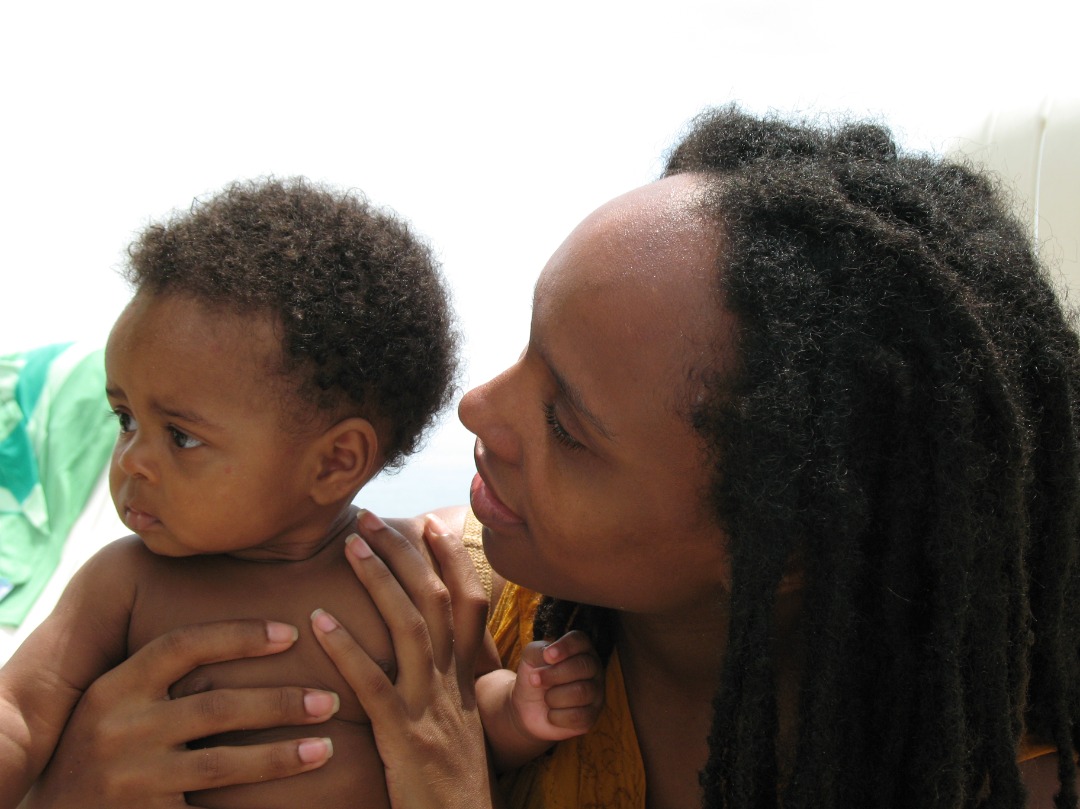
Mon retour à l’amour de moi-même – que j’appellerais une « renaissance » – qui a coïncidé avec l’accouchement de mon premier enfant, l’accouchement de moi-même et le moment où je suis tombée amoureuse avec le queer en moi et mon amour des personnes de même genre. (Crédit
photo : Naïké Ledan)
Ce qui m’a aidée, c’est que j’adorais le travail qui consiste à aller dans les terres et à documenter les connaissances des gens. Donc j’ai quitté le confort. Je suis devenue directrice nationale d’une organisation régionale qui était super mégaqueer! La majeure partie de mon travail consistait à trouver des ressources et à renforcer les capacités de la société civile. Ma stratégie était d’aller dans les campagnes, de chercher toutes ces petites organisations, d’aider à renforcer leurs capacités et de les financer. Je ne cherchais pas à rencontrer des politiciens, à serrer des mains et à prendre des photos <rires>. J’avais un très bon allié, Charlot Jeudy, l’activiste [queer] qui s’est fait tuer il y a trois ans chez lui. Nous nous sommes fortement rapproché·e·s après qu’un festival de films afroqueer que nous planifions en Haïti ait été interdit. Mais ç’a fait beaucoup de bruit et déclenché les conversations à propos du queer partout, et Charlot m’a présentée à toutes les petites OSC dans les moindres recoins du pays. Et moi, j’étais juste là pour aider les organisations à s’enregistrer légalement ou à construire leur plan stratégique. Donc, ce sont tous ces petits boulots qui ont fait de moi une activiste queer et, par extension, une activiste trans, bien que je ne me dise pas activiste. C’est un terme tellement piège, tu ne trouves pas? Et c’est un nom que les autres nous donnent. Moi, je pense que je suis juste une amoureuse et une battante <rires>.
Chinelo Parle-moi de la formation que tu as menée avec l’AWID pour le festival. De quoi ça parlait et quel était le contexte?
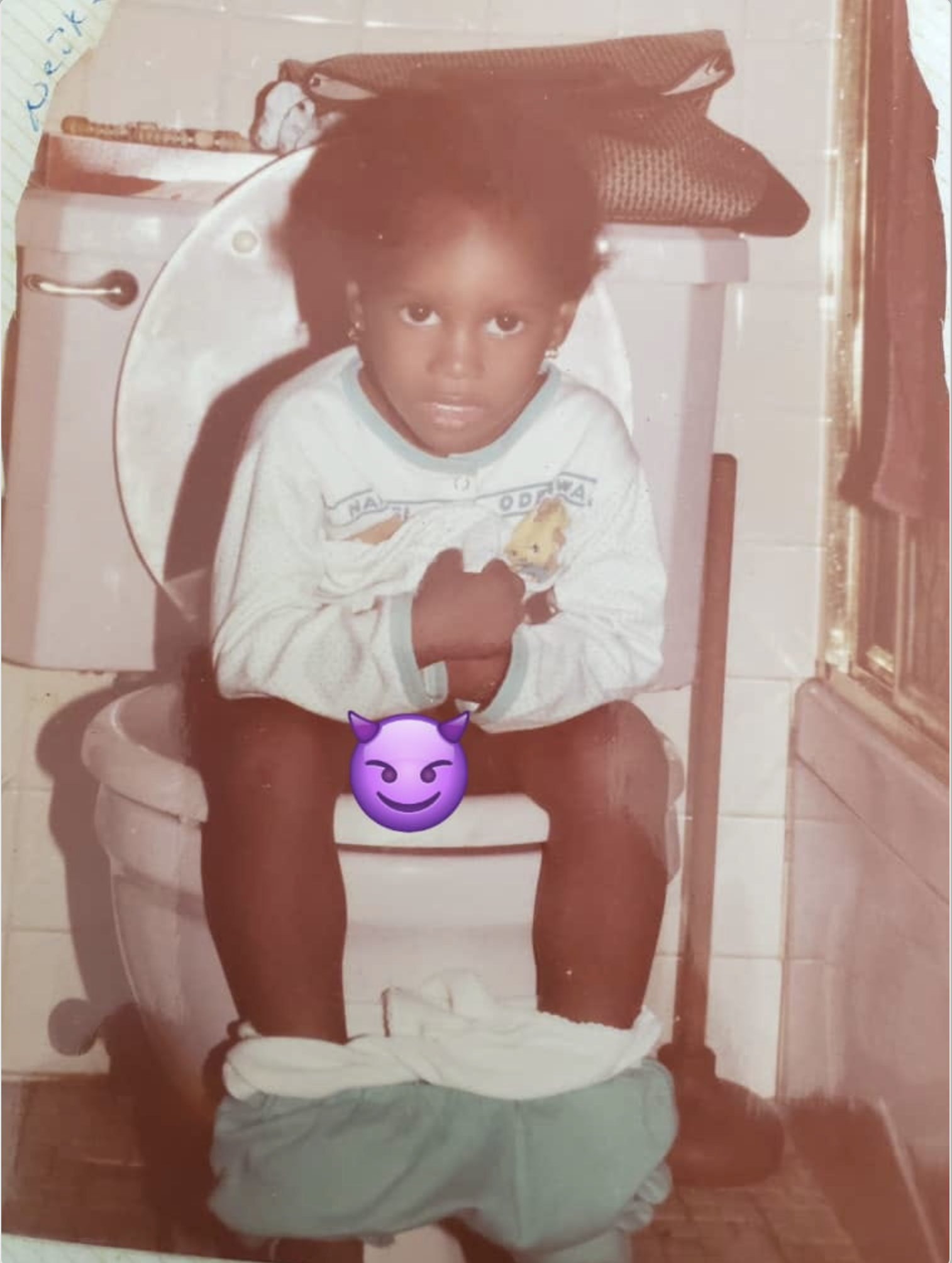
Ma profonde conscience de moi-même au cours de mon enfance et ma forte préoccupation à questionner les inégalités et l’injustice à un très, très jeune âge (+/- 4 ans). (Crédit photo : Naïké Ledan)
Naike Les médias internationaux ne parlent pas vraiment d’Haïti, mais avec un environnement politique aussi mauvais que le nôtre, l’environnement économique était encore plus catastrophique. Étant une Haïtienne plutôt de classe moyenne, parlant plusieurs langues et ayant différents passeports, j’étais hésitante au départ à occuper cet espace. Mais je me considère souvent davantage comme un pont que comme une personne qui parle d’elle-même. C’est comme ça que j’en suis venue à inviter Semi, une brillante jeune femme trans d’autour de Port-au-Prince, pour qu’elle vienne occuper cet espace, parler d’elle-même et nous raconter l’écosystème des réalités des femmes trans en Haïti. Nous en sommes venues à faire une séance sur le féminisme non inclusif – ou pour le dire autrement, les espaces féministes officiels – et la manière dont les filles trans en Haïti n’ont pas d’espace au sein desquels elles peuvent contribuer aux connaissances des femmes et au partage de leurs réalités. Donc, le festival de l’AWID a été pour moi l’opportunité de donner l’espace aux femmes qui devraient leur être dédié. Ce fut un super moment; on buvait du vin en ligne tout en modérant la conversation. Ma comodératrice, Semi, nous a fait part de ce que cela signifie que d’être une enfant/une fille/une femme trans à différentes étapes de sa vie. Elle a également parlé des dangers de la rue, de la pauvreté, de l’exclusion, du fait de « ne pas passer » et aussi de ses victoires.
Chinelo Quelle est la relation des femmes trans avec les organisations féministes en Haïti? Quelle expérience en as-tu retirée?
Naike Ç’a été vraiment très difficile – un crève-cœur, vraiment – cette expérience des femmes trans en Haïti. De l’inexistence absolue à une extrême sexualisation. L’autre chose qui se passe aussi c’est la manière dont elles sont tuées, et le fait que ces assassinats ne sont pas rapportés dans les médias. Cela montre la mesure dans laquelle les femmes trans sont non existantes et effacées. Elles sont partout mais non dans les cadres professionnels, non dans les cadres féministes et non dans les cadres organisationnels. Même pas dans les organisations LGBT. Ce n’est que récemment, et suite à un énorme effort de plaidoyer, que certaines de ces organisations se réajustent en quelque sorte. Mais dans les espaces féministes, c’est toujours hors de question. On doit toujours faire avec le vieux discours d’exclusion : « Ce ne sont pas des femmes. Bien sûr, si elles peuvent passer… ». La culture du passing, c’est en réalité une question de gestion des risques – à quel point tu passes et à quel point tu ne passes pas, et ce que cela veut dire pour ton corps et la violence que cela lui inflige. Dans les réalités d’exclusion des trans dans lesquelles nous vivons, qui sont reproduites dans de nombreux espaces féministes, celles qui passent complètement peuvent être considérées être des filles, mais seulement dans une certaine mesure. Mais tomber en amour, avoir une conversation et rester dans le placard, et souhaiter une certaine esthétique ou une carrière? De fait, la conversation sur la thérapie hormonale porte en réalité sur la réduction des risques, comme Semi elle-même l’a mentionné lors de la formation. Mais on n’a pas l’option de la thérapie hormonale ici, on n’a pas le cadre médical ni le système qui soutiendrait celles qui voudraient choisir cette option.
Chinelo Tu parles de la manière dont les trans et les queer sont considéré·e·s dans la société, je trouve que ça pourrait ressembler à la situation au Nigéria, qui peut être un environnement profondément homophobe.
Naike Haïti est un pays très complexe, d’une très belle manière. Rien n’est simple, tu sais, rien ne se fait jamais d’une seule manière. Les Haïtiens et les Haïtiennes sont très tolérant·e·s – et sont également très homophobes. Il y a des coins de campagne où les gens ne sont pas vraiment si homophobes, parce que les temples vaudous sont là, et c’est une religion qui respecte la vie. Un principe essentiel de la religion vaudou est que toutes et tous les enfants sont des enfants. Donc, il n’y a pas de vrai ou faux dans cette religion. Depuis la nuit des temps, les gens considèrent Haïti comme un havre, un lieu où les gens sont tolérants – je te parle là des années 1970, 1980, avant le VIH, les années 1990 même. Puis il y a eu le tremblement de terre [en 2010], dans lequel environ 300 000 personnes ont trouvé la mort. Et alors tout cet argent est arrivé du Sud des États-Unis par le biais des Évangélistes, pour reconstruire le pays et pour trouver Jésus. Donc l’homophobie en Haïti est très récente. Dans le tréfonds, dans le cœur de l’âme de la culture, je ne peux pas vraiment dire qu’Haïti est homophobe. Mais dans la vie de tous les jours, ça colle vraiment à la peau des personnes queer, toute cette violence. Et sur celle des femmes, des femmes pauvres, des femmes à la peau foncée aussi parce que le colorisme est bien ancré dans les Caraïbes.
Chinelo Comment as-tu géré cela? Quelle a été ta stratégie de survie?
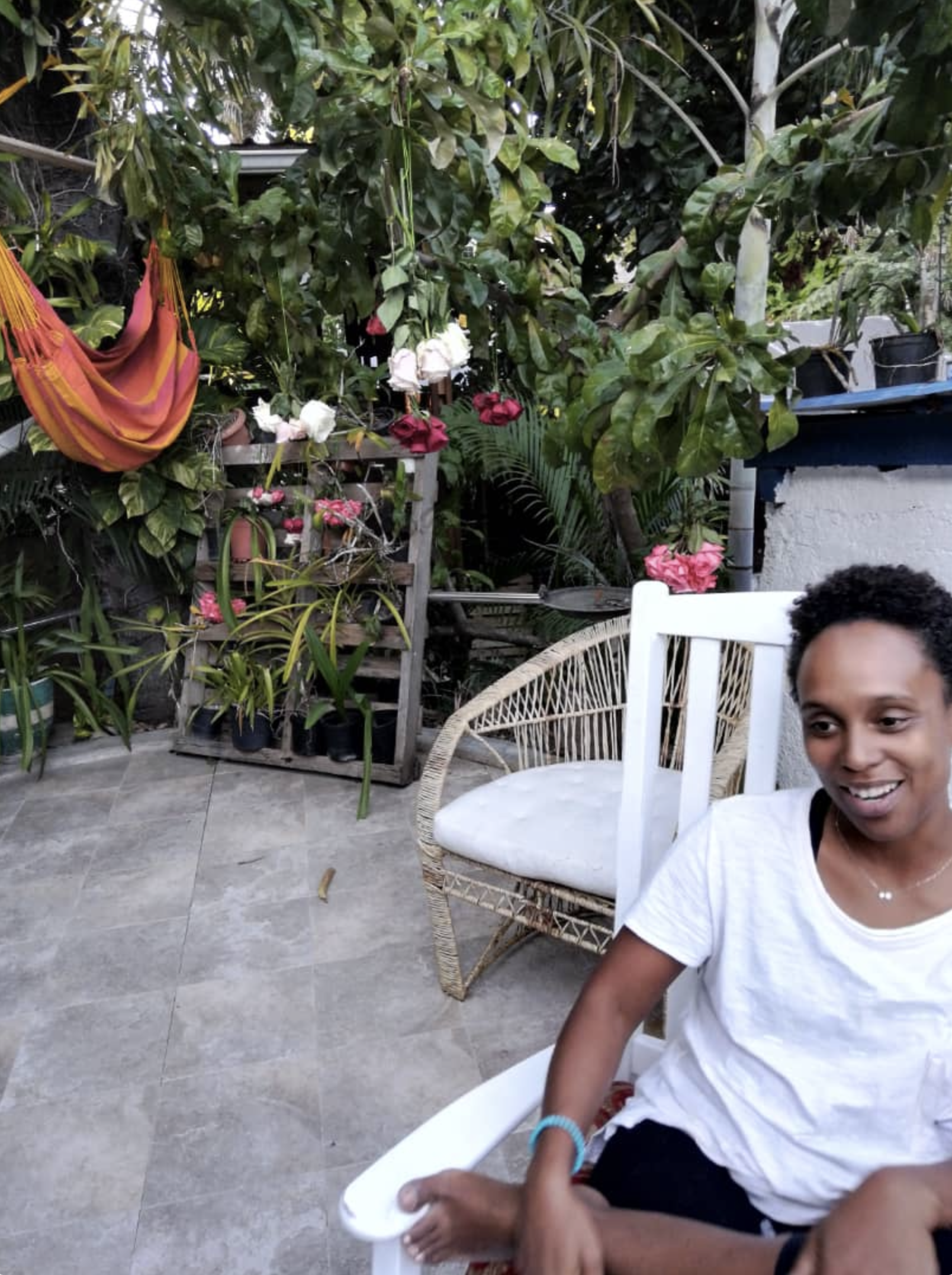
Mon retour à Haïti dans le cadre de mon processus de décolonisation, et de mon choix de mettre physiquement, et sans compromis, mes sens et les sens de ma famille en phase avec la magie et la culture noire. (Crédit photo : Naïké Ledan)
Naike J’aime vraiment beaucoup mon travail. J’adore travailler. Au début, quand je suis arrivée, je travaillais avec cette horrible ONG mais je faisais un travail génial. J’étais toujours à la campagne, discutant et apprenant des gens, des femmes. Et ç’a m’a comblée pendant si longtemps, parce que je suis vraiment très amoureuse de ma culture, des personnes noires, des femmes noires – des vieilles femmes noires, des bébés noir·e·s. Ça me nourrit vraiment spirituellement. Quand on était au Canada, mes enfants étaient dans ces écoles où il n’y avait que des blancs et des blanches et iels étaient instrumentalisé·e·s. Iels ne parlaient ni créole ni français. Et maintenant, iels courent librement dans la cour et commencent à se battre en créole. J’ai aussi trouvé des poches de survie auprès des gens que j’ai rencontrés. J’ai créé des liens avec les queer et d’autres qui étaient des bizarres comme moi, et ç’a vraiment été magique. Mais aujourd’hui, j’ai davantage mal parce que je ne me sens plus en sécurité en Haïti. Il y a environ 40 enlèvements par semaine à Port-au-Prince – et c’est ainsi depuis 2018. J’ai commencé à devenir anxieuse et à avoir des attaques de panique. Donc, l’heure est venue pour moi de partir, et je me demande régulièrement « C’est où la maison? ». J’ai passé 19 ans à Montréal mais je ne m’y suis jamais sentie chez moi. Quand je suis partie, cela ne m’a jamais manqué et je ne veux donc pas y retourner. Je pleure beaucoup ces derniers temps parce que j’ai l’impression d’entamer un deuxième exil.
Chinelo Quelle est ta relation au plaisir, aux loisirs et au repos?
Naike Ma relation avec le plaisir, les loisirs et le repos sont une seule et même chose pour moi. C’est le moment vécu où je me laisse aller à profiter de la chaleur du soleil sur mon visage, par exemple. C’est un plaisir, un loisir et un repos en même temps.
Le plaisir : c’est l’espace où je me réfugie, qui se résume généralement à un havre de célébration de moi-même. Je me réserve le pouvoir et le droit d’être bruyante ou calme, alors que je profite du plaisir que j’expérimente. Tout le plaisir auquel je m’adonne vicieusement et abondamment, notamment mais non exclusivement, le plaisir de la solitude et du silence.
Les loisirs : faire du vélo, assister à des festivals de musique, manger, déguster du vin et danser des danses traditionnelles du vaudou haïtien font partie de tout ce à quoi je m’adonne en ce moment.
Le repos : c’est ce pourquoi je vis. En tant qu’hyper performante et que personne qui est littéralement en amour avec son travail, il est paradoxal de voir à quel point je suis paresseuse. Personne ne sait ça parce que tout ce que le monde voit en moi, c’est la bête de travail satisfaite. Personne ne sait à quel point je peux, sans compromis et profondément, me plonger dans l’oisiveté.
Continuez à explorer Incarnations transnationales
Cette édition du journal, en partenariat avec Kohl : a Journal for Body and Gender Research (Kohl : une revue pour la recherche sur le corps et le genre) explorera les solutions, propositions et réalités féministes afin de transformer notre monde actuel, nos corps et nos sexualités.
نصدر النسخة هذه من المجلة بالشراكة مع «كحل: مجلة لأبحاث الجسد والجندر»، وسنستكشف عبرها الحلول والاقتراحات وأنواع الواقع النسوية لتغيير عالمنا الحالي وكذلك أجسادنا وجنسانياتنا.
Outre les six traditionnelles tables rondes portant sur chacun des chapitres du Consensus de Monterrey, un dialogue interactif officieux a été instauré entre différentes parties prenantes, parmi lesquelles des groupes de défense des droits des femmes.
Les nations « en développement » ont lancé un appel à prendre en compte les défis mondiaux aussi bien que les possibilités et besoins locaux dans les interactions avec les différents groupes sociaux –notamment les femmes, les jeunes, les personnes handicapées, etc. – sur les thèmes identifiés dans le Consensus de Monterrey.
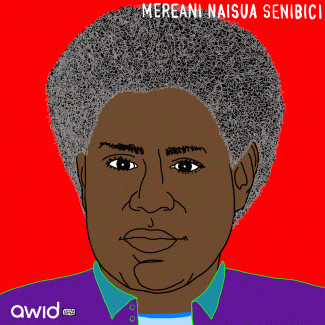
Mereani Naisua Senibici, also called ‘Sua’, was a longstanding member of the Fiji Young Women’s Christian Association (YWCA) movement.
She worked with diverse groups of women in multi-racial, rural and urban settings and was committed to supporting and promoting women’s and young women’s rights.
In the Lautoka YWCA, she worked with women of Indian descent, and was a leading figure in the sports development and participation of women and of trans athletes in Lautoka.
“Sua is greatly loved by Fiji YWCA members for her dedication and long-time support towards all that the organisation endeavoured to do.” - Tupou Vere
Mereani was part of the House of Sarah (HoS), an initiative of the Association of Anglican Women (AAW), launched in 2009 and aimed at raising awareness of the issues around gender-based violence, as well as providing support to women who face violence. She started as a dedicated volunteer and offered support to women throughout the Pacific.
“A people’s person and an all-rounder in women's empowerment and movement work at community level. Rest in Peace, Sua.” - Tupou Vere
Clone of Incarnations Transnationales | Note des éditeurices
Des mots perdus
Chinelo Onwualu
Ghiwa Sayegh
« Lorsque nous avons désespérément besoin de changement, comme c’est le cas dans la maladie et l’insurrection, notre langage se vide de sa complexité et se réduit à l’essentiel... Mais à mesure que la maladie et la révolution persistent, le langage fabriqué en elles et à leur sujet s’approfondit, laisse entrer plus de nuances, absorbé par l’expérience profondément humaine qu’est de rencontrer de ses propres limites sur le site de la fin du monde. » Johanna Hedva
Lorsque nous avons commencé à imaginer un tel numéro avec Nana Darkoa, à l’approche du festival Crear | Résister | Transform : un festival dédié aux mouvements féministes ! de l’AWID, nous sommes parti·e·s d’une question qui relève davantage d’une observation de l’état du monde – un désir de déplacer le terrain : pourquoi nos sexualités et nos plaisirs continuent-ils d’être apprivoisés et criminalisés, alors même qu’on nous répète sans cesse qu’ils n’apportent ni valeur ni progrès? Nous sommes arrivé·e·s à la conclusion que lorsqu’elles sont incarnées, quelque chose dans nos sexualités va à l’encontre d’un ordre mondial qui continue à se manifester par des contrôles aux frontières, des apartheids vaccinaux, un colonialisme d’occupation, un nettoyage ethnique et un capitalisme rampant. Pouvons-nous donc parler du potentiel perturbateur de nos sexualités? Pouvons-nous encore le faire lorsque, pour être financé·e·s, nos mouvements sont cooptés et institutionnalisés?
Lorsque notre travail incarné devient un profit entre les mains de systèmes que nous cherchons à démanteler, il n’est pas étonnant que nos sexualités et nos plaisirs soient une fois de plus relégués à la marge – surtout lorsqu’ils ne sont pas assez rentables. À plusieurs reprises au cours de la production de ce numéro, nous nous sommes demandé ce qui se passerait si nous refusions de nous plier aux services essentiels du capitalisme. Mais pouvons-nous oser poser cette question, lorsque nous sommes épuisé·e·s par le monde? Peut-être que nos sexualités sont si facilement rejetées parce qu’elles ne sont pas considérées comme des formes de soins. Peut-être que ce dont nous avons besoin, c’est de réimaginer le plaisir comme une forme de soin radical – un soin qui est également anticapitaliste et anti-institutionnel.
Alors que nous entrons dans notre deuxième année complète de pandémie mondiale, notre approche des incarnations transnationales a dû se concentrer sur un seul constat politique : prendre soin est une forme d’incarnation. Et parce qu’à l’heure actuelle, une grande partie de notre travail se fait sans tenir compte des frontières entre nous et en nous-mêmes, nous sommes toustes incarné·e·s de manière transnationale – et nous échouons toustes. Nous ne parvenons pas à prendre soin de nous-mêmes et, plus important encore, à prendre soin les un·e·s des autres.
Cet échec n’est pas de notre fait.
Beaucoup de nos parents considéraient le travail comme une transaction, quelque chose à donner en échange d’une compensation et d’une garantie de soins. Et bien que cet échange n’ait pas toujours été respecté, nos parents ne s’attendaient pas à ce que leur travail les comble. Iels avaient leurs loisirs, leurs passe-temps et leurs communautés pour cela. Aujourd’hui, nous, leurs enfants, qui avons été conditionné·e·s à penser que notre travail est intimement lié à notre passion, n’avons pas de telles attentes. Nous considérons le travail et les loisirs comme une seule et même chose. Pour un trop grand nombre d’entre nous, le travail en est venu à incarner tout notre être.
Cependant, le capitalisme hétéropatriarcal ne nous valorise pas, et encore moins notre travail ou nos sexualités. C’est un système qui ne fera qu’exiger toujours plus, jusqu’à votre mort. Et quand vous mourrez, il vous remplacera par quelqu’un·e d’autre. L’attente d’être en ligne 24 heures sur 24 signifie que nous ne pouvons tout simplement pas nous échapper du travail, même lorsque nous le souhaitons. Cette commercialisation du travail, qui le dissocie de la personne, a infiltré tous les aspects de nos vies et se perpétue même dans les milieux les plus féministes, les plus radicaux et les plus révolutionnaires.
Les attentes capitalistes ont toujours été particulièrement pernicieuses pour les corps qui ne correspondent pas à leur idéal. Et celleux qui cherchent à consolider leurs pouvoirs ont utilisé la pandémie comme une occasion de cibler les femmes, les minorités sexuelles et toustes celleux qu’iels considèrent comme des moins que rien.
Ce numéro spécial existe à cause, et certainement en dépit, de cela.
Presque tous les contributeur·ice·s et membres du personnel se sont surpassé·e·s. Chaque article est le fruit d’une passion, mais aussi d’un incroyable épuisement. De manière très concrète, ce numéro est une incarnation du travail transnational – et dans le monde numérique dans lequel nous vivons, tout travail est devenu un travail transnational. Alors que nous devons faire face à de nouvelles frontières qui ne brisent pas un ordre ancien mais le réifient, nous avons fait l’expérience directe, aux côtés de nos contributeurs, de la façon dont le capitalisme épuise nos limites – comment il devient difficile de construire des arguments cohérents, en particulier lorsque ceux-ci sont soumis à une date limite. Nous avons collectivement perdu les mots – parce que nous sommes perdu·e·s pour les mondes.
Se sentir perdu et seul dans le monde du capitalisme hétéropatriarcal est exactement la raison pour laquelle nous devons réévaluer et repenser nos systèmes de soins. À bien des égards, nous avons transformé ce numéro en une mission visant à trouver du plaisir dans les soins. Parce qu’il est devenu plus difficile de construire des arguments cohérents, les moyens visuels et créatifs sont passés au premier plan. Nombreux·ses sont celleux qui, ayant l’habitude d’écrire, se sont tourné·e·s vers ces médias pour produire des connaissances et couper court au brouillard mental qui nous a toustes enveloppé·e·s. Nous avons fait intervenir d’autres voix, en plus de celles que vous avez entendues au festival, afin d’ouvrir de nouvelles conversations et d’élargir nos horizons.
Alors que nous sommes privé·e·s de nos mots, il est de notre devoir politique de continuer à trouver des moyens de nous maintenir et de prendre soin de nous-mêmes et des autres. Une grande partie de nos réalités actuelles tente de nous effacer et de nous déplacer, tout en continuant à exploiter notre travail. Notre incarnation, par conséquent, devient une forme de résistance; c’est le début de nous-mêmes trouvant notre voie en dehors et en dedans de nous.
Sin trabajadorxs domésticxs no hay economía de los cuidados Un Manifiesto
Snippet Forum Quoate Sara Abu (ES)
El Foro es un ejemplo vivo de lo que el más grande NOSOTRXS podemos hacer. Vamos al Foro, somos semillas, luego nos sembramos. Esto lo tenemos que celebrar. - Sara Abu Ghazal, Líbano
Film club - Films from Nuestramérica
Notre programme final du Feminist Film Club est maintenant disponible: « Films from Nuestramérica » est une série de films sur les réalités féministes d'Amérique latine et d'Amérique centrale organisée par Alejandra Laprea (Venezuela).
A report by the MDG’s Gap Task Force launched during the session pointed to the failure to meet MDG 8 (Global Partnership for Development) as a major factor in the challenges to meeting the MDGs. The report showed that more focus should be given to developing stronger global partnerships that would ensure binding commitments for the new development framework post 2015.
"La vida se trata ... de vivir en alegría – despertarse con objetivos, sentir tu propia energía creativa, responder a tu llamada." - Sylvia Robinson
Sylvia Robinson, una incansable organizadora y líder comunitaria, fue la fundadora y directora ejecutiva de Emergence Community Arts Collective [Colectivo de Artes Comunitarias de Emergencia] (ECAC, por sus siglas en inglés ), en Washington DC.
Este centro y espacio de performance combina la educación, el compromiso cívico, las artes, los servicios sociales y espirituales y las prácticas ambientales sostenibles. Sylvia lo concibió como un hogar donde " hubiera equilibrio y sinergia con las actividades que la gente necesitaba para sostener la vida".
También fue una de lxs co-fundadorxs del Georgia Avenue Community Development Taskforce [Grupo de Trabajo de Desarrollo Comunitario de la Avenida Georgia], un grupo vecinal que trabaja por la justicia social y la organización de la comunidad en el noroeste de DC, para asegurarse de que esta tenga una voz en la reurbanización y gentrificación del área.
"Estamos pidiendo viviendas asequibles. Estamos pidiendo que los pequeños negocios que han estado aquí desde siempre no sean aniquilados por nuevos comercios. Estamos pidiendo espacios verdes y espacios para que la gente se pueda reunir y socializar. Estamos pidiendo mejoras en el paisaje urbano – mejores calles y mejor iluminación en los tramos de carretera." - Sylvia Robinson sobre el Grupo de Trabajo
Antes de convertirse en organizadora y después de recibir un título en informática, Sylvia trabajó en sistemas de control de tráfico aéreo por más de una década. Después se dedicó al asesoramiento en materia de drogas y alcohol, a través de lo cual se involucró cada vez más en el trabajo comunitario.
"Involucrarme con la comunidad era mi vocación". - Sylvia Robinson
Sylvia nació en Washington D.C. el 14 de agosto de 1961, y falleció el 18 de septiembre de 2017, después de una batalla contra el cáncer.
"El espíritu y el legado de Sylvia seguirán inspirando a esta comunidad durante muchos años." - ECAC
Un futur alternatif est possible, il nous suffit de continuer à y croire
Par Michel’le Donnelly
Le festival féministe Crear | Résister | Transform en septembre a été une véritable bouffée d'air frais en ces temps incertains, turbulents et douloureux.
L'espace créé par ce festival était absolument nécessaire. Nécessaire pour les âmes de ceux et celles qui cherchent du réconfort en ces temps les plus sombres. Nécessaire pour ceux et celles qui rêvent d’une communauté dans ce qui ressemble à un monde de plus en plus isolé et, par-dessus tout, nécessaire pour ceux et celles qui luttent contre les systèmes qui ont mis nombre d'entre nous à genoux, surtout au cours de ces deux dernières années.
«La crise n'est pas une nouveauté pour les mouvements féministes et sociaux, nous avons une longue histoire de survie face à l'oppression et cela fait longtemps que nous construisons nos communautés et nos propres réalités.»
Plaider pour des visions et des réalités alternatives à celle dans laquelle nous vivons actuellement constitue un élément fondamental du programme féministe. De nombreuses personnes extraordinaires œuvrent à explorer d'autres façons d'exister dans ce monde. Ces alternatives sont axées sur les personnes. Elles sont équitables et justes. Ces mondes sont remplis d'amour, de tendresse et d'attention. Les visions esquissées sont presque trop belles à imaginer, mais nous devons nous forcer à le faire car c'est la seule façon de continuer.
Au cours des dix derniers mois, j'ai eu la chance incroyable de travailler avec un collectif féministe qui ne se contente pas d'imaginer une réalité alternative, mais qui la vit activement. Nous nous inspirons du travail de nombreux autres mouvements féministes à travers le monde qui n'ont pas laissé le patriarcat capitaliste et suprémaciste blanc mettre un frein à leurs visions. Ce collectif m'a permis de tenir le coup alors que je ne demandais qu’à m'effondrer. À l'instar de l'histoire partagée par Maria Bonita le quatrième jour du festival, la libération à laquelle les mouvements féministes m’ont donné accès est bien trop importante pour que je sois la seule à en bénéficier. C'est quelque chose qui se partage, que nous devons crier sur les toits pour permettre aux autres de nous rejoindre.
Le quatrième jour du festival a été marqué par une conversation captivante entre Felogene Anumo, Dr. Dilar Dirik, Nana Akosua Hanson et Vandana Shiva, qui a encouragé les participant·e·s au festival à croire qu’un avenir alternatif était non seulement possible, mais qu'il était, de fait, urgent. Les féministes parlent de mondes alternatifs depuis tant d'années; entendre les panélistes en parler s’est avéré instructif, mais aussi réconfortant. Réconfortant dans le sens où je me suis sentie en sécurité à l’idée de savoir qu’il existe vraiment des réseaux féministes mondiaux solides travaillant au-delà des frontières internationales et nationales, cherchant à décoloniser les cadres établis de nos réalités actuelles.
À quoi ressemble une réalité alternative?
Au cours de la session, Dr Dirik a souligné le fait que la croyance, le sacrifice et la patience sont d’une nécessité absolue si l’on veut abolir les systèmes oppressifs dans lesquels nous vivons actuellement. Collaboration, partenariat, créativité, solidarité et autonomie. Ce sont les piliers essentiels de la construction d'une société féministe mondiale et ils devraient être adoptés par tous les mouvements féministes du monde.
Des exemples pratiques de ces réalités peuvent être trouvés à travers le monde, notamment le Mouvement des femmes Soulaliyate pour les droits fonciers. Ce mouvement, qui fait référence aux femmes tribales du Maroc vivant sur des terres collectives, représente la première mobilisation communautaire à l’échelle nationale pour les droits fonciers au Maroc. Bien qu’initialement assez restreint, le mouvement s'est transformé en un programme national qui a remis en question la nature genrée des lois régissant les terres dans le pays. En 2019, le groupe a contribué à la refonte du cadre législatif national sur la gestion des biens communautaires par l'adoption de trois séries de lois garantissant l'égalité entre les femmes et les hommes.
Il est incroyablement inspirant de découvrir ces mouvements féministes qui œuvrent à faire de ces futurs alternatifs une réalité et c’est exactement ce dont nous avons besoin, en particulier lorsque nous avons à affronter le flot incessant de mauvaises nouvelles qui semble couler sans interruption.
«Le patriarcat capitaliste est comme un cancer. Il ne sait pas quand s’arrêter de croître.» - Dr Vandana Shiva
L'AWID a toujours été un mouvement inspiré par les réalités féministes dans lesquelles il nous est possible de vivre. Grâce à ses festivals, ainsi qu'au magazine et à la boîte à outils des Réalités féministes, l’AWID nous a montré une autre façon de faire les choses. Nous pouvons imaginer un monde où les soins sont prioritaires, où les économies féministes et la justice de genre sont la norme. C'est en créant des futurs alternatifs que nous ripostons, que nous résistons à la violence qui est perpétrée contre nos corps chaque jour.
Le festival Crear | Résister | Transform m’a permis de me sentir vraiment connectée aux membres d’une communauté mondiale, que je ne rencontrerai pour la plupart jamais. Le fait de savoir que nous travaillons tou·t·es à la création d'un autre monde a allumé un feu dans mon âme et j'ai hâte de voir ce que le prochain festival nous réservera.
Si vous l'avez manquée, assurez-vous de regarder la session «Elle est en route : alternatives, féminismes et un autre monde» de la quatrième journée du festival ci-dessous. Et souvenez-vous de ce que la Dr Shiva a dit avec tant d'éloquence : «L'énergie des femmes perpétuera la vie sur terre. Nous ne serons pas vaincues.»
GenderJobs.org:This is a platform with a comprehensive list of job opportunities to work on gender equality and LGBTQI+ rights, curated by gender professionals and intersectional feminists who intimately know the sector and are extremely passionate about supporting other gender professionals and anyone who is aspiring to become one! (source: https://genderjobs.org/about)