None On Record

Analyses Spéciales

L´AWID est une organisation féministe mondiale qui consacre ses efforts à la justice de genre, au développement durable et aux droits humains des femmes

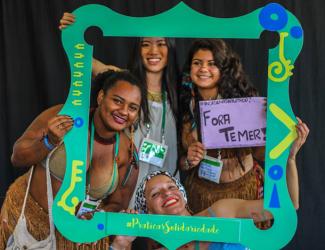
Activisme des jeunes féministes

S'organiser de manière créative face à des menaces croissantes

Les jeunes activistes féministes jouent un rôle crucial au sein des organisations et des mouvements pour les droits des femmes à travers le monde. Ce sont elles qui soulèvent les nouveaux problèmes auxquels les féministes sont confrontées aujourd'hui. Leur force, leur créativité et leur adaptabilité sont vitales pour assurer la viabilité des organisations féministes.

Pourtant,  elles sont confrontées à toute une série d’obstacles particuliers, notamment l'accès limité au financement et au soutien, le manque de possibilités de renforcement des capacités et une augmentation considérable des agressions sur les jeunes défenseuses des droits humains. Ces obstacles entraînent un manque de visibilité qui rend leur intégration et leur participation effective au sein des mouvements pour les droits des femmes encore plus difficiles.

Une approche multigénérationnelle

Le Programme d’activisme des jeunes féministes de l'AWID a été mis en place pour veiller à ce que les voix des jeunes femmes soient entendues et représentées dans le discours féministe. Nous voulons faire en sorte que les jeunes féministes aient un meilleur accès à du financement, à des opportunités de renforcer leurs capacités et aux processus internationaux.

En plus de soutenir directement les jeunes féministes, nous travaillons également avec des activistes des droits des femmes de tout âge pour élaborer des modèles et des stratégies d’organisation multigénérationnelles plus efficaces.

Nos actions

Nous souhaitons que les jeunes féministes puissent jouer un rôle actif dans les prises de décisions qui concernent leurs droits. Nos actions incluent :

  • Favoriser la mise en commun et le partage d'informations par la Plateforme de jeunes féministes. Étant donné l'importance des médias en ligne pour le travail des jeunes féministes, notre équipe a lancé la Plateforme de jeunes féministes en mai 2010. Elle a pour objectifs d’échanger des renseignements, de renforcer les capacités des membres par le truchement de webinaires et de  discussions en ligne, et d'encourager la consolidation d’une communauté de jeunes féministes.

  • Soutenir la recherche et le renforcement des connaissances sur l'activisme des jeunes féministes, pour accroître la visibilité et l'influence de leur activisme au sein et entre les mouvements pour les droits des femmes et auprès d'autres acteurs-trices clés, tels les donateurs.

  • Faire la promotion de la collaboration multigénérationnelle, en explorant de meilleures façons de travailler ensemble.

  • Inciter les jeunes féministes à s’engager dans les processus internationaux relatifs au programme de développement, notamment ceux des Nations Unies.

  • S’assurer leur collaboration dans tous les domaines prioritaires de l'AWID, y compris le Forum, pour faire en sorte que leurs contributions, leurs perspectives, leurs besoins et leur activisme se traduisent dans les débats, les politiques et les programmes qui les concernent.

Contenu lié

No me siento cómodx al compartir el nombre de mi agrupación o nuestra información de contacto con AWID, ¿aun así debería responder la encuesta?

Absolutamente; esas preguntas son opcionales y valoramos tu derecho a la anonimidad. Te pedimos que respondas la encuesta independientemente de tu decisión de compartir el nombre de tu agrupación, organización o movimiento y la información de contacto con AWID.

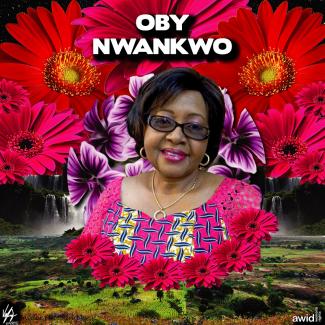
Obiageli “Oby” Nwankwo

With a legal career spanning more than 30 years, Oby was known across Africa and around the world as a champion for gender justice and human rights.

She founded and served as Executive Director of the Civil Resource Development and Documentation Centre (CIRDDOC), a Nigerian NGO which sponsors trainings and network-building activities for members of civil society, parliamentarians and other key stakeholders to promote human rights, good governance and access to justice and rule of law.

Oby is remembered fondly by activists in Nigeria as an “extraordinary activist who displayed energy and passion towards the fight for gender equality and gender justice in Nigeria and across Africa.” 


Obiageli “Oby” Nwankwo, Nigeria

Snippet FEA Brisa Escobar Quote (FR)

« Mes rêves et mes objectifs ont toujours été les mêmes que ceux de Lohana Berkins : que la coopérative continue à exister et non à fermer. Continuez à offrir cet endroit à nos collègues travesti, à leur donner du travail et un lieu de soutien»

Brisa Escobar,
présidente de la Coopérative

AWID Members Engaging at CSW61

Member states and women's rights advocates and organisations are gathering at the United Nations Headquarters in New York from 13 - 24 March for the 61st Commission on the Status of Women to address ‘women’s economic empowerment’ in the context of Sustainable Development Goal 5.

Whilst AWID is looking forward to physically meeting those of you who will be in New York, we want to engage with all those who cannot attend CSW, and as much as possible, amplify your voices in relevant spaces.

Continue reading to find out how to engage with AWID around CSW, whether you are attending physically or not.


Participate in an artistic takeover!

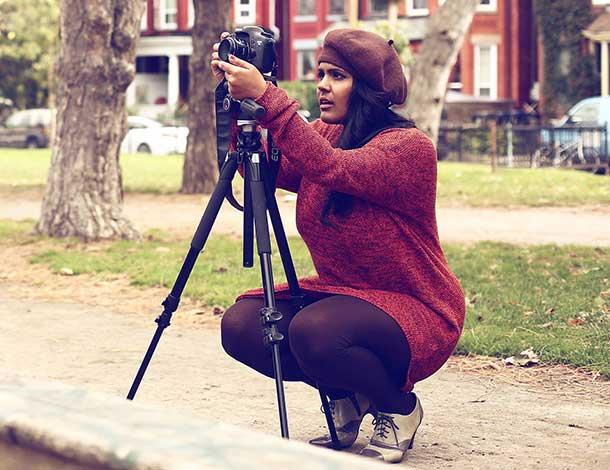
We are thrilled that AWID member Nayani Thiyagarajah is attending CSW this year and will take over the AWID Instagram. She will be available onsite to connect with other members for a possible feature on our Instagram. She will also explore possibilities of including some AWID members in a short film on the theme, ‘The personal is political’, a story of Nayani’s participation in this year’s CSW.

Nayani Thiyagarajah

Who is Nayani?

Nayani Thiyagarajah is a director, producer, and writer, dedicated to stories for the screen. A daughter of the Tamil diaspora, she calls Toronto home. For over 10 years, Nayani has worked in the arts and cultural industries. Her first independent feature documentary Shadeism: Digging Deeper (2015) had its World Premiere at the 2015 Zanzibar International Film Festival, where it won a Special Jury Prize. Nayani recently launched [RE]FRAME, with her producing partner Camaro West, a production company based out of Atlanta and Toronto, focused on re-framing the narratives around Black, Indigenous, and other people of colour through storytelling on screen.

On a more serious note, it should be noted that Nayani has a strange laugh, she's quite awkward, and her head is always in the clouds. She feels blessed beyond belief to create stories for the screen and play make believe for a living. Above all else, she believes in love.

(Biography submitted by Nayani)

Interested in meeting Nayani and being considered for inclusion in the film?

  • Send an email to membership@awid.org with the subject line “CSW Artistic Takeover”

  • By 13 March 2017

  • Please include your full name and country information.


Can't attend? Voice it!

If you are not able to attend CSW61 because of a travel ban, either due to the one imposed by the Trump administration or one you are facing from your own government, please share your story with us.

Send us messages you want heard in the United Nations spaces concerning funding, the impact of the reinstatement of the Global Gag Rule, and the need to push back against all types of religious fundamentalisms. You can send these in the following formats:

  • Video: no longer than two minutes and sent through a file sharing folder (for example dropbox, google drive) 

  • Audio: no longer than two minutes and sent through a file sharing folder (for example dropbox, google drive)

  • Image: you can share a photo or a poster of your message 

  • Text: no longer than 200 words and sent in the body of an email or in a word document

Share your message with us


Meet other members @CSW61

AWID members tell us that connecting with other members at CSW is valuable. In such a huge advocacy space, it is useful to connect with others including activists working on similar issues, or originating from the same country or region. Recognising the importance of connecting for movement building, we invite you to:

Interested in connecting with other members @CSW61?

  • Email membership@awid.org with the subject line “CSW AWID Members

  • NOTE: Please let us know your full name and country, and if we can share your email address with other members interested in meeting at CSW. 

Meet current AWID members


Take a picture!

If you are attending the CSW, we’d love to see what’s going on through your eyes!

Show us by capturing a moment you find speaks to the energy in the CSW space, be it on or off site. We hope to publish some of your ‘images’ on our social media channels and share on awid.org

You can send us: 

  • colour and/ or black and white photographs with a title (if you wish) and 

  • a caption (no longer than 100 words) about the story your image tells.

​Please also include:

  • your full name and country of origin and

  • let us know if we can publish the information you shared (in part or in full).

Send your images:

  • Email membership@awid.org with the subject line “CSW: Take a Picture!

  • During the whole CSW or shortly after until Tuesday 28 March 2017. 

¿En qué será diferente este Foro?

Siempre hemos trabajado para garantizar que nuestros Foros sean desarrollados conjuntamente con nuestrxs afiliadxs, los movimientos, y nuestros colectivos prioritarios.

Para el Foro 2020 queremos profundizar y fortalecer este espíritu y esta práctica de creación conjunta y colaboración. También reconocemos la necesidad de mejorar el equilibrio entre la inclusión de muchas voces y experiencias y el espacio para que lxs participantes y el equipo respiren, se tomen una pausa, y disfruten de un poco de tiempo de inactividad.

Este Foro será diferente en cuanto a que:

  • Tendremos muchas menos actividades organizadas, porque queremos que la gente tenga tiempo para relacionarse y hablar entre sí, experimentar, procesar, etc. Es fundamental que sepas que puedes venir al Foro, participar y ser muy activx, y no facilitar ninguna actividad organizada (o «sesión»).
  • Tendremos Espacios Abiertos (al menos una tarde entera sin ninguna actividad organizada), y también espacios físicos disponibles durante todo el Foro para que la gente organice sus propias reuniones.
  • Tendremos un Comité de Contenido y Metodología compuesto por feministas de distintas regiones con experiencia en metodologías participativas, para apoyar al equipo de AWID y a quienes lideren actividades en el Foro en el uso de formatos creativos e interesantes para las actividades del Foro.

Quand les résultats seront-ils disponibles?

L’analyse des réponses nous permettra de tirer des conclusions et de définir des tendances. Les résultats seront présentés à l’occasion du 15e Forum international de l’AWID à Bangkok, et en ligne, en décembre 2024. Inscrivez-vous ici pour participer au Forum!

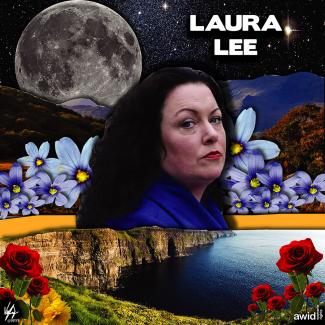
Laura Lee

Laura fue una abogada y líder activista que luchó valientemente por la descriminalización del trabajo sexual en Irlanda.

Es recordada como «una combatiente por la libertad de lxs trabajadorxs sexuales, una feminista, una madre para su hija y una amiga necesaria para mucha gente».

Laura promovió el reconocimiento de las personas de la industria del sexo como trabajadorxs merecedorxs de derechos. Presentó demandas por la descriminalización, e inició una revisión judicial en la Corte Suprema de Belfast respecto de las provisiones que criminalizan la compra de servicios sexuales. Declaró que su intención era llevar el caso a la Corte Europea de Derechos Humanos.


Laura Lee, Ireland

Snippet FEA Who takes care of them S4 (EN)

...WHO TAKES CARE OF THEM?

Background

Why this resource?

While active participants on the front lines of protests and uprisings in the Middle East and North Africa (MENA), women became invisible, absent from processes of formation of the new states, and excluded from decision-making roles, responsibilities, and positions in the aftermath of the uprisings. Except in rare cases, men dominated leadership positions in transitional structures, including the constitutional reform and electoral committees[i]. Subsequent elections brought very few women to parliamentary and ministerial positions.

Additionally, a strong and immediate backlash against women and women’s rights has clearly emerged in the aftermath. The rise of new religious fundamentalist groups with renewed patriarchal agendas aiming to obliterate previous gains of the women’s movements even in countries with longer histories of women’s rights, such as Tunisia, has been very alarming.

The varying contexts of governance and transition processes across the MENA countries presents an important opportunity for women human rights defenders to shape the future of these democracies. However, the lack of prioritization of women’s rights issues in the emerging transitions and the aforementioned backlash have posed a variety of complex challenges for the women’s movements. Faced with these enormous challenges and possibilities, women’s rights activists have been struggling to forge ahead a democratic future inclusive and only possible with women’s rights and equality. The particular historical and contextual legacies that impact women’s movements in each country continue to bear on the current capacities, strategies, and overall preparedness of the women’s movements to take on such a challenge. Burdened with daily human rights violations in one context, with lack of resources and tools in another, with organizational tensions in a third, in addition to the constant attacks on them as activists, women human rights defenders have voiced their desire to be more equipped with knowledge and tools to be effective and proactive in engaging with these fast-changing environments. Conceptual clarity and greater understanding of notions and practices of democratization, transitional justice tools and mechanisms, political governance and participation processes, international and local mechanisms, movement building strategies, constitutional reform possibilities, and secularization of public space and government are important steps to defining future strategic action.

It is clear that feminists and women’s rights activists cannot wait for women’s rights to be addressed after transitions – issues must be addressed as the new power configurations are forming. Experiences of earlier moments of transition, namely from colonial rule, have clearly demonstrated that women’s rights have to be inherently part of the transition movement towards a more just and equal society.

What is included?

This publication represents a research mapping of key resources, publications and materials on transitions to democracy and women’s rights in different countries of the world that have undergone such processes, such as: Indonesia, Chile, South Africa, Nepal, Mexico, Argentina, Poland, Ukraine, as well as within the Middle East and North Africa (MENA). It provides bibliographic information and short summaries of resources which succinctly identify the contextual changes and challenges facing women in those particular transitional moments, as well as clearly delineates the ways in which women’s rights activists sought to confront those challenges and what lessons were learned.

A key criterion in the selection process was the primacy of a women’s rights/feminist perspective; the few exceptions to this rule offer a unique and, we hope, useful, perspective on the issues that women’s rights organizations and activists face in the region.  The texts have been selected to provide a wide range of information, relevant to women human rights defenders working from the grassroots to the international level, across issues (including different case studies and examples), from different perspectives (international human rights bodies, academic institutions, NGO contributions, activists’ experiences, etc.), and at a wide range of levels of complexity, in order to respond to the needs of as many readers as possible.

The mapping clusters resources under six major categories:

  • Transitions to Democracy
  • Political Participation
  • Movement Building
  • Transitional Justice
  • Constitutional/Legal Reform
  • Responses to Fundamentalisms


[i]This and other context points are drawn from the report from Pre AWID Forum meeting on Women’s Rights in Transitions to Democracy: Achieving Rights, Resisting Backlash, collaboratively organized by AWID, the Equality Without Reservation Coalition, Global Fund for Women and Women’s Learning Partnership

¿Cómo puedo financiar mi participación en el Foro de AWID? Muchxs activistas no podrán costearse el Foro: ¿AWID está haciendo algo para brindar asistencia?

Por favor consulta la página «Financiamiento» para obtener algunas ideas sobre cómo puedes financiar tu participación en el próximo Foro. Esto incluye el limitado apoyo que AWID podrá brindar.

Snippet - WITM why - AR

لماذا عليّ تعبئة الاستطلاع؟

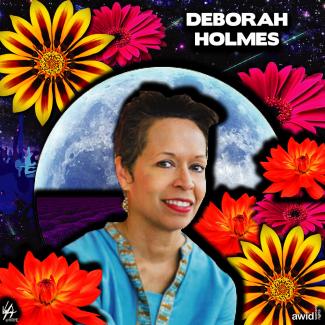
Deborah Holmes

Jusqu’à son décès, à la suite d’une lutte brève mais agressive contre le cancer, Deborah était la directrice de la communication et de la mobilisation au Women’s funding network (le réseau de financement des femmes), WFN.

Entre 2008 et 2017, elle avait également travaillé auprès du Fonds mondial pour les femmes. Deborah était extrêmement appréciée et respectée par le conseil d'administration, l’équipe et les partenaires du Fonds mondial pour les femmes.

Kavita Ramdas, ex-PDG a déclaré, à juste titre, que Deborah était « la combinaison unique d’un être mêlant chaleur, générosité, intelligence et style, avec un engagement passionné pour faire fusionner la beauté et la justice. Elle avait compris le pouvoir des histoires. Le pouvoir de la voix des femmes. Le pouvoir de l'expérience vécue. Le pouvoir de renaître de ses cendres et de dire aux autres que c'était possible. Et nous continuons à nous relever. »

Musimbi Kanyoro, l'actuelle PDG du Fonds mondial pour les femmes, a ajouté: « Nous avons perdu une sœur et sa vie illumine des valeurs qui nous unissent et nous inspirent tou-te-s. Alors que nous sommes tou-te-s réuni-e-s pour pleurer le décès de Deborah, souvenons-nous et célébrons sa vie remarquable, audacieuse et passionnée. »


Deborah Holmes, USA

Snippet FEA collaborator and allies Photo 2 (ES)

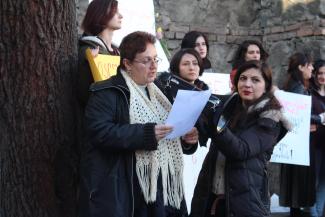
La foto muestra a ocho mujeres de pie juntas durante una protesta. Muchos sostienen pancartas mientras Sopo acerca el megáfono a la boca de una trabajadora de pelo corto y rojo, con bufanda blanca y abrigo negro, que lee un manifiesto.

Twitter Test

¿Habrá esta vez reuniones pre-Foro?

Nuestrxs asociadxs globales y regionales nos han contactado con algunas ideas para reuniones pre-Foro, y pronto compartiremos más información sobre estas ideas.

Si planeas organizar una reunión antes del Foro, ¡por favor avísanos!

Contactanos


Muchas cosas hermosas surgieron del Foro de Feminismos Negros (BFF) de 2016, organizado por un Grupo Asesor y financiado por AWID. Parte del activismo independiente que surgió del BFF incluye al activismo feminista negro de Brasil. Si bien este año no tendremos otro BFF, seguimos comprometidxs a compartir algunas de las enseñanzas fundamentales con cualquier persona interesada en continuar el trabajo sobre el activismo feminista negro.

Snippet - WITM To Strengthen - AR

لتقوية صوتنا وقوتنا الجماعية لنصل لتمويل أكبر وأفضل للتنظيمات النسائية والنسوية وحركات الميم - عين وحلفائها/يفاتها عالمياً

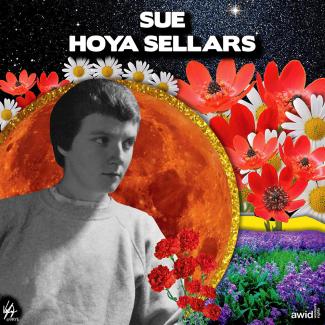
Sue Hoya Sellars

Sue was an artist, activist and teacher born in 1936 in Maryland, USA.

Sue created art for women, about women. As a lesbian feminist, and for a time, a separatist, she was committed to creating women-only spaces. In 1976 she purchased land that is still held by women who visit to make art. Sue took a fierce stand on the protection of women and girls.

With her groundbreaking futuristic, classical and anthropological approach, she filled any room she entered with intellect, authentic eccentricity, unforgiving wit, and humor.  Her ideas about consciousness and creativity continue to inspire many people.


Sue Hoya Sellars, USA