None On Record

Analyses Spéciales

L´AWID est une organisation féministe mondiale qui consacre ses efforts à la justice de genre, au développement durable et aux droits humains des femmes

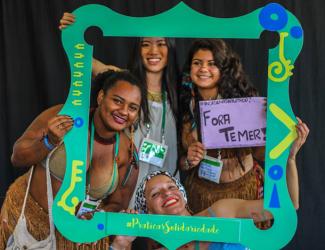
Activisme des jeunes féministes

S'organiser de manière créative face à des menaces croissantes

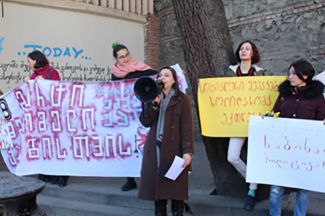
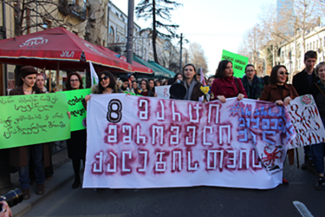
Les jeunes activistes féministes jouent un rôle crucial au sein des organisations et des mouvements pour les droits des femmes à travers le monde. Ce sont elles qui soulèvent les nouveaux problèmes auxquels les féministes sont confrontées aujourd'hui. Leur force, leur créativité et leur adaptabilité sont vitales pour assurer la viabilité des organisations féministes.

Pourtant,  elles sont confrontées à toute une série d’obstacles particuliers, notamment l'accès limité au financement et au soutien, le manque de possibilités de renforcement des capacités et une augmentation considérable des agressions sur les jeunes défenseuses des droits humains. Ces obstacles entraînent un manque de visibilité qui rend leur intégration et leur participation effective au sein des mouvements pour les droits des femmes encore plus difficiles.

Une approche multigénérationnelle

Le Programme d’activisme des jeunes féministes de l'AWID a été mis en place pour veiller à ce que les voix des jeunes femmes soient entendues et représentées dans le discours féministe. Nous voulons faire en sorte que les jeunes féministes aient un meilleur accès à du financement, à des opportunités de renforcer leurs capacités et aux processus internationaux.

En plus de soutenir directement les jeunes féministes, nous travaillons également avec des activistes des droits des femmes de tout âge pour élaborer des modèles et des stratégies d’organisation multigénérationnelles plus efficaces.

Nos actions

Nous souhaitons que les jeunes féministes puissent jouer un rôle actif dans les prises de décisions qui concernent leurs droits. Nos actions incluent :

  • Favoriser la mise en commun et le partage d'informations par la Plateforme de jeunes féministes. Étant donné l'importance des médias en ligne pour le travail des jeunes féministes, notre équipe a lancé la Plateforme de jeunes féministes en mai 2010. Elle a pour objectifs d’échanger des renseignements, de renforcer les capacités des membres par le truchement de webinaires et de  discussions en ligne, et d'encourager la consolidation d’une communauté de jeunes féministes.

  • Soutenir la recherche et le renforcement des connaissances sur l'activisme des jeunes féministes, pour accroître la visibilité et l'influence de leur activisme au sein et entre les mouvements pour les droits des femmes et auprès d'autres acteurs-trices clés, tels les donateurs.

  • Faire la promotion de la collaboration multigénérationnelle, en explorant de meilleures façons de travailler ensemble.

  • Inciter les jeunes féministes à s’engager dans les processus internationaux relatifs au programme de développement, notamment ceux des Nations Unies.

  • S’assurer leur collaboration dans tous les domaines prioritaires de l'AWID, y compris le Forum, pour faire en sorte que leurs contributions, leurs perspectives, leurs besoins et leur activisme se traduisent dans les débats, les politiques et les programmes qui les concernent.

Contenu lié

Snippet FEA Life expectancy of a trans and travesti (EN)

This illustration depicts a faceless person with long dark hair and a burgundy shirt, with the number 37 written across the image (37 being the life expectancy of a trans and travesti person in Argentina)

Life expectancy of a trans and travesti person in Argentina is 37 years old - the average age for the general population is 77.

I don't feel comfortable sharing the name of my group and our contact information with AWID, should I still fill out the survey?

Absolutely. These questions are optional, we value your right to remain anonymous. Please fill the survey regardless of your decision to share the name and contact information of your group, organization and/or movement.

Por qué y cómo renovar tu membresía a AWID

Conoce a otras/os afiliadas/os

Nuestras/os afiliadas/os tanto individuales como institucionales provienen de todas las regiones del mundo y de 163 países; las/os más recientes se nos han unido desde Zimbabue, Turquía y los Estados Unidos. ¡Todas/os nuestras/os afiliadas/os aportan una rica y diversa gama de perspectivas, experiencias, conocimiento, energía e inspiración!

¿Sabías que cada semana publicamos perfiles de afiliadas/os?

Uno de los beneficios de ser afiliada/o de AWID es que tu historia sea destacada en nuestro boletín informativo, el cual llega a 35,000 suscriptoras/es, y a través de nuestros canales en las redes sociales que tienen más de 60,000 seguidores.

Publicaciones recientes:

Conoce a Angila Ashitua, una joven afiliada a AWID que vive en el condado de Vihiga, Kenia Occidental.

Conoce a otras/os afiliadas/os 


¡Conectarte, inspirarte, movilizarte!

¿Cómo?

¡Y mucho más!

Puedes renovar tu membresía por uno, dos o tres años; también ofrecemos membresías individuales e institucionales gratis a quienes tengan bajos ingresos o presupuestos.

¡Renueva hoy tu membresía! 

Si tienes alguna dificultad y necesitas apoyo con el proceso de inscripción, por favor no dudes en comunicarte conmigo a través de membership@awid.org


Testemonios de nuestras/os afiliadas/os

"AWID nos ha resultado una red muy interesante y estamos participando en muchas de sus plataformas". - Engabu Za Tooro (afiliada/o institucional AWID)

"Espero una colaboración fructífera con el equipo. Me siento excelente. Gracias por aceptarme como afiliada". - R. Chakraborty (afiliada individual AWID)

"Muchas gracias, AWID, pues el trabajo que hacen es formidable. Aprecio realmente sus esfuerzos". - E. Khan (afiliada individual AWID)

Snippet FEA Trans and Travesti people (ES)

This image represents a faceless person with short dark hair, and dark skin, with a navy blue shirt, and yellow sweater, working behind a burgundy sewing machine on a navy blue piece of fabric

EL CUPO LABORAL TRANS
no está siendo respetado por las empresas

¿Cuánto tiempo permanecerá abierta la encuesta?

La encuesta permanecerá abierta hasta fines de agosto de 2024. Te pedimos que la respondas dentro de dicho lapso para asegurarte de que tus respuestas se incluyan en el análisis.

6. Menez une recherche documentaire

La recherche documentaire peut se dérouler tout au long de votre initiative. Elle peut vous aider à encadrer vos travaux, à choisir des questions de sondage et à comprendre vos résultats.

Dans cette section

Préciser le contexte

La réalisation de recherches documentaires tout au long de votre initiative peut vous aider à encadrer vos travaux, à choisir les questions de sondage et à vous fournir une clarté contextuelle, tout en rehaussant votre compréhension des résultats de votre sondage. Vous pourriez notamment comparer les similarités et les différences entre les résultats de votre sondage et l’information diffusée par la société civile et les donateurs.

Il se peut que vous déceliez des tendances dans les résultats de votre sondage et que vous souhaitiez mieux les comprendre.

Par exemple, vos données de sondage pourraient révéler que les budgets des organisations diminuent, mais cela ne vous dit pas pour quelle raison cette situation se produit. L’analyse des publications vous donne un contexte et vous révèle certaines des raisons pour lesquelles ces tendances surviennent.

Haut de page


Exploiter les connaissances existantes

La recherche documentaire garantit également que vous appuyez votre recherche sur les connaissances existantes touchant à votre sujet d’intérêt, confirmant ainsi la validité et la pertinence de vos résultats.

Vos résultats pourraient être complémentaires ou contradictoires par rapport aux connaissances actuelles, mais ils doivent faire référence aux données existantes sur le sujet.

Pour que votre recherche soit complète et englobe tout le panorama du financement qui entoure votre sujet, examinez une gamme de secteurs de financement.

Vous pouvez notamment considérer :

  • Les fonds pour les femmes
  • Les fondations privées et publiques
  • Les organisations non gouvernementales internationales (ONGI)
  • Les agences bilatérales et multilatérales
  • Les acteurs et actrices du secteur privé
  • Les philanthropes
  • Les groupes de financement participatif

Inclure tout secteur pertinent dans le cadre de référence de votre recherche.

Par exemple, vous pourriez décider qu’il est important d’effectuer des recherches sur les organisations non gouvernementales (ONG) locales.

Haut de page


Sources éventuelles d’information pour la recherche documentaire (liste non exhaustive)

1. Sites Web et rapport annuels des donateurs

Voici des sources directes d’information sur les actions des bailleurs de fonds qui contiennent habituellement des renseignements sur les politiques et les budgets. Si vous réalisez vos recherches avant d’interviewer les donateurs, vos questions seront mieux ciblées et vos interviews plus solides.

2. Sources d’information en ligne

Haut de page


Étape précédente

5. Menez des interviews

Étape suivante

7. Synthétisez les résultats de votre recherche


Temps estimé :

• 1-2 mois

Personnel requis :

• 1 personne (ou plus) chargée de la recherche


Étape précédente

5. Menez des interviews

Étape suivante

7. Synthétisez les résultats de votre recherche


Êtes-vous prêts-tes ?

Télécharger la Boîte à outils en PDF

Obiageli “Oby” Nwankwo

With a legal career spanning more than 30 years, Oby was known across Africa and around the world as a champion for gender justice and human rights.

She founded and served as Executive Director of the Civil Resource Development and Documentation Centre (CIRDDOC), a Nigerian NGO which sponsors trainings and network-building activities for members of civil society, parliamentarians and other key stakeholders to promote human rights, good governance and access to justice and rule of law.

Oby is remembered fondly by activists in Nigeria as an “extraordinary activist who displayed energy and passion towards the fight for gender equality and gender justice in Nigeria and across Africa.” 


Obiageli “Oby” Nwankwo, Nigeria

Snippet FEA Brisa Escobar Quote (FR)

« Mes rêves et mes objectifs ont toujours été les mêmes que ceux de Lohana Berkins : que la coopérative continue à exister et non à fermer. Continuez à offrir cet endroit à nos collègues travesti, à leur donner du travail et un lieu de soutien»

Brisa Escobar,
présidente de la Coopérative

Snippet - Intro WITM - PT

Com base na nossa história de 20 anos de mobilização de mais fundos de melhor qualidade para a mudança social liderada por feministas, a AWID convida a participar da nova edição da nossa pesquisa principal:

"Onde está o dinheiro para a organização feminista?"

(WITM)

PARTICIPE NO INQUÉRITO!Veja o tutorial

Please select your language in the upper right corner of the page.

Body

5 Major Threats

In the current context, we have identified five major threats to the struggle towards feminist just economies.


1. Financialisation of the world economy.

“Financialisation refers to the increasing importance of financial markets, financial motives, financial institutions, and financial elites in the operation of the economy and its governing institutions both at the national and international levels”. - Gerald Epstein

Epstein Gerald A. 2006: Financialization and the World Economy. Edward Elgar Publishing.

Financial institutions exert a strong influence over economic governance and the direction of development policy. The growing dominance of the corporate sector and international financial institutions in defining local and global public policies, has resulted in the capture of the State in the interest of capital. The current financial system, including controversial credit and debt policies, are integral to the reproduction and expansion of capital accumulation processes.

This raises important questions of how to regulate and re-think the global financial system, not only to avoid serious negative consequences of debt-driven crises,but to allow for sustainable livelihoods and the realization of economic and social rights without retrogression.

For more details, see the article by Balakrishnan and Heintz  “Debt, Power, and Crisis: Social Stratification and the Inequitable Governance of Financial Markets

2. Harmful trade agreements.

For the past 20 years, trade agreements (both bilateral or multilateral) have expanded their role demonstrating increased interest in Intellectual Property Rights (IPR) to be given to corporations.

IPR has clearly benefitted transnational corporations with huge impacts on the ability of poorer nations and peoples to realize human rights, notably:

  • the right to food,
  • the right to conserve,
  • the right to use and sell seeds, and
  • the right to access to essential medicines.

In addition, agriculture import liberalisation resulting in an influx of cheap goods jeopardise women’s self-employed farmers in poor countries and food security. Investment protection clauses included in trade agreements limit the policy space of national governments to create and enforce regulations on issues as crucial as environmental protection, labour rights, and the duration of copyrights.

Feminist movements have been, and are, at the forefront of resistance to these agreements exposing its pitfalls.

(See for example, the reactions by feminist networks around the globe to both the Transatlantic and TransPacific Trade and Investment Partnership Agreement negotiations.)

3. Unprecedented scale of threat to ecosystems and biodiversity.

The commodification of the Earth’s resources and resulting environmental degradation and climate change produced by decades of aggressive industrialisation, plunder and extractivism of the world’s resources, have damaged biodiversity and ecological resilience. These damages are now threatening the existence of human society itself.

The international community has failed to address production and consumption patterns sitting at the root of the problem. Instead, governments –with the support of large corporations interested in making a profit - are leaning towards a “green economy” approach promoting “energy-efficient technologies” (including nuclear energy, biofuels, genetically modified organisms and geo-engineering) and carbon trade schemes as the silver bullet.

4.Commodification of land and accelerating global phenomenon of land and resource grabbing.

While the processes of land and resource appropriation is not new – in fact, they are central struggles in colonial histories- what is new is the advanced means by which land and natural resource wealth are becoming commodities in new markets.

International Financial Institutions play a central role in promoting land markets in developing countries. These institutions finance land reforms that enable powerful actors to use land for speculative gain in exchange of meagre promises of jobs and growth. Land-grabbing has far reaching negative impacts on local peoples’ access to essential goods and services apart from displacement and environmental degradation that are associated with it.

People who are resisting land grabbing, among them women human rights defenders, face diverse forms of violence including physical attacks and sexual abuse, on a daily basis.

5. Entrenched patriarchal foundations that structure the capitalist system

This patriarchal foundation is particularly hegemonic in today’s neoliberal models.

The many ways in which political economy and development are connected to sexuality or gender is evident: think how capitalism defines what can even be characterized as labour and ties human worth to wage-labour productivity.

For the most part, women’s position in the global economy continues to be one of gender-based labour exploitation with women’s work undervalued in precarious jobs, domestic subsistence, reproduction, and in unwaged household production.  Because reproductive labour has been naturalized as women's unpaid work, it has provided an immense subsidy to capitalism at the same time as a source of gender oppression and subjugation.

This situation is aggravated by the fact that as social protection mechanisms begin to dwindle, women’s care burden increases.

Further, the phenomenon of global migration spurred on by thousands of economic refugees escaping oppressive poverty across the globe is not estranged to that of capitalist gender power relations. Remittances become a major source of development financing for the families and communities, but at a major cost for women migrants who struggle to earn a living wage in their new country.

In the same vein, we have seen how patriarchal capitalist systems are using violence and oppression to maintain their status quo. Rising global expenditures in militarism and violence, both perpetrated by state and non-state actors, is increasingly used to control dissent, women’s bodies and voice and settle economic, political and social disputes.

Across the world, violence, incarceration and discrimination disproportionately targets

  • women, communities of colour,
  • indigenous peoples,
  • people with disabilities,
  • sex workers,
  • impoverished people, and
  • LGBTQI people.

An intersectional analysis linking gender, race, ethnicity, age, ability, nationality, sexual orientation and gender identity, among other status is needed to challenge structural violence and its links with a capitalist global system.

A profound crisis in the current global governance system is also evident in the feeble inter-governmental agreements reached and how they often lack the most fundamental accountability mechanisms. The multilateral system that served global governance before is failing to respond to the current multiple crises. The same system continues to be deeply undemocratic, with increasing presence and power by corporations occupying the spaces where States used to be.

Rethinking, Renewing & Reactivating

These threats challenge feminists to re-think our framework and strategies. To renew and reactivate our commitment to movement building with others for a just economy.

They challenge us to consider broad agendas for socio-economic transformations, from a feminist perspective, in ways that address the realities of the majority of the impoverished. Now is the time to bring about change for a just economy and to address the persistent systemic challenges.


See also

Where does the project come from?

Our vision

Laura Lee

Laura fue una abogada y líder activista que luchó valientemente por la descriminalización del trabajo sexual en Irlanda.

Es recordada como «una combatiente por la libertad de lxs trabajadorxs sexuales, una feminista, una madre para su hija y una amiga necesaria para mucha gente».

Laura promovió el reconocimiento de las personas de la industria del sexo como trabajadorxs merecedorxs de derechos. Presentó demandas por la descriminalización, e inició una revisión judicial en la Corte Suprema de Belfast respecto de las provisiones que criminalizan la compra de servicios sexuales. Declaró que su intención era llevar el caso a la Corte Europea de Derechos Humanos.


Laura Lee, Ireland

Snippet FEA Who takes care of them S4 (EN)

...WHO TAKES CARE OF THEM?

Snippet - WITM To make - AR

لجعل الواقع المركّب لتمويل الأشكال المختلفة من التنظيم النسوي، مرئي

Body