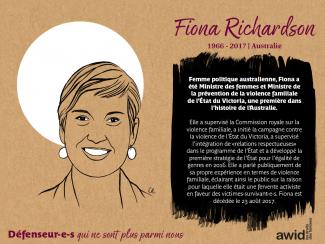
Fiona Richardson
Esta sección de análisis especial ofrece un análisis feminista crítico y acceso a los recursos clave relacionados con la «protección de la familia» en los espacios internacionales de derechos humanos.
Durante los últimos años, venimos observando una nueva y preocupante tendencia en el ámbito internacional de derechos humanos, donde se están empleando discursos sobre la «protección de la familia» para defender violaciones cometidas contra miembros de la familia, de modo de reforzar y justificar la impunidad y para coartar la igualdad de derechos en el seno de la familia y la vida familiar.
La campaña para «proteger a la familia» es impulsada por proyectos conservadores que tienen como fin imponer interpretaciones «tradicionales» y patriarcales de familia; quitando los derechos de las manos de sus miembros para ponerlos en las de la institución «familia».
Desde 2014 un grupo de estados opera como bloque en espacios de derechos humanos, bajo el nombre «Group of Friends of the Family» [Grupo de amigos de la familia], y a partir de entonces se han aprobado resoluciones sobre la «Protección de la familia» todos los años.
Esta agenda se ha extendido más allá del Consejo de Derechos Humanos (HRC, por sus siglas en inglés). Hemos visto cómo el lenguaje regresivo sobre «la familia» se ha introducido en la Comisión de la Condición Jurídica y Social de las Mujeres (CSW, por sus siglas en inglés), y hemos asistido a intentos por incluir este lenguaje en las negociaciones sobre los Objetivos de Desarrollo Sostenible.
AWID trabaja con asociadxs y aliadxs para resistir conjuntamente las agendas regresivas de «Protección de la familia» y otras, y para defender la universalidad de los derechos humanos.
En respuesta a la creciente influencia de actores regresivos en los espacios de derechos humanos, AWID se ha unido con aliadxs para formar el Observatorio de la Universalidad de los Derechos (OURs, por sus siglas en inglés). OURs es un proyecto colaborativo que monitorea, analiza y comparte información sobre iniciativas anti-derechos tales como la «Protección de la familia».
Derechos en Riesgo, el primer informe de OURs, traza un mapa de los actores que conforman el cabildeo global anti-derechos e identifica sus discursos y estrategias principales, señalando los efectos que estos discursos y estrategias están teniendo sobre nuestros derechos humanos.
El informe expone a la «Protección de la familia» como una agenda que ha promovido la colaboración entre una amplia gama de actores regresivos en las Naciones Unidas. La describe como un marco estratégico que aloja «múltiples posiciones patriarcales y anti-derechos, cuyo marco, a su vez, apunta a justificar e institucionalizar estas posiciones».
Des partenaires mondiaux et régionaux nous ont déjà communiqué certaines idées de rassemblements préalables au Forum, dont nous vous ferons part sous peu.
Si vous projetez d’organiser une réunion avant le Forum, n’hésitez pas à nous le faire savoir !
Plusieurs belles choses ont émergé du Forum des féminismes noires (BFF, selon son acronyme anglais), qui avait été organisé en 2016 par un Groupe consultatif et financé par l’AWID. À l’issue de ce BFF, certaines organisations indépendantes ont ainsi pu voir le jour, telles ques des organisations féministes noires au Brésil. Bien que le BFF n’aura pas lieu cette année, nous nous engageons à partager certains apprentissages clés avec toute personne intéressée à poursuivre le travail d'organisation féministe noire.
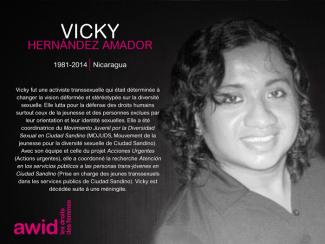
Notre hommage en ligne met à l’honneur cinq défenseuses des droits humains assassinées au Moyen-Orient ou en Afrique du Nord. Ces défenseuses étaient avocates ou militantes et ont œuvré pour les droits des femmes ou pour les droits civils. Leur mort met en évidence les conditions de travail souvent difficiles et dangereuses dans leurs pays respectifs. Nous vous invitons à vous joindre à nous pour commémorer la vie, le travail et l’activisme de ces femmes. Faites circuler ces mèmes auprès de vos collègues et amis ainsi que dans vos réseaux et twittez en utilisant les hashtags #WHRDTribute et #16Jours.
S'il vous plaît cliquez sur chaque image ci-dessous pour voir une version plus grande et pour télécharger comme un fichier


Le financement extérieur inclut les subventions et autres formes de financement de la part de fondations philanthropiques, de gouvernements, de financeurs bilatéraux, multilatéraux ou d’entreprise et de donateur·rices individuel·les, qu’elles et ils soient de votre pays ou de l’étranger. Il exclut les ressources que les groupes, organisations et/ou mouvements génèrent de manière autonome (ressource en anglais), telles que les cotisations d’adhésion, contributions volontaires du personnel, de membres et/ou de soutiens, les collectes de fonds communautaires, les locations de salles et ventes de services. Les définitions des différents types de financement, ainsi que de courtes descriptions des différents bailleurs de fonds, sont incluses dans l’enquête pour une meilleure compréhension.
Le 14e Forum international de l'AWID aura lieu du 20 au 23 septembre 2021 à Taipei, Taiwan.
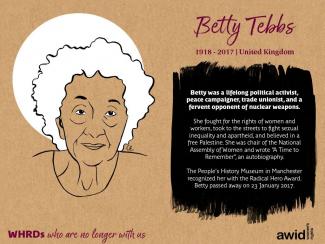

In our 2015 Online Tribute to Women Human Rights Defenders No Longer With Us we are commemorating four women from Sub-Saharan Africa, three of whom were murdered due to their work and/or who they were in their gender identity and sexual orientation. Their deaths highlight the violence LGBT persons often face in the region and across the globe. Please join AWID in honoring these women, their activism and legacy by sharing the memes below with your colleagues, networks and friends and by using the hashtags #WHRDTribute and #16Days.
Please click on each image below to see a larger version and download as a file


Yes, the survey is accessible to people with a diverse range of hearing, movement, sight, and cognitive abilities.

Nous Sommes la Solution is a rural women 's movement for food sovereignty in West Africa. Founded originally as a campaign against hyper-industrialized agriculture, Nous Sommes la Solution has grown into a movement of more than 500 rural women’s associations from Burkina Faso, Senegal, Ghana, Gambia, Guinea Bissau, Mali and Guinea.
Together, this women-led movement is building and strengthening food and seed sovereignty across West Africa. They feed communities, strengthen local economies, amplify the knowledge of women farmers and mitigate the devastating effects of climate change through agroecological practices. They also organize workshops, forums and community radio broadcasts to share their messages, their traditional knowledges and agroecological practices across rural communities.
In collaboration with universities and public research centers, Nous Sommes la Solution works towards restoring traditional Indigenous varieties of rice (a staple food in West Africa) and promoting local food economies based on agroecological principles, influencing national policy-making, all the while supporting women in creating farming associations and collectively owning and managing farmland.

In 2013, we published three global reports. These reports confirm that women’s rights organizations are doing the heavy lifting to advance women’s rights and gender equality by using diverse, creative and long-term strategies, all while being underfunded.
Our 2010 global survey showed that the collective income of 740 women’s organizations around the world totaled only USD 104 million. Compare this with Greenpeace International, one organization with a 2010 budget of USD 310 million1. Imagine the impact these groups could have if they were able to access all the financial resources they need and more?
AWID’s WITM research has catalyzed increased funding for women’s rights organizing. WITM research was a driving force behind the Catapult crowdfunding platform, which has raised USD 6.5 million for women’s rights. The Dutch Government cited WITM research as a reason for its unprecedented MDG 3 Fund of EU 82 million. WITM research has also led to the creation of several new funds: FRIDA – The Young Feminist Fund, the Indigenous Women’s Fund, Fundo Elas, the Mediterranean Women’s Fund and the Rita Fund.
While the WITM research has shed important light on the global funding landscape, AWID and partners have identified the need to dig deeper, to analyze funding trends by region, population and issue. In response, organizations are now using AWID’s WITM research methodology to do their own funding trends analyses. For example, in November 2013, Kosova Women’s Network and Alter Habitus – Institute for Studies in Society and Culture published Where is the Money for Women’s Rights? A Kosovo Case Study.
At the same time, AWID continues to collaborate with partners in Where is the Money for Indigenous Women’s Rights (with International Indigenous Women’s Forum and International Funders for Indigenous Peoples) and our upcoming Where is the Money for Women’s Rights in Brazil? (with Fundo Elas).
Several organizations have also conducted their own independent funding trends research, deepening their understanding of the funding landscape and politics behind it. For example, the South Asian Women’s Fund was inspired by AWID’s WITM research to conduct funding trends reports for each country in South Asia, as well as a regional overview. Other examples of research outside of AWID include the collaboration between Open Society Foundations, Mama Cash, and the Red Umbrella Fund to produce the report Funding for Sex Workers Rights, and the first-ever survey on trans* and intersex funding by Global Action for Trans* Equality and American Jewish World Service.
El tiempo estimado para responder la encuesta es de 30 minutos.