Alberta "Betty" Cariño
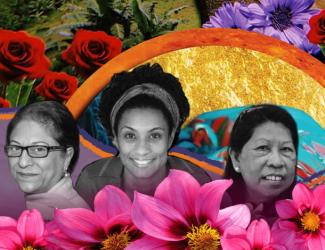
El Tributo de AWID es una exhibición de arte que honra a feministas, a activistas por los derechos de las mujeres y de la justicia social de todo el mundo que ya no están con nosotrxs.
El Tributo de este año cuenta y comparte las historias y narraciones de quienes crearon conjuntamente realidades feministas, ofrecieron visiones de alternativas a los sistemas y actores que nos oprimen, y propusieron nuevas formas de organizarnos, de movilizarnos, de luchar, de trabajar, de vivir y de aprender.
Se agregan a la galería 49 retratos nuevos de feministas y defensorxs de derechos humanos. Aunque muchxs feministas y defensorxs han fallecido debido a edad avanzada o enfermedad, muchísimxs han sido asesinadxs debido a su trabajo y por ser quienes eran.
Esta violencia creciente (de parte de Estados, empresas transnacionales, crimen organizado, sicarios no identificados, etc.) no se dirige solo a activistas individuales sino a nuestro trabajo común y a las realidades feministas.
Visita nuestra exhibición en línea
Lors retratos de 2020 fueron diseñados por la ilustradora y animadora galardonada, Louisa Bertman.
En AWID nos gustaría agradecer a las familias y organizaciones que nos compartieron sus historias personales, y así haber contribuido a este memorial. Nos unimos a ellxs para continuar el extraordinario trabajo de estxs activistas y defensorxs, y en el esfuerzo para asegurarnos de que se logre justicia en los casos que permanecen en la impunidad
"Ellos trataron de enterrarnos pero no sabían que éramos semillas."‐ Proverbio Mexicano
Primero tomó forma como una exposición física de retratos y biografías de feministas y activistas que habían fallecido, en el 12º Foro Internacional de AWID, en Turquía. Ahora vive como una galería en línea, que actualizamos cada año.
Desde 2012 hemos presentado más de 467 feministas y defensorxs.
Yes, please do! We encourage you to share the survey link with your networks. The more diverse perspectives we gather, the more comprehensive our understanding of the financial landscape for feminist organizing will be.
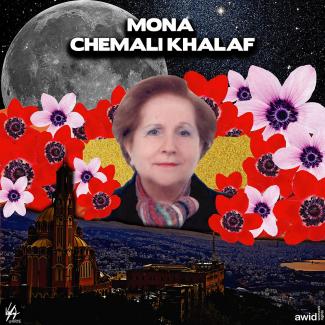
Mona was an economist and an independent consultant on gender and development issues.
She was a former Professor of Economics and Director of the Institute for Women's Studies in the Arab World at the Lebanese American University.
She passed away suddenly on January 6, 2018.
Friends and former colleagues say of Mona: “When we celebrate her life, the best thing we can do is commit to continuing what she started: gender equality no matter what.”
by Karina Ocampo
In a hidden corner of Chiapas, Mexico, women and sexual dissidents have come to organize our actions. (...)
< artwork by Sonia Carolina Madrigal Loyola
Au nom du Conseil d’administration, je souhaite exprimer notre plus profonde gratitude, notre appréciation et tout notre respect pour Hakima Abbas et Cindy Clark, nos deux extraordinaires codirectrices exécutives ces cinq dernières années, qui quittent leurs fonctions pour laisser place à un nouveau leadership de l’AWID, alors que nous entrons dans une nouvelle phase de la vie de notre organisation avec un nouveau plan stratégique. Elles ont systématiquement mis en application les meilleurs principes de leadership organisationnel féministe et d’éthique du soin lorsqu’elles nous guidaient, lors des temps bien troubles et imprévisibles de la récente histoire du monde, cette syndémie de COVID-19 et la spirale politique mondiale descendante qui s’en est suivie. Elles ont tenu l’AWID, notre personnel et notre CA fermement, doucement et avec amour alors que nous éprouvions toutes et tous ces situations inconnues. Elles se sont également accrochées à la vision et à la mission de l’AWID lorsqu’elles ont dû, avec respect et stratégie, réagir aux différents changements, dont la difficile annulation du forum de l’AWID.
Reconnaissant tout à fait le potentiel immense qui existe au sein de l’équipe actuelle, le CA a décidé de privilégier un processus de recrutement en interne dans un premier temps. Nous pensons terminer cette transition d’ici la fin de l’année 2022. Hakima et Cindy décaleront leur départ, pour permettre une transition en douceur vers le nouveau leadership.
Il est difficile pour le Conseil d’administration et d’autres, qui ont travaillé étroitement avec elles et qui les aiment, de voir Cindy et Hakima quitter l’AWID. Rassurez-vous, le CA de l’AWID mène ce processus de transition de manière à ce que les belles marques indélébiles et inspirantes que laissent Hakima et Cindy soient inscrites dans les quatre décennies de notre histoire. Nous assurerons l’arrivée et le soutien de la nouvelle direction et veillerons à ce que ce processus nous inspire à faire mieux encore à cette étape de la vie de l’AWID.
Les grandes transformations dans les organisations ne sont jamais simples ni faciles. Elles sont parfois contraintes, hors du contrôle de quiconque, tendues, voire destructrices. J’ai vu, mais vous aussi, des exemples de telles transitions. Il arrive également que les besoins et les aspirations du personnel soient alignés avec ceux de l’organisation. Bien que nous n’ayons ni choisi ni souhaité le départ de Cindy et Hakima, leur décision et l’entrée de l’AWID dans un nouveau plan stratégique et une nouvelle décennie d’existence sont alignées. Et mieux que tout encore, nous sommes entre les mains merveilleuses, super compétentes, créatives et féministes du personnel et du CA de l’AWID.
Nous vous remercions, chers mouvements féministes, pour votre confiance dans l’AWID. Nous vous demandons également de soutenir notre transition de leadership au cours des mois à venir. Continuons à construire, approfondir et renforcer nos connexions, comme nous le faisons depuis 40 ans.
Nous reviendrons vers vous dans les prochaines semaines pour vous tenir au courant de nos mises à jour et des évolutions concrètes.
Avec solidarité et amour féministes,
Margo Okazawa-Rey,
Présidente, Conseil d’administration de l’AWID

Incluso en tiempos de crisis climática, los gobiernos continúan alentando el crecimiento de las industrias agrícolas a gran escala. Estas actividades envenenan la tierra, amenazan la biodiversidad y destruyen la producción de alimentos y los medios de vida locales. Mientras tanto, aunque las mujeres producen la mayoría de nuestros alimentos en el mundo, casi no poseen tierra.
¿Qué pasaría si percibiéramos la tierra y la Naturaleza no como una propiedad privada para ser explotada, sino como una totalidad con la cual aprender y coexistir en armonía? ¿Y si repararíamos nuestras relaciones con la tierra y adoptaríamos alternativas más sostenibles que nutran tanto al planeta como a sus comunidades?
Nous Sommes la Solution (Somos la Solución, NSS) es uno de los muchos movimientos liderados por mujeres que se esfuerzan por lograr este objetivo.
Esta es su historia.
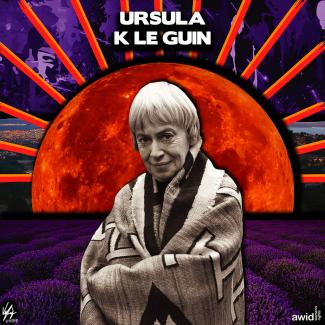
Ursula fue una novelista estadounidense que trabajó principalmente con los géneros de fantasía y ciencia ficción.
Encontró la fama con La mano izquierda de la oscuridad, novela en la cual imagina una sociedad futura donde la gente es ambisexual: no tienen un sexo fijo. Indaga en los efectos del género y el sexo en la sociedad, y fue uno de los primeros grandes libros feministas de ciencia ficción. Ursula fue una inspiración por su escritura subversiva y original y también por los temas sobre feminismo y libertad a los que les daba tanta importancia.
En un discurso que pronunció en 1983 en el Mills College, en California, les dijo a las graduadas: «¿Por qué una mujer libre con formación universitaria debería o luchar contra el macho o servirlo? ¿Por qué ella debería vivir su vida en los términos de él? Espero que ustedes vivan sin la necesidad de dominar y sin la necesidad de ser dominadas».
por Alejandra Laprea
Vivo en un país de lo imposible, donde no caen bombas pero padecemos una guerra. (...)
arte: «Entretejidas», Surmercé >By: Marianne Mesfin Asfaw
I have many fond memories in my journey with feminism, but one in particular that stands out. It was during my time at graduate school, at a lecture I attended as part of a Feminist Theory course. This lecture was on African feminism and in it the professor talked about the history of Pan Africanism and the ways in which it was patriarchal, male-centric, and how Pan Africanist scholars perpetuated the erasure of African women. She talked about how African women’s contributions to the anti-colonial and decolonial struggles on the continent are rarely, if ever, discussed and given their due credit. We read about the African feminist scholars challenging this erasure and actively unearthing these stories of African women led movements and resistance efforts. It seems so simple but what stood out to me the most was that somebody put the words African and feminist together. Better yet, that there were many more of us out there wrestling with the complicated history, politics and societal norms in the various corners of the continent and we were all using a feminist lens to do this. I came out of that lecture feeling moved and completely mind-blown. After the lecture three of my friends (all African feminists) and I spent some time debriefing outside the classroom. We were all so struck by the brilliance of the lecture and the content but, more than anything, we all felt so seen. That feeling stood out to me.
Falling in love feminism was thrilling. It felt like finally getting to talk to your longtime crush and finding out that they like you back. I call it my crush because in high school I referred to myself as a feminist but I didn’t feel like I knew enough about it. Was there a right way to be feminist? What if I wasn’t doing it right? Attending my first Women’s Studies lecture answered some of these questions for me. It was thrilling to learn about stories of feminist resistance and dismantling the patriarchy. I felt so affirmed and validated, but I also felt like something was missing.
Deepening my relationship with feminism through academia, at an institution where the students and teaching staff were mostly white meant that, for those first few years, I noticed that we rarely had discussions about how race and anti-blackness show up in mainstream feminist movements. In most courses we had maybe 1 week, or worse 1 lecture, dedicated to race and we would usually read something by bell hooks, Kimberly Crenshaw’s work on intersectionality, and maybe Patricia Hill Collins. The following week we were back to sidelining the topic. I dealt with this by centring race and black feminism in almost all my assignments, by writing about black hair and respectability politics, the hypersexualization of black women’s bodies, and so much more. Over time I realized that I was trying to fill a gap but didn’t quite know what it was.
Encountering and learning about African feminism was a full circle moment. I realized that there was so much more I had to learn.
Mainly that my Africanness and my feminist politics did not have to be separate. In fact, there was so much that they could learn from each other and there were African feminists out there already doing this work. It was the missing piece that felt so elusive during my exploration of feminism throughout my academic journey.
Feminism to me is the antithesis to social and political apathy. It also means once you adopt a feminist lens, nothing can ever be the same. My friends and I used to talk about how it was like putting on glasses that you can never take off because you now see the world for what it is, mess and all. A mess you can’t simply ignore or walk away from. Therefore my vow to the feminist movement is to never stop learning, to keep stretching the bounds of my empathy and to never live passively. To dedicate more time and space in my life to feminist movements and to continue to amplify, celebrate, document and cite the work of African feminists. I also commit to centring care and prioritizing pleasure in this feminist journey because we can’t sustain our movements without this.

Опрос доступен на английском, арабском, испанском, португальском, русском и французском языках!
Gender Impact Investing (GII) is now trending as a solution to gender inequality. Yet, as our report indicates, it is actually part of the problem. Public and private institutions marketing GII equate it with promotion of gender equality and with increased resources for women and girls.
Rather, GII is another expression of subjecting our lives and societies to the same financial logic that has shaped, and continues shaping, the profound inequalities in our world.
With this report, AWID offers the readers - feminists, gender justice advocates and stakeholders in gender impact investing - a critical analysis and substantiated evidence to understand GII, its narratives, and economic and political implications for feminist movements.
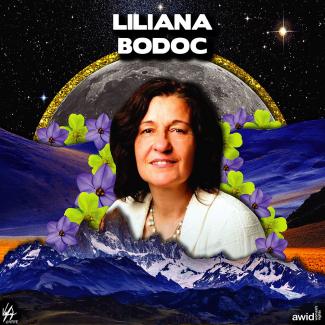
Liliana était enseignante argentine, tisseuse et également une écrivaine reconnue.
Sa trilogie « La saga des confins » a reçu plusieurs prix. Son œuvre est la seule dans le domaine littéraire fantastique à avoir eu recours et ré-imaginé la mythologie autochtone sud-américaine.
L’engagement de Liliana envers le féminisme s’est exprimé à travers les voix féminines diverses, riches et fortes de ses écrits, et en particulier dans le cadre de ceux à destination du jeune public. Elle a également pris position publiquement en faveur de l'avortement, de la justice économique et de l’égalité de genre.
par Sophia Armen
Que cela vous plaise ou non, les ungerhouis font partie intégrante de nos histoires de résistance et elles ne disparaîtront pas de sitôt. (...)