AWID es un organización feminista internacional de membresía, que brinda apoyo a los movimientos que trabajan para lograr la justicia de género y los derechos de las mujeres en todo el mundo.
Lxs defensorxs se identifican a sí mismas como mujeres y personas lesbianas, bisexuales, transgénero, queer e intersex (LBTQI) y otrxs que defienden derechos y que debido a su trabajo en derechos humanos están bajo riesgos y amenazas específicos por su género y/o como consecuencia directa de su identidad de género u orientación sexual.
Lxs defensorxs son objeto de violencia y discriminación sistemáticas debido a sus identidades y su inclaudicable lucha por derechos, igualdad y justicia.
El Programa Defensorxs colabora con contrapartes internacionales y regionales así como con lxs afiliadxs de AWID para crear conciencia acerca de estos riesgos y amenazas, abogar por medidas de protección y de seguridad que sean feministas e integrales, y promover activamente una cultura del autocuidado y el bienestar colectivo en nuestros movimientos.
Riesgos y amenazas dirigidos específicamente contra lxs defensorxs
lxs defensorxs enfrentan los mismos tipos de riesgos que todxs lxs demás defensorxs de derechos humanos, de comunidades y del medio ambiente. Sin embargo, también están expuestas a violencia y a riesgos específicos por su género porque desafían las normas de género de sus comunidades y sociedades.
Por defender derechos, lxs defensorxs están en riesgo de:
Ataques físicos y muerte
Intimidación y acoso, incluso en los espacios virtuales
Acoso judicial y criminalización
Agotamiento
Un enfoque integral y colaborativo de la seguridad
Trabajamos de manera colaborativa con redes internacionales y regionales y con nuestrxs afiliadxs
para crear conciencia de las violaciones de derechos humanos contra lxs defensorxs y de la violencia y discriminación sistemáticas que enfrentan
para fortalecer los mecanismos de protección y asegurar respuestas más oportunas y efectivas para lxs defensorxs que están en riesgo
Trabajamos para promover un enfoque integral de la protección que incluya:
remarcar la importancia del autocuidado y el bienestar colectivo, y reconocer que el significado de cuidado y bienestar puede variar entre las diferentes culturas;
documentar las violaciones dirigidas contra lxs defensorxs usando una perspectiva feminista interseccional;
promover el reconocimiento y celebración social del trabajo y la resiliencia de lxs defensorxs; y
construir espacios ciudadanos que conduzcan al desmantelamiento de las desigualdades estructurales sin restricciones ni obstáculos.
Nuestras acciones
Nos proponemos contribuir a un mundo más seguro para lxs defensorxs, sus familias y comunidades. Creemos que actuar por los derechos y la justicia no debe poner en riesgo a lxs defensorxs, sino que debe ser valorado y celebrado.
Promoviendo la colaboración y coordinación entre organizaciones de derechos humanos y organizaciones de derechos de las mujeres en el plano internacional para fortalecer la capacidad de respuesta en relación a la seguridad y el bienestar de lxs defensorxs.
Apoyando a las redes regionales de defensorxs y de sus organizaciones, tales como la Iniciativa Mesoamericana de Mujeres Defensorxs de Derechos Humanos y la WHRD Middle East and North Africa Coalition [Coalición de Defensorxs de Derechos Humanos de Medio Oriente y África del Norte], promoviendo y fortaleciendo la acción colectiva para la protección, poniendo el énfasis en establecer redes de solidaridad y protección, promover el autocuidado y la incidencia y movilización por la seguridad de lxs defensorxs.
Aumentando la visibilidad y el reconocimiento de lxs defensorxs y sus luchas, así como de los riesgos que enfrentan, a través de la documentación de los ataques que sufren, e investigando, produciendo y difundiendo información sobre sus luchas, estrategias y desafíos.
Movilizando respuestas urgentes de solidaridad internacional para lxs defensorxs que están en riesgo a través de nuestras redes internacionales y regionales y de nuestrxs afiliadxs activxs.
Abby was a pioneering feminist, human-rights activist and former McGill University epidemiologist.
Abby was renowned for championing social causes and for her insightful critiques of reproductive technologies and other medical topics. Specifically, she campaigned against what she called the "geneticization" of reproductive technologies, against hormone replacement therapy and for better, longer research before the approval of discoveries such as the vaccines against the human papillomavirus.
On the news of her passing, friends and colleagues described her fondly as an “ardent advocate” for women’s health.
Snippet - WITM why - RU
Почему Мне Следовало Бы Пройти Этот Опрос?
Reclaiming the Commons
Definition
There are varied conceptualizations about the commons notes activist and scholar Soma Kishore Parthasarathy.
Conventionally, they are understood as natural resources intended for use by those who depend on their use. However, the concept of the commons has expanded to include the resources of knowledge, heritage, culture, virtual spaces, and even climate. It pre-dates the individual property regime and provided the basis for organization of society. Definitions given by government entities limit its scope to land and material resources.
The concept of the commons rests on the cultural practice of sharing livelihood spaces and resources as nature’s gift, for the common good, and for the sustainability of the common.
Context
Under increasing threat, nations and market forces continue to colonize, exploit and occupy humanity’s commons.
In some favourable contexts, the ‘commons’ have the potential to enable women, especially economically oppressed women, to have autonomy in how they are able to negotiate their multiple needs and aspirations.
Feminist perspective
Patriarchy is reinforced when women and other oppressed genders are denied access and control of the commons.
Therefore, a feminist economy seeks to restore the legitimate rights of communities to these common resources. This autonomy is enabling them to sustain themselves; while evolving more egalitarian systems of governance and use of such resources. A feminist economy acknowledges women’s roles and provides equal opportunities for decision-making, i.e. women as equal claimants to these resources.
Feminism And The Politics Of The Commons by Silvia Federici looks at the politics of the commons from a feminist standpoint shaped by the struggle against sexual discrimination and reproductive work, to clarify the conditions under which the principle of the common/s can become the foundation of an anti-capitalist program.
Marielle fue una política brasileña feminista lesbiana y activista por los derechos humanos.
Criticó abiertamente la brutalidad policial y las ejecuciones extrajudiciales. Su política declaradamente feminista, negra, centrada en las favelas, fue una fuente de esperanza para los grupos marginados de Río de Janeiro, gobernados actualmente por un gobierno municipal conservador y un intendente evangélico.
El 14 de marzo de 2018, después de dar un discurso en Río de Janeiro, Franco y su chofer fueron asesinados a balazos. A partir de la noticia de su muerte, multitudes se volcaron a las calles al grito de «¡Marielle presente!», en demanda de justicia.
Para fortalecer a nossa voz e poder coletivos para obter mais recursos de melhor qualidade para a organização feminista, de direitos das mulheres, de LBTQI+ e de aliados globalmente.
Key opposition strategies and tactics
Despite their rigidity in matters of doctrine and worldview, anti-rights actors have demonstrated an openness to building new kinds of strategic alliances, to new organizing techniques, and to new forms of rhetoric. As a result, their power in international spaces has increased.
There has been a notable evolution in the strategies of ultra conservative actors operating at this level. They do not only attempt to tinker at the edges of agreements and block certain language, but to transform the framework conceptually and develop alternative standards and norms, and avenues for influence.
Strategy 1: Training of UN delegates
Ultra conservative actors work to create and sustain their relationships with State delegates through regular training opportunities - such as the yearly Global Family Policy Forum - and targeted training materials.
These regular trainings and resources systematically brief delegates on talking points and negotiating techniques to further collaboration towards anti-rights objectives in the human rights system. Delegates also receive curated compilations of ‘consensus language’ and references to pseudo-scientific or statistical information to bolster their arguments.
The consolidated transmission of these messages explains in part why State delegates who take ultra-conservative positions in international human rights debates frequently do so in contradiction with their own domestic legislation and policies.
Strategy 2: Holding international convenings
Anti-rights actors’ regional and international web of meetings help create closer links between ultra conservative Civil Society Organizations (CSOs), States and State blocs, and powerful intergovernmental bodies. The yearly international World Congress of Families is one key example.
These convenings reinforce personal connections and strategic alliances, a key element for building and sustaining movements. They facilitate transnational, trans-religious and dynamic relationship-building around shared issues and interests, which leads to a more proactive approach and more holistic sets of asks at the international policy level on the part of anti-rights actors.
Strategy 3: Placing reservations on human rights agreements
States and State blocs have historically sought to undermine international consensus or national accountability under international human rights norms through reservations to human rights agreements, threatening the universal applicability of human rights.
The Convention on the Elimination of Discrimination Against Women (CEDAW) has received by far the most reservations, most of which are based on alleged conflict with religious law. It is well-established international human rights law that evocations of tradition, culture or religion cannot justify violations of human rights, and many reservations to CEDAW are invalid as they are “incompatible with the object and purpose” of CEDAW. Nevertheless, reference to these reservations is continually used by States to dodge their human rights responsibilities.
‘Reservations’ to UN documents and agreements that are not formal treaties - such as Human Rights Council and General Assembly resolutions - are also on the rise.
Strategy 4: Creating a parallel human rights framework
In an alarming development, regressive actors at the UN have begun to co-opt existing rights standards and campaign to develop agreed language that is deeply anti-rights.
The aim is to create and then propagate language in international human rights spaces that validates patriarchal, hierarchical, discriminatory, and culturally relativist norms.
One step towards this end is the drafting of declarative texts, such as the World Family Declaration and the San Jose Articles, that pose as soft human rights law. Sign-ons are gathered from multiple civil society, state, and institutional actors; and they are then used a basis for advocacy and lobbying.
Strategy 5: Developing alternative ‘scientific’ sources
As part of a strategic shift towards the use of non-religious discourses, anti-rights actors have significantly invested in their own ‘social science’ think tanks. Given oxygen by the growing conservative media, materials from these think tanks are then widely disseminated by conservative civil society groups. The same materials are used as the basis for advocacy at the international human rights level.
While the goals and motivation of conservative actors derive from their extreme interpretations of religion, culture, and tradition, such regressive arguments are often reinforced through studies that claim intellectual authority. A counter-discourse is thus produced through a heady mix of traditionalist doctrine and social science.
Strategy 6: Mobilizing Youth
This is one of the most effective strategies employed by the religious right and represents a major investment in the future of anti-rights organizing.
Youth recruitment and leadership development, starting at the local level with churches and campuses, are a priority for many conservative actors engaged at the international policy level.
This strategy has allowed for infiltration of youth-specific spaces at the United Nations, including at the Commission on the Status of Women, and creates a strong counterpoint to progressive youth networks and organizations.
Key anti-rights strategies
Strategy 7: Defunding and delegitimizing human rights mechanisms
When it comes to authoritative expert mechanisms like the UN Special Procedures and Treaty Monitoring Bodies and operative bodies like the UN agencies, regressive groups realize their potential for influence is much lower than with political mechanisms[1].
In response, anti-rights groups spread the idea that UN agencies are ‘overstepping their mandate,’ that the CEDAW Committee and other Treaty Bodies have no authority to interpret their treaties, or that Special Procedures are partisan experts working outside of their mandate. Anti-rights groups have also successfully lobbied for the defunding of agencies such as the United Nations Population Fund (UNFPA).
This invalidation of UN mechanisms gives fuel to state impunity. Governments, when under international scrutiny, can defend their action on the basis that the reviewing mechanism is itself faulty or overreaching.
Strategy 8: Organizing online
Conservative non-state actors increasingly invest in social media and other online platforms to promote their activities, campaign, and widely share information from international human rights spaces.
The Spanish organization CitizenGo, for example, markets itself as the conservative version of Change.org, spearheading petitions and letter-writing campaigns. One recent petition, opposing the establishment of a UN international day on safe abortion, gathered over 172,000 signatures.
Overarching Trends:
Learning from the organizing strategies of feminists and other progressives.
Replicating and adapting successful national-level tactics for the international sphere.
Moving from an emphasis on ‘symbolic protest’ to becoming subversive system ‘insiders.’
By understanding the strategies employed by anti-rights actors, we can be more effective in countering them.
[1] The fora that are state-led, like the General Assembly, the Human Rights Council, and UN conferences like the Commission on the Status of Women and the Commission on Population and Development
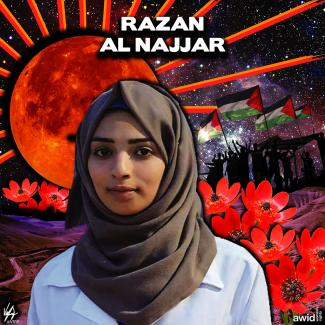
Razan était une infirmière palestinienne bénévole âgée de 21 ans.
Elle a été tuée par balle à l'est de la ville de Khan Younis, au sud de Gaza, alors qu'elle courait vers une clôture de la frontière fortifiée dans le but de porter secours à une victime.
Dans son tout dernier post sur Facebook, Razan avait déclaré : « J’y retourne et ne reculerai pas », ajoutant: « Frappez-moi de vos balles. Je n'ai pas peur ».
Snippet - WITM Why now_col 2 - PT
O financiamento dos movimentos feministas é fundamental para garantir uma presença mais justa e pacífica, e um futuro liberto.
Na busca da abundância, e para acabar com esta escassez crónica, o inquérito WITM é um convite para os defensores do feminismo e da justiça de género se envolverem no percurso da recolha coletiva de testemunhos e de casos para mobilizar mais recursos financeiros de melhor qualidade e recuperar o poder no ecossistema de financiamento neste momento. Em solidariedade com os movimentos que continuam invisibilizados, marginalizados e sem acesso a financiamento central, de longo prazo, flexível e baseado em fundos fiduciários, o inquérito WITM destaca o estado efetivo dos recursos, desafia soluções falsas e aponta.
Siete recomendaciones feministas de políticas para frenar los flujos financieros ilícitos
La creciente dominación de los mercados y las instituciones financieras internacionales en la definición de las políticas económicas globales ha tenido como resultado la captura del poder popular en aras del interés de las élites y las grandes corporaciones globales.
Este informe «Flujos financieros ilícitos» analiza su desproporcionado impacto de género y los marcos legales y políticos actuales que permiten a las corporaciones multinacionales beneficiarse del fraude fiscal en detrimento de las personas y el planeta.
El informe concluye con siete recomendaciones feministas de políticas para exigir transparencia y rendición de cuentas por parte del poder corporativo para frenar los flujos financieros ilícitos.
Recomendaciones de políticas para la incidencia
Los flujos financieros ilícitos están llamando la atención como nunca antes: ya sea en negociaciones para el desarrollo, como los que condujeron a la Agenda 2030 y a la Conferencia sobre Financiamiento para el
Desarrollo de Addis Abeba en 2015, u ocupando los titulares de los medios hegemónicos con la publicación de documentos filtrados sobre finanzas offshore conocidos como los «Panama Papers». En otro ejemplo, en un
referendum de febrero de 2017, el pueblo ecuatoriano votó para prohibir que políticxs y funcionarixs públicxs posean acciones, compañías o capital en paraísos fiscales. El Gobierno de Ecuador es ahora, dentro del grupo
G-77, una de las voces principales que reclaman en las Naciones Unidas la creación de un organismo tributario global para poner fin a los paraísos fiscales.
Esta atención pública potencialmente da impulso para que lxs feministas, los movimientos sociales y lxs defensores de la justicia tributaria presionen por la transformación del sistema financiero internacional, donde
se arraigan desigualdades globales, incluidas las desigualdades de género.
Ofrecemos aquí siete pedidos de políticas como contribución a los crecientes esfuerzos de incidencia de actores por la justicia social, feministas, por los derechos de las mujeres y por la igualdad de género.
1. Abordar los flujos financieros ilícitos como una violación de los derechos humanos y los derechos de las mujeres:
Los FFI impiden el cumplimiento de la obligación de los Estados de movilizar los máximos recursos disponibles para la realización de los derechos humanos, incluidos los compromisos de larga data sobre los derechos de las mujeres y la igualdad de género.
El aumento de la de la rendición de cuentas de las corporaciones es una posibilidad que está sobre la mesa del Consejo de Derechos Humanos de las Naciones Unidas (ONU). Ya se ha establecido un grupo de trabajo abierto intergubernamental para elaborar un instrumento vinculante internacional que regule, según las normativas internacionales de derechos humanos, las actividades de las corporaciones transnacionales y otras empresas comerciales. Este proceso tiene el potencial de abordar la evasión fiscal corporativa como una violación de los derechos humanos, incluidos los derechos de las mujeres, y debería recibir más apoyo de los países del Norte y del Sur globales.
2. Garantizar que las corporaciones multinacionales paguen su parte:
• Desarrollar mecanismos internacionales para detener las prácticas fiscales fraudulentas y evitar las exenciones fiscales a las corporaciones. Los Estados miembros de las Naciones Unidas deberían iniciar negociaciones para redactar el borrador de una convención de la ONU para combatir las prácticas fiscales fraudulentas. La convención debería adoptar un sistema de consolidación y prorrateo para gravar las ganancias corporativas globales.
Revisar específicamente las regulaciones nacionales de los países ricos que requieren que las CMN paguen impuestos solo en el país de residencia y no en los países de actividad económica. Esta práctica daña sobre todo a los países en desarrollo, ya que cada vez pierden más base tributaria que se desplaza a jurisdicciones de baja o nula tributación. Al respecto deberían considerarse propuestas tales como el enfoque de tributación unitaria.
3. Apoyar el establecimiento de un organismo tributario internacional de las naciones Unidas:
Un organismo tributario de las Naciones Unidas, con iguales derechos de voto y membresía universal, debería tener la facultad de revisar la política tributaria nacional, regional y global y de garantizar que los Estados cumplan con los compromisos de larga data sobre derechos humanos, incluidos los derechos de las mujeres y la igualdad de género.
4. Promover la transparencia y la recolección de datos con perspectiva de género:
Deben realizarse mayores esfuerzos globales para pulir los datos comparables sobre fraude fiscal, por ejemplo, con datos desglosados por género que ponen al desnudo los prejuicios de género de ciertos sistemas tributarios.
Los países deben garantizar un esquema para el intercambio automático de información que garantice el acceso público y global a datos clave que afectan los recursos disponibles para la realización de los derechos humanos.
Implementar obligaciones informativas país por país para que las corporaciones multinacionales publiquen, como parte de sus informes anuales, las ganancias obtenidas y los impuestos pagados en cada país donde operan.
Debe haber más cooperación de los gobiernos para compartir sus registros públicos nacionales que dan a conocer los verdaderos beneficiarios de compañías, fideicomisos, fundaciones y estructuras legales similares, además de otra información financiera.
5. Promover la justicia tributaria a través de políticas fiscales nacionales progresivas:
Promover la justicia tributaria a través de políticas fiscales progresivas. Esto implica aumentar el peso de los impuestos directos sobre los ingresos de capital y los sectores sociales de alta rentabilidad y, al mismo tiempo, reducir y eliminar el peso tributario que recae en las mujeres y las personas pobres. Los segmentos precarizados de la sociedad, donde las mujeres están sobrerrepresentadas, no deberían terminar pagando más impuestos, en relación con sus ingresos, que los segmentos más adinerados, que a menudo se benefician de subsidios impositivos, moratorias y reducciones fiscales.
Los gobiernos deben revisar desde una perspectiva crítica los dañinos acuerdos comerciales y de inversión que otorgan incentivos y exenciones fiscales, que perpetúan la desigualdad y los prejuicios de género.
6. Garantizar la participación de las organizaciones por los derechos de las mujeres, los movimientos sociales y la sociedad civil progresista en sentido amplio:
Las decisiones sobre política económica y fiscal carecen a menudo de perspectiva de género. La interacción de los ministerios de género y de finanzas, y de estos con la sociedad civil y las defensoras de derechos humanos, es fundamental para entender mejor el impacto que tienen las decisiones sobre los ingresos públicos en los derechos de las mujeres y la igualdad de género.
Debe establecerse un ambiente propicio que proteja a las defensoras de derechos humanos y otrxs activistas (incluidxs lxs denunciantes y activistas para la justicia tributaria) que expongan el fraude fiscal e informen sobre la corrupción.
7. Poner fin a la impunidad de las actividades delictivas asociadas con los flujos financieros ilícitos y garantizar la rendición de cuentas:
Establecer un mecanismo coordinado global entre autoridades fiscales nacionales, mecanismos de derechos humanos e igualdad de género y unidades de inteligencia, para garantizar que las actividades delictivas asociadas con los FFI no continúen impunes.
Fortalecer los sistemas de justicia nacionales y globales para lograr la rendición de cuentas de individuos y entidades por la financiación de actividades delictivas a través de los FFI.
Suivez le travail de la coopérative sur Facebook ou Instagram, partagez leurs campagnes et gardez un oeil sur leurs actions et événements de collecte de fonds!
Jacqueline was a pioneering Malian/Burkinabe feminist, nationalist and educator.
She taught English in Senegal, before being recruited in 1961 as an English teacher at the Lycée Philippe Zinda Kaboré in Ouagadougou, Burkina Faso. Through her activism, she was involved in the popular uprising of January 3, 1966. Between 1961 and 1966, Jacqueline was also responsible for the trade union press, Voices of the Teachers. She was appointed as the head of the Normal Course for Young Girls (now known as Nelson Mandela High School) until 1974, and dedicated herself to girls’ education and advancing women’s rights.
In 1984 she was awarded the Paul G. Hoffmann Award for outstanding work in national and international development.
Какую цель преследует опрос «Где деньги?»
Ключевая цель исследования – осветить финансовое положение различных феминистских движений, инициатив за права женщин, гендерную справедливость, ЛГБТКИ+ и смежных движений по всему миру и, основываясь на этом, еще больше усилить аргументы в пользу увеличения объема денежных средств и передачи власти феминистским движениям.







 Na última década, os financiadores investiram significativamente mais dinheiro na igualdade de género; no entanto, apenas 1% do financiamento filantrópico e de desenvolvimento