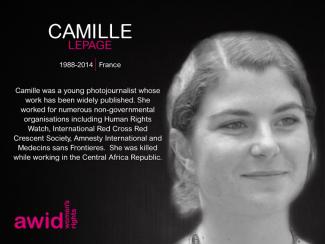
Camille Lepage
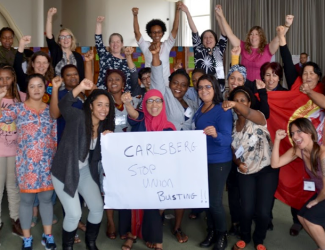
Defensoras de derechos humanos de todo el planeta defienden sus tierras, medios de subsistencia y sus comunidades ante las industrias extractivas y el poder corporativo. Ellas hacen frente a fuertes intereses económicos y políticos que promueven el robo de tierras, el desplazamiento de comunidades, la pérdida de los medios de subsistencia y la degradación del medioambiente.
El extractivismo es un modelo económico y político de desarrollo que mercantiliza la naturaleza y prioriza la ganancia por sobre los derechos humanos y el medioambiente. Arraigado en la historia colonial, refuerza las desigualdades sociales y económicas tanto a nivel local como global. Muchas veces, las mujeres negras, rurales e indígenas son las más afectadas por el extractivismo, y además son notablemente excluidas de la toma de decisiones. Desafiando estas fuerzas patriarcales y neocoloniales, las mujeres se alzan en defensa de los derechos, las tierras, las personas y la naturaleza.
Las defensoras que enfrentan a las industrias extractivas, experimentan una diversidad de riesgos, amenazas y violaciones, incluidas la criminalización, la estigmatización, la violencia y laintimidación. Sus historias dan cuenta de marcados aspectos de violencia sexual y de género. Entre los perpetradores se incluyen autoridades estatales y locales, las corporaciones, la policía, el ejército, las fuerzas paramilitares y de seguridad privada, y en algunos casos, sus propias comunidades.
AWID y la Coalición Internacional de Mujeres Defensoras de Derechos Humanos (WHRDIC por su sigla en inglés) tienen el placer de anunciar «Defensoras de derechos humanos confrontado al extractivismo y al poder corporativo»; un proyecto interregional de investigación que documenta las experiencias vividas por las defensoras de Asia, África y América Latina.
Alentamos a activistas, integrantes de movimientos sociales, la sociedad civil organizada, donantes y responsables de políticas públicas, a leer y utilizar estas producciones para el trabajo de incidencia, con fines educativos y como fuente de inspiración:
«Defensoras de derechos humanos confrontando a las industrias extractivas: un panorama de los riesgos críticos y las obligaciones en materia de derechos humanos» es un informe sobre políticas desde la perspectiva de género (en inglés, pronto disponible en español). Analiza las formas de violaciones y los tipos de perpetradores, hace referencia a las obligaciones relevantes en derechos humanos e incluye recomendaciones de políticas para los estados, corporaciones, la sociedad civil y donantes.
«Tejiendo la Resistencia a través de la Acción: Las Estrategias de las Defensoras de Derechos Humanos contra a las Industrias Extractivas» es una guía práctica que expone formas creativas y deliberadas de acción, tácticas exitosas e inspiradoras historias de resistencias.
El video «Defendiendo a las Personas y al Planeta: Mujeres Confrontando a las Industrias Extractivas» está protagonizado por defensoras de derechos humanos de África, Asia y América Latina, que comparten sus luchas por la tierra y la vida, y hablan de los riesgos y desafíos que enfrentan en su activismo.
«Desafiar al poder corporativo: Las luchas por los derechos de las mujeres, la justicia económica y de género» es un informe de investigación que explica los impactos del poder corporativo y ofrece ideas sobre estrategias de resistencia.
AWID reconoce con gratitud las invaluables contribuciones de cada Defensora de Derechos Humanos que ha sido parte de este proyecto. Esta guía ha sido posible gracias su generosidad y apertura al compartir sobre sus experiencias y lecciones. Su coraje, creatividad y resiliencia son una inspiración para todxs nosotrxs. ¡Muchas gracias!
Even in times of climate crisis, governments continue to encourage large-scale agriculture industries to expand. These activities poison the land, threaten biodiversity, and destroy local food production and livelihoods. Meanwhile, while women produce the majority of our food in the world, they own almost none of the land.
What if we perceived land and Nature not as private property to exploit, but as a whole to live in, learn from, and harmoniously coexist with? What if we repaired our relationships with the land and embraced more sustainable alternatives that nurture both the planet and its communities?
Nous Sommes la Solution (We Are the Solution, NSS) is one of many women-led movements striving to do this. This is their story.
by Alejandra Laprea
I live in a country of the impossible, where there are no bombs yet we are living in a war. (...)
artwork: “Entretejidas” [Interwoven women] by Surmercé >
وسيكون التحقيق مفتوحًا حتى 31 أغسطس 2024. الرجاء تكملته خلال هذا الوقت للتأكد بأن تشمل ردودكم/ن في التحليل.
Connue comme la drag queen de couleur de New York, Sylvia était une infatigable et féroce défenseure des marginalisé·e·s et exclu·e·s au début des années 1970, alors que le mouvement pour les « droits des gays » prenait de l’ampleur aux États-Unis.
Dans un discours bien connu prononcé pour Chistopher Street Day en 1973, Sylvia s’est exclamée, parmi une foule de membres de la communauté LGBT :
« Vous me dites tous d’aller me cacher, la queue entre les jambes.
Je ne supporterai plus ces conneries.
On m’a battue.
On m’a cassé le nez.
On m’a jetée en prison.
J’ai perdu mon travail.
J’ai perdu mon appartement.
Tout ça pour la libération gay, et vous me traitez de la sorte?
C’est quoi votre putain de problème à tous?
Réfléchissez à ça! »
En 1969, à l’âge de 17 ans, Sylvia a participé aux célèbres émeutes de Stonewall en jetant, paraît-il, le deuxième cocktail molotov en signe de protestation contre la descente de la police dans le bar gay de Manhattan. Elle a continué à être une figure centrale des soulèvements qui ont suivi, organisant des rassemblements et ripostant aux brutalités policières.
En 1970, Sylvia a collaboré avec Marsha P. Johnson à la création de Street Transvestite Action Revolutionaries (S.T.A.R.), collectif et organisation politique qui mettait sur pied des projets de soutien mutuel pour les personnes trans vivant dans la rue, celles et ceux aux prises avec la toxicomanie ou en détention, et spécialement pour les personnes trans de couleur et celles et ceux vivant dans la pauvreté.
Refusant les étiquettes, Sylvia a incité les personnes du mouvement de libération gay à penser différemment, et ce, tout au long de sa vie. Elle a déclaré :
« J’ai quitté ma maison en 1961, à l’âge de 10 ans. Je me suis démenée sur la 42e rue. Le début des années 1960 n’était pas génial pour les drag queens, les garçons efféminés ou les garçons qui se maquillaient comme on le faisait. À l’époque, on se faisait battre par la police, par tout le monde. Je n’ai pas vraiment fait mon coming out en tant que drag queen avant la fin des années 1960. C’était vraiment la débandade lorsque des drag queens se faisaient arrêter. Je me rappelle la première fois où je me suis fait arrêter, je n’étais même pas habillée entièrement en drag. Je marchais dans la rue et les flics m’ont tout simplement attrapée. Les gens maintenant prétendent que je suis une lesbienne, parce que je suis avec Julia, ce à quoi je leur je réponds : « Non, je suis juste moi. Je ne suis pas une lesbienne. » J’en ai marre d’être étiquetée. Je ne suis même pas en faveur de l’étiquette de transgenre. J’en ai marre de vivre avec des étiquettes. Je veux juste être qui je suis. Je suis Sylvia Rivera »
Par son activisme et son courage, Sylvia Rivera a présenté un miroir où se reflétait tout ce qui n’allait pas dans la société, mais aussi la possibilité d’une transformation. Sylvia est née en 1951 et décédée en 2002.
Les discours antidroits continuent à évoluer. Outre le recours à des arguments religieux, culturels et traditionnels, les acteur·rice·s antidroits s’approprient le langage de la justice sociale et des droits humains pour travestir leurs véritables programmes et gagner ainsi en légitimité.

Il y a trente ans, un télévangéliste américain candidat républicain décrivait le féminisme comme « un mouvement politique antifamille qui encourage les femmes à quitter leur mari, tuer leurs enfants, pratiquer la sorcellerie, détruire le capitalisme et devenir lesbiennes ». Cette idée progresse et acquiert aujourd’hui une légitimité insoupçonnée sous les apparats de l’« idéologie du genre » – une espèce de croque-mitaine polyvalent créé par les antidroits dans le seul but de s’y opposer.
Un thème revient sans cesse dans leurs discours teintés d’« impérialisme culturel », de « colonisation idéologique », de « génocide prénatal » et d’appel à la « clause de conscience » : la prise de contrôle. Les antidroits s’approprient des questions d’intérêt légitime, qu’ils et elles déforment pour servir leurs programmes oppressifs.
por Sophia Armen
Guste o no, lxs férrexs ungerhouis han sido parte esencial de nuestras historias de resistencia y están aquí para quedarse. (...)

En s’appuyant sur nos 20 années d’efforts pour la mobilisation de davantage de financements de meilleure qualité pour des changements sociaux menés par des féministes, l’AWID vous invite à répondre à la nouvelle version de notre enquête phare intitulée WITM
Yamile Guerra was a well-known lawyer, community leader and political activist in the Santander region of Colombia.
She was actively working to resolve disputes between local communities and developers, advocating against illegal land appropriation. Yamile had occupied various political posts, including as the Secretary General for the Santander government in Bogota and also aspired for the Mayor’s Office of Bucaramanga. In the last few years of her life, Yamile became increasingly active in environmental causes, particularly in the defense of the biodiverse wetlands of Santurbán against development, a region which supplies nearly 2 million people with freshwater.
According to her family and friends, Yamile received daily threats against her life and had asked the authorities for protection.
“She was very very aware of this issue [land litigation] and she said many times that she felt insecure.” - Alixon Navarro Munoz, journalist and friend of Guerra family
On July 20, 2019 Yamile was shot to death by two men in Floridablanca, Santander. She had just finished discussing a land dispute with them. A suspect was later arrested for her murder and admitted to being paid to carry out her assassination. According to reports, Yamile was the third member of her family to have been killed in relation to land disputes. Her father, Hernando Guerra was murdered several years previously.
Yamile’s assassination is part of a wave of violence and systematic killing of hundreds of social activists and human rights defenders in Colombia. According to the Institute for Development and Peace Studies (INDEPAZ), at the time of Yamile’s death, over 700 community leaders and human rights activists had been killed since the country signed a peace agreement in August 2016. Most were murdered for confronting illegal drug trafficking and mining operations, with indigenous people, Afro-Colombians and women human rights defenders being most at risk.
Less than a week after Yamile’s death, thousands of Colombians marched all over towns and cities, holding up black and white photos of activists who had been killed, with signs that read: "Without leaders there can be no peace" and "No more bloodshed”.
Yamile Guerra was only 42 years old at the time of her assassination.

 |
Hind et Hind étaient le premier couple queer documenté dans l’histoire arabe. Dans le monde d’aujourd’hui, iel est un·e artiste queer du Liban. |
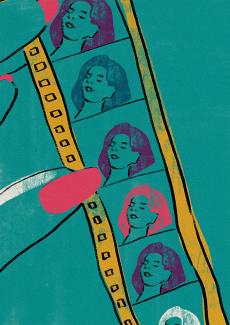
À l’âge de six ans, j’appris que mon grand-père avait un cinéma. Ma mère me raconta comment il l’avait ouvert au début des années 1960, quand elle avait également à peu près six ans. Elle se rappelait qu’il avait projeté La Mélodie du bonheur le soir de l’ouverture.
Je passais au cinéma tous les week-ends et regardais mon grand-père jouer au backgammon avec ses amis. Je ne savais pas qu’il vivait là, dans une pièce située juste en dessous de la cabine de projection. J’appris plus tard qu’il y avait emménagé à la suite de la séparation d’avec grand-mère, et de la fermeture du cinéma dans les années 1990, peu après la fin de la guerre civile libanaise.
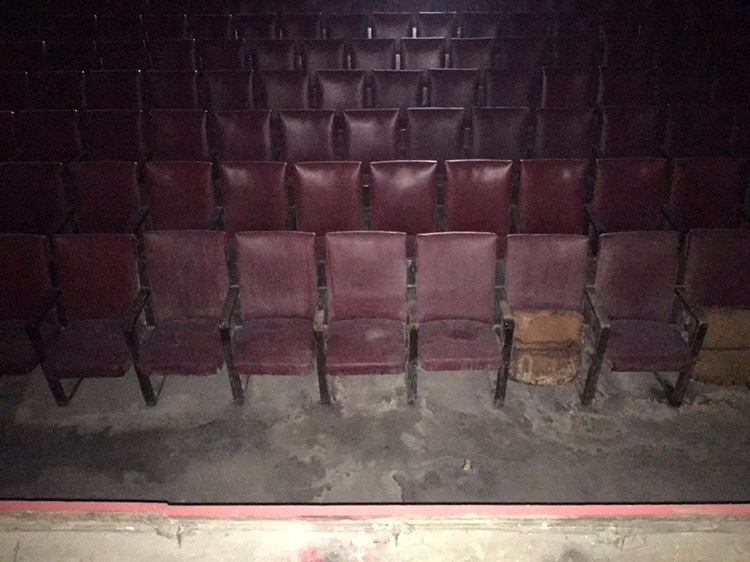
Pendant des années et jusqu’à son décès, je voyais généralement mon grand-père jouer au backgammon à l’accueil du cinéma, qui n’était plus du tout entretenu. Ces scènes à répétition sont mes seuls souvenirs de lui. Je n’ai jamais vraiment appris à le connaître – on ne parlait jamais de cinéma, malgré qu’il ait passé tout son temps dans un cinéma en déperdition. Je ne lui ai jamais demandé ce que ça faisait de vivre dans un lieu comme celui-là. Il est mort quand j’avais 12 ans, le soir de Noël, d’une chute dans l’escalier en colimaçon qui montait jusqu’à la cabine de projection. C’est presque poétique qu’il soit mort en mouvement, dans une maison où les images en mouvement sont perpétuellement suspendues dans le temps.

Au printemps 2020, mon cousin m’a appelée pour me dire qu’il avait nettoyé le cinéma de mon grand-père et me demandait de le retrouver là-bas. Tous les deux, nous avions toujours rêvé de remettre le cinéma sur pied. J’arrivai sur place avant lui. À la réception, des cadres d’affiches étaient toujours accrochés aux murs… mais les affiches avaient disparu. Je savais qu’il devait rester des souches de places de ciné quelque part. Je les ai toutes trouvées dans une petite boîte en fer, sur une étagère derrière le bureau de l’accueil, et j’en ai profité pour en glisser quelques-unes dans ma poche.
Je commençai à me promener dans le ciné. Sur la scène principale, l’écran de projection était plutôt sale et quelque peu abîmé sur les côtés. Je passai mon index sur l’écran pour enlever une couche de poussière, et remarquai qu’il était toujours bien blanc en dessous. La toile semblait également en bon état. Je levai la tête pour voir si les rideaux de ma grand-mère, faits de satin blanc et arborant un petit emblème en lisière à l’effigie du cinéma, étaient toujours en place. Dans la pièce, il y avait une salle basse, une salle principale et un balcon. Les chaises semblaient vraiment très usées.
Je remarquai le projecteur qui dépassait d’une petite fenêtre à l’extrémité des places au balcon. Je gravis les marches en colimaçon jusqu’à la cabine de projection.
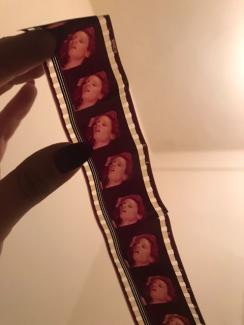
La pièce était sombre mais une source de lumière provenant des fenêtres poussiéreuses tombait sur une pile de bobines de films dans un coin. Des bandes de celluloïde sans vie gisaient emmêlées au pied du projecteur. Les bobines poussiéreuses étaient toutes des westerns, des films de Bollywood et de science-fiction, avec des titres horribles comme La Météorite qui détruisit la Terre, ou d’autres du même genre. Certaines d’entre elles attirèrent mon attention, et notamment de petites bandes de pellicule. Une par une, les bandes montraient différentes scènes de baisers, des danses suggestives, une vague scène de rassemblement, un gros plan d’une femme allongée bouche ouverte, le générique de début d’un film de Bollywood, et une étiquette « Actuellement à l’affiche » répétée sur plusieurs images.
Les génériques des films de Bollywood me rappelaient ma mère. Elle me racontait qu’on distribuait des mouchoirs aux spectateurs et spectatrices à la fin des projections. Je conservai les bandes avec les scènes de baisers et de danses suggestives, supposant qu’elles avaient été coupées pour des raisons de censure. Le gros plan sur la femme me rappela un extrait du film Visible Man de Béla Balázs, ou The Culture of Film, The Spirit of Film ou encore The Theory of the Film. Mon grand-père disait que les gros plans dans un film étaient comme un
soliloque silencieux, dans lequel un visage peut parler avec des nuances de sens les plus subtiles, sans sembler artificielles ni rappeler la distance des spectateurs. Dans ce monologue silencieux, l’âme humaine solitaire peut trouver une langue plus candide et désinhibée que tout soliloque parlé, car elle s’exprime instinctivement, subconsciemment.
Balázs décrivait surtout les gros plans de Jeanne dans le film muet La Passion de Jeanne d’Arc. Il remarquait combien « … dans le (cinéma) muet, l’expression faciale, isolée de son environnement, semble pénétrer une étrange nouvelle dimension de l’âme ».
J’examinai plus précisément la bande de pellicule. La femme semblait morte, son visage semblable à un masque. Cela me fit penser à l’Ophélie du peintre John Everett Millais. Dans son livre On Photography, Susan Sontag dit que la photographie est « une trace, quelque chose de marqué directement sur la bobine, comme une empreinte ou un masque mortuaire ». Ces masques mortuaires sont comme une présence qui rappelle une absence.
Je me souviens de ma rencontre avec un discours sur la mort et la photographie dans le film The Machine that Kills Bad People de Roberto Rossellini, tombé dans l’oubli. Dans ce film, un cameraman prend des photos de gens, qui sont alors figés, puis suspendus dans le temps. Le critique de cinéma français André Bazin disait que la photographie capture les corps hors du flux de l’amour et les conserve en les embaumant. Il décrivait cette momification photographique comme étant « la préservation de la vie par une représentation de la vie ».
Cette cabine de projection, sa disposition et toutes les choses qui semblaient avoir été déplacées, y compris les bandes de pellicules sur le sol, tout ce sur quoi mon grand-père avait laissé sa marque – je voulais absolument tout protéger.
Sous les bandes de pellicule reposait une bobine de film poussiéreuse intacte. On aurait dit que quelqu’un avait regardé le film en faisant dérouler la pellicule à la main. C’est à ce moment que mon cousin arriva en haut de l’escalier en colimaçon et me trouva en train de l’examiner. Se frottant le menton du bout des doigts, de manière très factuelle, il me dit : « Tu as trouvé le porno ».

J’observai la bande de film dans ma main et réalisai que ce n’était pas une scène de décès. La bande avait été coupée de la bobine d’un porno. La femme gémissait d’extase. Les gros plans servent à communiquer des sentiments d’intensité, d’extase, mais je n’avais jamais vraiment utilisé les théories de Balázs pour décrire une scène porno. Il écrivait « le paroxysme dramatique entre deux personnes sera toujours présenté comme un dialogue d’expression faciale en gros plan ». Je fourrai les bandes de films dans ma poche et donnai à la femme le nom d’Ishtar. Elle vit dans mon portefeuille depuis. Il semble étrange de comparer la représentation détaillée des peurs et du courage de Jeanne avec l’expression faciale orgasmique d’Ishtar.
D’après mon cousin, le frère de mon grand-père attendait que ce dernier ait quitté le cinéma et, au lieu de le fermer, il invitait ses amis à des projections privées. Je n’en pensais pas grand-chose. C’était une pratique courante, surtout pendant et après la guerre civile au Liban. Après la guerre, il y avait des téléviseurs dans presque tous les foyers libanais. Je me souviens même en avoir un dans ma chambre à la fin des années 1990, quand j’avais à peu près six ans. On m’avait dit que c’était courant d’acheter des films porno en cassette VHS à l’époque. Mohammed Soueid, un écrivain et réalisateur libanais, m’a dit un jour que les cinémas projetaient des films d’art et d’essai et de pornographie de la moitié des années 1980 à la moitié des années 1990, pour survivre. J’ai aussi entendu dire que les projectionnistes découpaient les bobines de films porno pour modifier les montages et pouvoir projeter quelque chose de différent chaque soir. Les gens sont finalement restés confortablement chez eux à regarder des cassettes VHS sur leur téléviseur, et les cinémas ont commencé à décliner.

Mon cousin redescendit pour consulter les archives administratives dans le bureau.
Je restai dans la cabine et commençai à faire glisser la bande entre mon index et mon majeur, la relevant avec les pouces pour faire lentement défiler les images entre mes mains. Je levai les mains pour capter la lumière de la fenêtre poussiéreuse et plissai les yeux pour tenter de deviner ce que cachaient les vignettes monochromes. Dans cette série d’images figurait un gros plan exagéré d’une bite plantée dans un vagin. L’image se répétait sur plusieurs cadres, jusqu’à ce que j’arrive à un nœud dans la bande, et que j’imagine le reste.
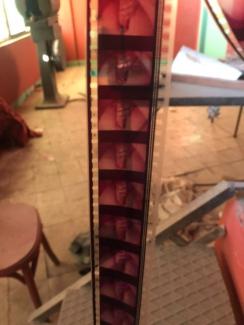
Hank exhibe son érection devant Veronika, couchée sur un lit à côté d’un faux secrétaire Louis XIV. Elle se lève lentement et fait glisser la fine bretelle de sa nuisette transparente de son épaule gauche. Hank dénoue sa robe de voile, la retourne, lui donne une claque sur les fesses et la pousse contre le secrétaire. Il enfonce sa bite dans sa chatte de manière répétée, alors que l’arrière du meuble frappe contre le mur tapissé.
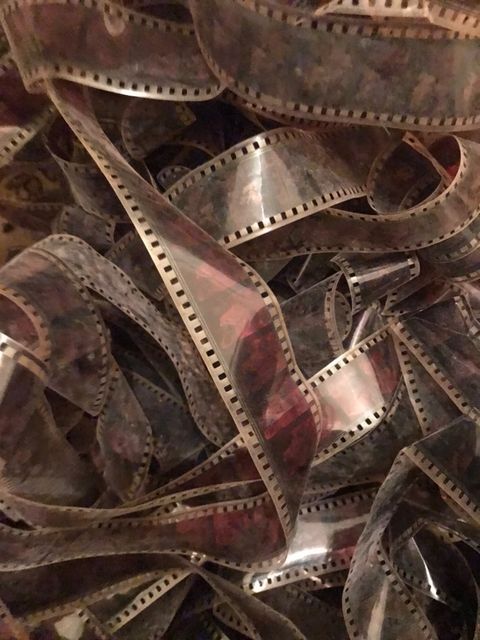
Je fais toujours attention aux décorations intérieures depuis que mon enseignante en Études des femmes dans le porno m’a dit que les plus grandes archives de porno d’Amérique du Nord sont utilisées, de manière intéressante, pour examiner le mobilier de la classe moyenne de l’époque. Donc, alors que Veronika se penche et se fait prendre par derrière par Hank, une assistante en recherche universitaire pourrait tout aussi bien tenter de deviner le design du motif doré sur le secrétaire, ou étudier le relief rococo d’une chaise en bois dans un coin.
Pendant un moment, la cabine est devenue un espace d’imagination sexuelle féminine, perturbant un espace généralement promis à la liberté de la sexualité masculine. J’étais sûre que seuls les hommes pouvaient accéder aux cinémas qui diffusaient des films porno. La bobine de film était trop emmêlée pour pouvoir être démêlée dans une cabine de projection où la poussière s’accumulait depuis une décennie, donc je la fourrai dans mon sac de sport et sortis du cinéma.
Je ne sais pas ce qui m’a pris, mais je me suis sentie obligée de la garder. Je voulais ressentir l’excitation de garder quelque chose de mystérieux, quelque chose de non orthodoxe. Dans mon esprit, j’étais sûre que les gens savaient que je cachais quelque chose pendant que je descendais la rue. J’étais prise d’un sentiment de culpabilité mêlée de plaisir. Je me sentais perverse.
J’entrai dans la maison, préoccupée par le fait d’avoir une bobine de porno dans mon sac de sport et le fil de mes pensées qui s’était déroulé sur la route du retour à la maison. Je me dirigeai immédiatement vers ma chambre. Dans un coin un peu éloigné de mon esprit, je me suis rappelée que derrière mon mur se trouvait la chambre de Layla. Elle n’était probablement pas à la maison, mais la possibilité d’être entendue m’excitait. Je fermai la porte de ma chambre et sortis la bobine du film d’Ishtar.
Je l’imaginais habillée d’une légère robe en voile verte, dansant de manière suggestive devant moi, balançant ses hanches et me souriant du regard. Je m’allongeai sur mon lit et glissai mes doigts dans ma culotte. Soulevant mes hanches, je fis descendre ma main entre mes cuisses pour les écarter et glisser deux doigts à l’intérieur. Je me tendis en caressant mes plis chauds. Je gémis avant même de pouvoir m’arrêter. Je haletai et remuai mes reins. Les rayons de soleil qui entraient par la fenêtre me plaquaient des baisers sur la peau sans le vouloir. Je retenais mon souffle et mes membres tremblaient. J’avalai un cri et reposai à plat sur le matelas.
Quand j’étais en premier cycle à l’université, je suivais un cours d’Introduction au cinéma et la professeure, Erika Balsom, avait prévu une projection du Variety de Bette Gordon. J’étais excitée à l’idée de regarder le premier film de la productrice Christine Vachon, avant qu’elle ne se mette à produire des films qui font maintenant partie du mouvement du Nouveau cinéma queer. Variety était décrit comme un film féministe sur Christine, une femme qui commence à travailler à la billetterie d’un cinéma porno de New York appelé The Variety Theater. Christine peut entendre le son des films au cinéma, mais ne pénètre jamais dans les salles. Elle finit par s’intéresser à un client régulier, qu’elle observe de près. Elle le suit dans une boutique pour adultes où elle se tient à l’écart et feuillette des magazines pour adultes pour la toute première fois.
Le voyeurisme de Christine est affiché de différentes manières tout au long du film. Le script est également très chargé et contient des monologues érotiques qui seraient aujourd’hui considérés obscènes ou vulgaires.
Dans une scène qui se déroule dans une salle de jeux, elle lit de la littérature érotique à son copain. La caméra fait des allers-retours entre des gros plans des fesses de son copain Marc qui joue au flipper, faisant des mouvements de va-et-vient avec ses hanches contre le flipper, et un gros plan du visage de Christine qui lui récite son monologue.
« Sky fait du stop et est pris par une femme qui conduit une camionnette. Il est tard et il a besoin d’un endroit où dormir, elle lui propose donc de dormir chez elle.
Elle lui montre sa chambre et lui propose un verre. Ils boivent en discutant, puis décident d’aller se coucher. Ne parvenant pas à dormir, il remet son pantalon et traverse le hall jusqu’au salon. Il s’arrête avant de pouvoir être vu, mais il peut voir la scène. La femme est allongée nue sur la table basse, dont seules les jambes dépassent. Tout son corps est d’une blancheur excitante, comme s’il n’avait jamais été exposé au soleil. Ses mamelons sont d’un rose brillant, en feu, presque des néons. Ses lèvres sont entrouvertes. Sa longue chevelure de couleur châtain touche le sol; au bout de ses bras tendus, ses doigts caressent l’air. Son corps huilé est tout en rondeurs, sans angle ni os saillants. Glissant sur sa poitrine, un gros serpent entoure un de ses seins et descend contre le second. La langue du serpent lui lèche la chatte, si ouverte, si rouge dans la lumière de la lampe. Chaud et confus, l’homme retourne à sa chambre et, avec beaucoup de difficulté, parvient à s’endormir. Le lendemain matin, autour d’un bol de fraises, la femme lui demande de rester une autre nuit. Une fois encore, il ne parvient pas à dormir […] »
Quand j’avais 23 ans, Lynn, la fille de mon cours de cinéma avec qui je sortais, m’a prise par surprise en m’emmenant regarder des court-métrages érotiques le jour de la Saint-Valentin. L’événement avait lieu au Mayfair Theater, un vieux cinéma indépendant. L’architecture du cinéma rappelait les Nickelodéons d’Amérique du Nord, mais en plus vieillot. Ses balcons étaient décorés avec des cartons de Swamp Thing et d’Alien en taille réelle.
Cette année-là, le jury du festival était présidé par la star de cinéma pour adultes Kacie May, et le programme composé de court-métrages d’une heure et demie. Le contenu allait de courts-métrages soft sans machisme à des films scato fétichistes. Nous avons regardé quelques minutes de ce qui semblait être un porno hétérosexuel soft. Le film suivait un couple qui commence à faire l’amour dans un salon moderne, puis passe à la chambre. Il s’agissait surtout de scènes des deux en train de s’embrasser, se toucher et faire l’amour en position du missionnaire. Puis une femme avec un bob châtain entre dans leur lit, se léchant le dos de la main à petits coups de langue. Elle miaule et grimpe sur le couple, qui ne semblait pas y faire attention. Le couple continue à faire l’amour. Elle va alors jusqu’à la cuisine, ramasse son bol vide avec les dents et le dépose sur un coussin. Elle continue à faire des aller-retours jusqu’au couple pendant tout le reste du film. Cela semblait plutôt absurde. J’ai commencé à rire, mais Lynn avait l’air un peu mal à l’aise. J’ai alors regardé sur notre gauche et vu d’autres spectateurs et spectatrices se passer des bières et se gaver de pop-corn, tout en riant hystériquement. Leur rire ininterrompu et leurs commentaires à haute voix donnèrent le ton du festival. Regarder les spectatrices et les spectateurs est devenu plus intéressant que de regarder les films érotiques. Le Mayfair Theater projetait souvent des films culte, et regarder des films culte est une expérience de communion.
Ce n’est pas exactement la manière dont j’imaginais que l’oncle de ma mère regardait du porno au cinéma de mon grand-père. Les cinémas projetaient de manière évidente des films porno à l’époque, mais je ne pouvais imaginer cela se dérouler dans la ville de naissance de ma mère. Je l’imaginais regarder le film depuis le projecteur dans la cabine afin de pouvoir rapidement arrêter la projection en cas d’arrivée inopinée d’autres personnes. Ses amis prenaient place au balcon à l’arrière. Personne ne pouvait entrer à moins d’avoir la clé, donc ils étaient en sécurité. Ils devaient penser à tout. C’était un quartier chrétien conservateur et ils ne voulaient surtout pas causer d’ennuis. Ils étaient probablement dépassés par des sentiments d’excitation et de culpabilité. Les voix fortes de plaisanteries homoérotiques se mélangeaient à des gémissements et des râles, mais ils se rappelaient mutuellement de baisser le ton toutes les quelques minutes. Ils se relayaient à la fenêtre pour vérifier que les bruits ne pouvaient pas interpeller les voisins. Ils éteignaient parfois les haut-parleurs et regardaient sans le son.
Après une manifestation politique en 2019, je suis tombée sur un bouquiniste sur la rue Riad El Solh, près de la Place des martyrs dans le centre de Beyrouth. Au bout d’une des tables, passés les exemplaires d’Hugo et de Beauvoir, je trouvai une pile de romans érotiques et de magazines pour adultes. C’étaient des traductions de publications occidentales. J’en pris une vraiment au hasard; tout ce que je voulais, c’était détenir un exemplaire, juste pour le frisson. J’ai cherché celui avec la couverture la plus artistique.
En me rendant ma monnaie, le vendeur me demanda : « Je ne t’ai pas déjà vue quelque part? ». Il se mit à observer ma poitrine, descendant le regard plus bas. Il supposait probablement que je travaillais dans l’industrie du sexe ou du porno. Je le regardai bien dans les yeux et lui répondis que « Non ». Je fis demi-tour, prête à m’éloigner avec mon magazine. Il m’arrêta alors pour me dire qu’il avait beaucoup d’archives dans son sous-sol, et qu’il vendait régulièrement des collections et des publications de porno sur eBay, vers l’Europe et les États-Unis. J’aurais bien été intéressée à fouiller dans ses archives, mais je n’étais pas à l’aise et déclinai son offre. Je ne me sentais pas en sécurité. Je lui demandai où il trouvait ses romans. À ma grande surprise, ils étaient publiés au Liban.
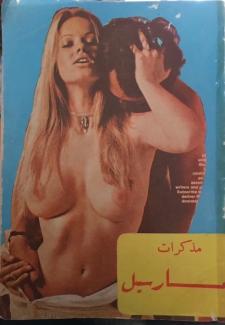
En me dirigeant vers la statue de Riad El Solh, je parcourus la publication que j’avais achetée et trouvai le format du texte quelque peu démodé; les caractères de police étaient un peu flous, rendant le texte illisible. Les photographies à l’intérieur étaient faites de collages pornographiques aux couleurs passées. Ça paraissait assez cru; ça me plaisait. Le roman avait pour titre Les journaux intimes de Marcel.
La couverture était de manière évidente un découpage de magazines collés sur une feuille bleue. Sur l’image, une femme torse nu attrape la tête de son amant, enfonçant ses doigts dans ses cheveux, pendant qu’il lui embrasse le cou par derrière. La fermeture de sa jupe est entièrement descendue. Son amant à la main sur le bas de sa hanche droite. Sa main à elle est sur la sienne. Ses lèvres sont retroussées et entrouvertes, comme si elle gémissait de plaisir, ses cheveux blonds et raides à la mode des années 1970 descendant sur sa poitrine et couvrant partiellement ses mamelons.
J’ouvris la première page. La préface indiquait
ce qui se traduit par
« Désir
et débauche »
ou par
« Désir
et perversion »
Je lus le premier chapitre et réalisai que la personne qui avait traduit le texte avait changé le prénom du personnage principal en Fouad, un prénom arabe. Je supposai que l’idée était que le lectorat masculin libanais s’identifie à l’histoire. En continuant ma lecture, je réalisai que toutes ses amantes portaient des noms étrangers comme Hanna, Marla, Marcel, Marta.
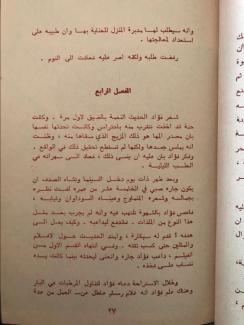
Je réalisai à la page 27, chapitre quatre, que Marcel était un des amants de Fouad.

La scène avait lieu dans un cinéma. Les cinémas étaient souvent des espaces de liberté sexuelle en Amérique du Nord, et particulièrement depuis les années 1970, suite à la révolution sexuelle.
Je supposais également que tous les noms étrangers avaient été conservés pour donner une touche exotique au texte et le rendre moins tabou. La pornographie et l’érotisme étaient attribués à Hollywood, bien que le monde arabe ait de tout temps produit des textes érotiques. L’érotisme est devenu tabou, et la seule manière d’en produire sans danger est de le commercialiser comme un produit étranger, exotique.
Il est intéressant de noter comment l’exotique couvre l’érotique. La différence entre les deux adjectifs remonte à leur étymologie grecque respective : exotique vient de exo, « extérieur », qui signifie également autre, étranger; tandis qu’érotique est dérivé d’Éros, le dieu de l’amour sexuel. Donc, ce qui est exotique est mystérieux étranger – et ce qui est érotique est sexy.
Au Liban, la distinction entre l’exotique et l’érotique au cinéma est très ténue, tout comme la frontière entre films d’art et films porno. En 2015, lors d’une conversation avec la réalisatrice Jocelyne Saab dans un restaurant vietnamien de Paris, j’appris qu’elle avait dû tourner son film Dunia une deuxième fois pour modifier le dialecte égyptien en dialecte libanais. Elle me dit que ses acteurs et actrices étaient égyptiennes et égyptiens, et qu’elle n’était pas très stricte quant au script. Elle n’avait cependant pas le droit d’utiliser le dialecte égyptien. Le film devait être en libanais parce que les producteurs s’inquiétaient des scènes érotiques un peu limites dans le film. Ils en ont donc fait un film étranger.
par Ana María Belique
El Batey Naranjo est une communauté un peu à l’écart de la ville mais regorgeant de personnes travailleuses et enthousiastes. (...)
< illustration : « Tejedoras de sueños » (« Tisseuses de rêves ») , par Diana Mar
Cuando la gente se reúne a escala global, como personas individuales y como movimientos, se genera una fuerza arrolladora. Únete a nosotrxs en Bangkok, Tailandia, y de manera virtual, en diciembre de 2024.
Binta Sarr fue una activista por la justicia social, económica, cultural y política, y una ingeniera hidráulica en Senegal. Después de 13 años en la administración pública, Binta dejó ese camino para trabajar con mujeres rurales y marginadas.
Fue de este compromiso que surgió la Association for the Advancement of Senegalese Women [Asociación para el Avance de las Mujeres Senegalesas] (APROFES, por sus siglas en inglés), un movimiento y organización de base que Binta fundó en 1987. Uno de sus principales enfoques fue la formación de dirigentes, en relación no solo con las actividades económicas, sino también con los derechos de las mujeres y el acceso a los puestos de toma de decisiones.
"Las poblaciones de base deben organizarse, movilizarse, asumir el control ciudadano y exigir la gobernabilidad democrática en todos los sectores del espacio público. La prioridad de los movimientos sociales debe ir más allá de la lucha contra la pobreza y debe centrarse en programas de desarrollo articulados y coherentes en consonancia con los principios de los derechos humanos, teniendo en cuenta al mismo tiempo sus necesidades y preocupaciones tanto a nivel nacional como subregional y desde una perspectiva de integración africana y mundial". - Binta Sarr
Partiendo de la convicción de Binta de que el cambio fundamental de la condición de la mujer requiere una transformación de las actitudes masculinas, APROFES adoptó un enfoque interdisciplinario, al utilizar la radio, los seminarios y el teatro popular, además de proporcionar una educación pública innovadora y brindar apoyo cultural a las acciones de sensibilización. Su compañía de teatro popular representó piezas originales sobre el sistema de castas en el Senegal, el alcoholismo y la violencia conyugal. Binta y su equipo también analizaron la conexión crucial entre la comunidad y el mundo en general.
"Para APROFES, se trata de estudiar y tener en cuenta las interacciones entre lo micro y lo macro, lo local y lo global y también, las diferentes facetas del desarrollo. Desde la esclavitud hasta la colonización, el neocolonialismo y la mercantilización del desarrollo humano, la mayor parte de los recursos de África y del Tercer Mundo (petróleo, oro, minerales y otros recursos naturales) están todavía bajo el control de carteles financieros y las otras multinacionales que dominan este mundo globalizado". - Binta Sarr
Binta fue una de las integrantes fundadoras de la sección femenina de la Asociación Cultural y Deportiva Magg Daan. Recibió distinciones del Gobernador Regional y del Ministro de Hidrología por su "devoción por la población rural".
Nacida en 1954 en Guiguineo, un pequeño pueblo rural, Binta falleció en septiembre de 2019.
"La pérdida es inconmensurable, el dolor es pesado y profundo, pero resistiremos para no llorar a Binta; no lloraremos a Binta, mantendremos la imagen de su amplia sonrisa en todas las circunstancias, para resistir e inspirarnos en ella, para mantener, consolidar y desarrollar su obra..." - Página de Facebook de Aprofes, 24 de septiembre de 2019.
"¡Adiós Binta! Creemos que tu inmenso legado será preservado." - Elimane FALL , presidente de ACS Magg-Daan