AWID es un organización feminista internacional de membresía, que brinda apoyo a los movimientos que trabajan para lograr la justicia de género y los derechos de las mujeres en todo el mundo.
Confrontando al extractivismo y al poder corporativo
Defensoras de derechos humanos de todo el planeta defienden sus tierras, medios de subsistencia y sus comunidades ante las industrias extractivas y el poder corporativo. Ellas hacen frente a fuertes intereses económicos y políticos que promueven el robo de tierras, el desplazamiento de comunidades, la pérdida de los medios de subsistencia y la degradación del medioambiente.
¿Por qué resistir a las industrias extractivas?
El extractivismo es un modelo económico y político de desarrollo que mercantiliza la naturaleza y prioriza la ganancia por sobre los derechos humanos y el medioambiente. Arraigado en la historia colonial, refuerza las desigualdades sociales y económicas tanto a nivel local como global. Muchas veces, las mujeres negras, rurales e indígenas son las más afectadas por el extractivismo, y además son notablemente excluidas de la toma de decisiones. Desafiando estas fuerzas patriarcales y neocoloniales, las mujeres se alzan en defensa de los derechos, las tierras, las personas y la naturaleza.
Riegos críticos y violencia específica de género
Las defensoras que enfrentan a las industrias extractivas, experimentan una diversidad de riesgos, amenazas y violaciones, incluidas la criminalización, la estigmatización, la violencia y laintimidación. Sus historias dan cuenta de marcados aspectos de violencia sexual y de género. Entre los perpetradores se incluyen autoridades estatales y locales, las corporaciones, la policía, el ejército, las fuerzas paramilitares y de seguridad privada, y en algunos casos, sus propias comunidades.
Actuar juntxs
AWID y la Coalición Internacional de Mujeres Defensoras de Derechos Humanos (WHRDIC por su sigla en inglés) tienen el placer de anunciar «Defensoras de derechos humanos confrontado al extractivismo y al poder corporativo»; un proyecto interregional de investigación que documenta las experiencias vividas por las defensoras de Asia, África y América Latina.
Alentamos a activistas, integrantes de movimientos sociales, la sociedad civil organizada, donantes y responsables de políticas públicas, a leer y utilizar estas producciones para el trabajo de incidencia, con fines educativos y como fuente de inspiración:
AWID reconoce con gratitud las invaluables contribuciones de cada Defensora de Derechos Humanos que ha sido parte de este proyecto. Esta guía ha sido posible gracias su generosidad y apertura al compartir sobre sus experiencias y lecciones. Su coraje, creatividad y resiliencia son una inspiración para todxs nosotrxs. ¡Muchas gracias!
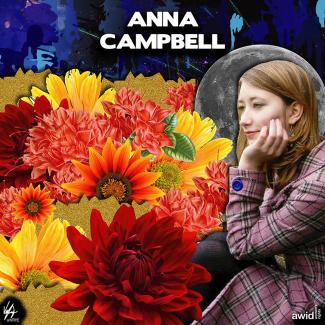
Anna grew up in Lewes, Sussex (UK) and, after deciding not to pursue her English degree at Sheffield University, she moved to Bristol and became a plumber.
She spent much of her time defending the marginalised and under-privileged, attending anti-fascist rallies, and offering support to the women of Dale Farm when they were threatened with eviction. A vegan and animal lover, she attended hunt sabotages and her name is honoured on PETA's 'Tree of Life' Memorial. Anna went to Rojava in May 2017 with a strong commitment to women's empowerment, full representation of all ethnicities and protection of the environment.
Anna died on March 15, 2018 when she was hit by a Turkish airstrike in the town of Afrin, northern Syria. Anna was fighting with the Women's Protection Forces (YPJ), when she was killed.
Idées de financement
Cette page vous fournira des idées pour financer votre participation au 14ème Forum de l’AWID.
En planifiant l’activité que vous voulez présenter au Forum, pensez aussi à la façon dont vous financerez votre participation. Prenez en compte : l’hébergement, le voyage, le visa, les frais d’inscription au forum, etc.
Veuillez noter que ce Forum offrira de nombreux « espaces ouverts » et moments d’apprentissage et d’échange entre mouvements, mais aussi moins de sessions formelles. (Consultez la section « Comment décrire le Forum pour votre levée de fonds » ci-dessous concernant le langage à adopter dans votre demande).
Travaillez avec vos bailleurs actuels :
Votre meilleure option sera toujours de faire appel à vos bailleurs de fonds actuels : Si votre groupe bénéficie de l'appui d'organismes donateurs, dites-leur que vous souhaitez participer au Forum de l’AWID pour apprendre, expérimenter, échanger et travailler en réseau, et ce même si votre activité n'est pas sélectionnée dans le programme final.
Pour soutenir votre participation, vos bailleurs de fonds devront en être informés longtemps à l'avance, alors n’attendez pas pour leur en parler déjà tout de suite ! (Ils sont déjà en train de décider des fonds qu’ils vont distribuer en 2020. Nous vous recommandons de les contacter au plus tard début 2020.) Bon nombre de donateurs qui soutiennent les organisations féministes disposent de budgets alloués au déplacement pour le Forum.
D’autres pourraient les inclure dans des renouvellements de subventions ou dans d’autres financements permettant de couvrir les frais de déplacements.
Trouver de nouveaux donateurs :
Si vous ne disposez pas actuellement d’un soutien financier, ou que vous ne pouvez garantir de subventions dédiées au déplacement pour le Forum, vous pouvez envisager de contacter de nouveaux donateurs.
Explorez les réseaux de donateurs, comme Candid et le Centre Européen des Fondations (EFC) (liens en anglais), pour obtenir une liste de donateurs et d’opportunités dans votre région
Les délais et exigences varient d’un donateur à l’autre, et la procédure d’octroi de financement peut prendre plusieurs mois. Si vous envisagez d’effectuer de nouvelles demandes de financement, nous vous encourageons à le faire au plus tôt.
Inspirations créatives :
Les mouvements féministes ont depuis longtemps fait preuve de créativité lorsque s’agissait de financer leur propre militantisme. Voici quelques idées que nous avons été en mesure de rassembler afin d’inspirer des modes alternatifs de financement.
Mobilisez votre communauté pour soutenir la participation : réalisez des levées de fonds grâce à de légères contributions de membres à travers des dîners et des soirées dansantes communautaires, ainsi que des spectacles, des évènements et des excursions au niveau local.
Mobilisez votre réseau en organisant des cercles de donateurs·trices et du crowdsourcing (appel au grand public) via une variété d’outils en ligne comme gofundme, indiegogo, plumfund ou kickstarter (liens en anglais).
Développez des sources locales de revenus, y compris les dons individuels et les cotisations de membres.
Envisagez le cofinancement et initiez des partenariats stratégiques avec d’autres communautés et groupes œuvrant pour la justice sociale.
Le Fonds d’accès de l’AWID : l’AWID s'efforce de faire du Forum un véritable rassemblement mondial avec la participation de divers mouvements, régions et générations. A cette fin, l'AWID mobilise des ressources pour constituer un Fonds d'accès limité (AF, selon son sigle anglais) afin d'aider les participant-e-s à couvrir leurs frais de participation.
Vous pouvez indiquer dans votre candidature si vous souhaitez soumettre une demande de financement au Fonds d'accès de l’AWID.
N'oubliez pas que ces ressources sont très limitées et que nous ne serons pas en mesure de soutenir tou.te.s les candidat.e.s. Même si vous faites une demande pour le Fonds d'accès de l’AWID, nous vous encourageons à continuer à explorer d'autres options pour financer votre participation au Forum. Les décisions relatives au Fonds d'accès seront confirmées d'ici la fin du mois de juin 2020.
Comment décrire le Forum pour votre levée de fonds :
Voici quelques extraits de messages qui peuvent vous aider à prendre contact avec vos donateurs ou votre réseau. N’hésitez pas à les adapter de la façon que vous jugerez la plus utile à vos yeux !
Le Forum de l’AWID est un espace cocréé par des mouvements féministes qui stimule les participant·e·s dans leur propre activisme, et renforce les connexions entre divers mouvements de droits et de justice. Les participant·e·s en tirent des sources d’espoir, d’énergie et d’imagination débridée, tout en approfondissant leurs analyses partagées et leurs apprentissages. C’est aussi un lieu de renforcement de la solidarité entre mouvements qui permet de développer des programmes d’action intégrés et de faire avancer des stratégies communes.
Notre organisation est à la recherche de fonds pour participer à ce Forum afin de se connecter à d’autres activistes et mouvements du monde entier, de consolider nos stratégies et de partager notre travail. Les participant·e·s des années précédentes nous inspirent, notamment lorsque ces personnes décrivent le pouvoir de ce rassemblement mondial féministe :
« Pendant quelques jours… les voix se sont tissées en une perspective mondiale sur l’état de l’égalité de genre. Et lorsque je dis mondiale, je fais référence à des traductions simultanées en sept langues… »
« Nous nous sommes rappelé·e·s que nous n’étions pas seul·e·s. Le Forum est un moyen pour traduire le collectif dans nos mouvements. En dépit des idéologies, des identités ou des frontières, notre force réside dans notre vision et notre soutien les un·e·s pour les autres. »
Veuillez noter que ce Forum offrira de nombreux « espaces ouverts » et moments d’apprentissage et d’échange entre mouvements, mais aussi moins de sessions formelles.
Même si beaucoup de participant·e·s ne feront pas de présentation aux sessions formelles, le Forum offrira cependant un espace précieux d’apprentissage, de réflexion stratégique et d’expérimentation du pouvoir collectif en action des mouvements féministes.
Considérations budgétaires :
Lors du calcul de vos coûts et du montant nécessaire à financer, il est important de prendre en compte certaines dépenses qui peuvent survenir. Voici des exemples d’éléments clés à considérer :
Le prix du vol
Les frais d’inscription au Forum (veuillez noter que même si vous obtenez un soutien de l’AWID via le Fonds d’accès, vous devez régler vous-même vos frais d’inscription)
Les frais de visa
L’assurance santé voyage
Les transports locaux depuis et vers l’aéroport (taxis ou autres moyens de transport)
Les frais d’escale, tels que l'hôtel et les repas, si votre voyage en avion comprend une longue correspondance
L’hébergement, comprenant un jour de repos si vous avez parcouru une grande distance
La technologie, comprenant l’accès WiFi et les frais de communication internationale si requis pendant le voyage (l’AWID fournira le WiFi pendant le Forum)
Les coûts matériels pour tout support (visuels, rapports, travaux artistiques!) que vous souhaitez apporter, partager ou échanger durant le Forum
Les frais accessoires et/ou per diems pour couvrir les repas et d’autres besoins qui peuvent survenir (tous les déjeuners et pauses-café/thé, ainsi qu’un dîner seront fournis par l’AWID durant le Forum)
L’accessibilité, par exemple toute aide supplémentaire pouvant être jugée nécessaire pour que votre voyage soit confortable, sûr et sécurisant
Au plaisir de vous voir au Forum !
Le Forum est un processus collaboratif
Le 14ème Forum de l'AWID aura lieu du 11 au 14 janvier 2021 à Taipei, Taiwan.
C'est bien plus qu’un événement de quatre jours. C’est un arrêt de plus dans un parcours de renforcement de mouvement autour des réalités féministes, lequel a déjà commencé et continuera bien au-delà des dates du Forum.
Comparte tus historias y conoce las de otrxs. Al conectar nuestras experiencias, relatos y propuestas ayudamos a crear en conjunto y amplificar las Realidades Feministas.
На данный момент опрос в KOBO доступен на арабском, английском, французском, португальском, русском и испанском языках. В начале опроса у вас будет возможность выбрать нужный вам язык.
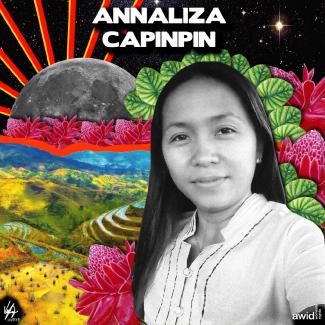
Conocida como «Ate Liza», Annaliza era la presidenta del Consejo de la Reforma Agraria para lxs Pionerxs de Mindanao, un grupo coodinador general en Tacurong City, Filipinas.
Querida madre de cuatro hijxs, maestra y líder comunitaria, Annaliza es recordada por su comunidad como «la que lidera cuando nadie quiere liderar, la que habla cuando nadie quiere hablar, la que se puso de pie con coraje para ayudar a lxs beneficiarxs de la reforma agraria a ser dueñxs de sus tierras».
Atacantes desconocidos la ultimaron a balazos en frente de la Universidad Estatal Sultán Kudarat (SKSU), mientras se dirigía a la Escuela Secundaria Nacional Salabaca, en Esperanza.
Su familia ha dicho: «Naghihintay pa rin kami ng hustisya para sa kanya» (todavía estamos esperando justicia para ella).
nous estimons que pour être transformateurs et forts, les mouvements féministes doivent continuer à travailler au-delà de leurs similitudes et de leurs différences. Nous devons également interroger le pouvoir et les privilèges, tant au sein qu'à l'extérieur de nos mouvements.
Devo fazer alguma preparação para responder ao inquérito?
Tendo em conta que o inquérito WITM foca-se nas realidades do financiamento de organizações feministas, a maioria das perguntas aborda o tópico do financiamento do seu grupo entre 2021-2023. Será preciso ter essas informações facilmente acessíveis para preencher o inquérito (por exemplo, os seus orçamentos anuais e as principais fontes de financiamento).
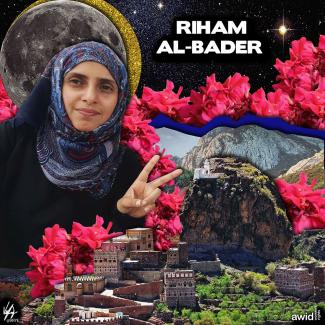
Riham était avocate et activiste engagée à suivre de près la question des violations des droits au Yémen.
Elle a travaillé avec d'autres activistes pour fournir de la nourriture et de l'eau aux civils piégés par les milices houthies dans la banlieue de la ville de Taiz.
Riham a été tuée en février 2018. La cause de son décès, soit par la main d’un tireur d'élite ou par un tir de mortier, n’a pas été confirmée. Personne n'a été tenu responsable de son meurtre.
My Queer Ramadan
by Amal Amer, California, US
I pray with my family for the first time in six years while wrapped in a keffiyah I scavenged from a dumpster.
Since coming into myself, I have refused to pray in jamaat with my family. Joining in the ranks of hierarchy, “women” behind “men” irks me. It grates my skin and teeth to the degree where I can’t focus, and the standing, bowing, and kneeling feels like a battle against my true being. Each second listening, a betrayal of my nature. Instead, I pray by myself in my own way.
Yet this Ramadan, I feel different. Back in my childhood home after many years, I am choosing to fast. I choose suhoor with my family, and praying together feels like a natural extension of eating together. After eating, my mother, father, brother and I line up for fajr.
I pray behind Baba, but my prayer is my own. I close my eyes, staying with my breath and my body.
My eyes closed, I open my inner sight to a wide open window on a vista of mountains, bright sun spreading over a light mist of clouds. This was the view I had while praying in jamaat at a queer Muslim wedding I attended in the mountains of the South of France last September.
I lined up with the wedding guests, queer and trans folks of North and West African, Arab, and European descent. Folks of all faiths joined while some chose to stand in respect at the sides or behind. The groups did not fall along fault lines of “Muslim” or “non-Muslim,” “religious” or “non religious.” The two lovers marrying each led us in prayer, and so did the Muslim woman officiating the nikkah. Each of the three led us in two rounds of prayers, two raqat.
I showed up as I was, my body uncovered. I had not washed. I only passed my camera to a friend who chose to stand at the side.
In the first sujood, I broke down crying. I wore a jean dress that loves my body, one found at a thrift store my ex-girlfriend pointed me to.
The sobs come through my whole body during the prayer, and I put my head to the earth with my community like a homecoming. A return to the embrace of love both intensely personal and communal, and I am held.
It feels like swimming in the sea with multiple people: joyful togetherness. But when you go beneath the water, it’s just you and the current.
Like a dozen people buried in the same graveyard. Separate, but sharing the same soil. Becoming one with the growing earth.
That was how it felt to pray in communion at a queer Muslim wedding.
I welcomed the light of acceptance while showing up as myself that day, with a group of people who had also chosen to claim all the parts of themselves in love. That light made a home in me, and it illuminates my heart in the dark living room at fajr this Ramadan morning. Though I pray with my birth family who do not accept all of me, I see myself praying in jamaat at that glorious wedding with all of my queer Muslim ancestors, my queer angels, my lineage, my soul family, my queer Muslim family, all standing in prayer. Bowing as one.
My family’s home does not always feel like my own, though I am here now. I take the bukhoor from room to room, barefoot. Smolder from the censer, an incense that says, “Here I am.” Baraka, blessings from the source of all, Allah and the Goddess to each room in the house, bidding good and dispersing the unbidden.
As I write this the sky turns the same royal blue I am familiar with from exiting the club and pulling all-nighters. It is the gradient of morning I step into as I go to sleep.
Word meanings:
Ramadan: the Muslim holy month, traditionally observed with 29 days of fasting without food or water during daylight hours
Keffiyah: a patterned scarf common in the SWANA region. The black and white version referred to here is associated with the Palestinian liberation movement
Pray in jamaat: Islamic ritual prayer in a group. Participants follow one person, traditionally male, who calls the prayer aloud.
Suhoor: the meal before the fast starts at dawn
Fajr: the dawn prayer
Baba: father
Raqat: one round of prayer consisting of standing, bowing, kneeling, and pressing the head to the ground
Sujood:the prayer position when one presses one’s head to the earth
Nikkah: the religious marriage ceremony
Bukhoor: an Arabic incense, woodchips soaked in resin
Pictures of angels in my life, just some women and non-binary people of color hanging out, taking care of themselves and expressing love to each other. It's these simplest moments that are the most empowering.
"I participated in a member-only activity and I was particularly moved to see how there was space for everyone to share and that there was no judgment whatsoever. The entire session was energetic and vibrant."
- Kirthi Jayakumar, Founder, The Gender Security Project, India