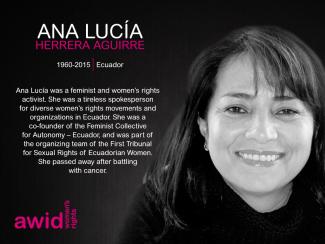
Ana Lucia Herrera Aguirre
Defensoras de derechos humanos de todo el planeta defienden sus tierras, medios de subsistencia y sus comunidades ante las industrias extractivas y el poder corporativo. Ellas hacen frente a fuertes intereses económicos y políticos que promueven el robo de tierras, el desplazamiento de comunidades, la pérdida de los medios de subsistencia y la degradación del medioambiente.
El extractivismo es un modelo económico y político de desarrollo que mercantiliza la naturaleza y prioriza la ganancia por sobre los derechos humanos y el medioambiente. Arraigado en la historia colonial, refuerza las desigualdades sociales y económicas tanto a nivel local como global. Muchas veces, las mujeres negras, rurales e indígenas son las más afectadas por el extractivismo, y además son notablemente excluidas de la toma de decisiones. Desafiando estas fuerzas patriarcales y neocoloniales, las mujeres se alzan en defensa de los derechos, las tierras, las personas y la naturaleza.
Las defensoras que enfrentan a las industrias extractivas, experimentan una diversidad de riesgos, amenazas y violaciones, incluidas la criminalización, la estigmatización, la violencia y laintimidación. Sus historias dan cuenta de marcados aspectos de violencia sexual y de género. Entre los perpetradores se incluyen autoridades estatales y locales, las corporaciones, la policía, el ejército, las fuerzas paramilitares y de seguridad privada, y en algunos casos, sus propias comunidades.
AWID y la Coalición Internacional de Mujeres Defensoras de Derechos Humanos (WHRDIC por su sigla en inglés) tienen el placer de anunciar «Defensoras de derechos humanos confrontado al extractivismo y al poder corporativo»; un proyecto interregional de investigación que documenta las experiencias vividas por las defensoras de Asia, África y América Latina.
Alentamos a activistas, integrantes de movimientos sociales, la sociedad civil organizada, donantes y responsables de políticas públicas, a leer y utilizar estas producciones para el trabajo de incidencia, con fines educativos y como fuente de inspiración:
«Defensoras de derechos humanos confrontando a las industrias extractivas: un panorama de los riesgos críticos y las obligaciones en materia de derechos humanos» es un informe sobre políticas desde la perspectiva de género (en inglés, pronto disponible en español). Analiza las formas de violaciones y los tipos de perpetradores, hace referencia a las obligaciones relevantes en derechos humanos e incluye recomendaciones de políticas para los estados, corporaciones, la sociedad civil y donantes.
«Tejiendo la Resistencia a través de la Acción: Las Estrategias de las Defensoras de Derechos Humanos contra a las Industrias Extractivas» es una guía práctica que expone formas creativas y deliberadas de acción, tácticas exitosas e inspiradoras historias de resistencias.
El video «Defendiendo a las Personas y al Planeta: Mujeres Confrontando a las Industrias Extractivas» está protagonizado por defensoras de derechos humanos de África, Asia y América Latina, que comparten sus luchas por la tierra y la vida, y hablan de los riesgos y desafíos que enfrentan en su activismo.
«Desafiar al poder corporativo: Las luchas por los derechos de las mujeres, la justicia económica y de género» es un informe de investigación que explica los impactos del poder corporativo y ofrece ideas sobre estrategias de resistencia.
AWID reconoce con gratitud las invaluables contribuciones de cada Defensora de Derechos Humanos que ha sido parte de este proyecto. Esta guía ha sido posible gracias su generosidad y apertura al compartir sobre sus experiencias y lecciones. Su coraje, creatividad y resiliencia son una inspiración para todxs nosotrxs. ¡Muchas gracias!
Pour la première fois, le Forum de l'AWID propose trois modes de participation :
Les participant.e.s se réuniront à Bangkok, en Thaïlande. Nous sommes impatient.e.s de vous y retrouver!
Nuestro poder colectivo, nuestra sabiduría y nuestro compromiso no tienen límites. Pero nuestras cuentas bancarias sí.
Las instantáneas de datos están basadas en las respuestas de 1.174 organizaciones feministas, por los derechos de las mujeres, LGBTQI+ y aliadas (en adelante «organizaciones feministas y por los derechos de las mujeres») de 128 países a ¿Dónde está el dinero para las organizaciones feministas? la encuesta de AWID.
Alors que le capitalisme hétéropatriarcal s’acharne à nous contraindre au consumérisme et à la conformité, nous constatons que nos luttes sont cloisonnées et séparées par des frontières aussi bien physiques que virtuelles.
This policy governs all pages hosted at www.awid.org, and any other websites under the control of the AWID (the “Website”) and registrations for these sites. It does not apply to pages hosted by organisations other than AWID, to which we may link and whose privacy policies may differ. Please read the following policy to understand our privacy policy regarding nature, purpose, using and sharing of your personal identifiable information that is collected via this website.
Generally, you can browse this website without submitting your personal information to us. However, in some circumstances, we will ask for your personal information.
When you are on the website and are asked for personal information, you are sharing that information only with AWID.
When you register to use the website – for example, subscribe to receive emails from us or apply to become a member - you provide us with the mandatory information about you like Name, country, language to receive email updates and email address. This information is provided by you through secure forms and is stored on secure servers.
Also, while becoming a member or registering for events, you may need to provide payment information. AWID doesn’t store any credit card information on its servers and uses payment gateway to process the payment information.
When you communicate with AWID, provide optional information through forms on the website or use the site to communicate with other members, we collect information about your communication and any information you choose to provide.
When you communicate with us, we collect your communication and any other information you choose to provide us.
In addition, when you interact with the Website, our servers may keep an activity log that does not identify you individually (“Non-Personal Information”). Generally, we collect the following categories of Non-Personal Information:
For more information about cookies, please see www.allaboutcookies.org.
If you do not wish to receive cookies you can easily modify your web browser to refuse cookies, or to notify you when you receive a new cookie, see how here.
AWID uses the information we collect about you to:
If you have subscribed to AWID´s e-newsletters or email updates or you have become a member, we will send you regular communications as specified in the relevant area of the website. You are able to unsubscribe from any of the e-newsletters or email updates at any time by using the unsubscribe information provided in our emails.
The accuracy of your individual identifying information is important to AWID. We are always looking for ways to make it easier for you to review and correct the information that AWID maintains about you through our website. If you change your email address, or if any of the other information we hold is inaccurate or out of date, please write to us here.
Except as explained below, AWID will not disclose any of your personally identifiable information, and will not sell or rent lists containing your information to third parties. AWID may disclose information when it has your permission to do so or under special circumstances, such as when it believes in good faith that the law requires it.
We are continuously implementing and updating administrative, technical, and physical security measures to help protect your information against unauthorized access, loss, destruction, or alteration. Some of the safeguards we use to protect your information are firewalls and data encryption, and information access controls. If you know or have reason to believe that your AWID membership credentials have been lost, stolen, misappropriated, or otherwise compromised or in case of any actual or suspected unauthorized use of your AWID membership account, please contact us through on Contact Us.
This policy may change from time to time. The changed policy will be posted on this website and Last updated date at the end of the policy will be updated. There will be an email update sent to you for the revised policy and if you do not agree with the revised policy, you will have the option to cancel you registration(s) with us. You can also write to us here. We welcome your feedback!
Last updated: May 2019
Bessy était aussi membre d’Arcoíris, une organisation qui soutient la communauté LGBTI+. Elle était en outre la personne référente de la plateforme Derechos aquí y Ahora (les droits ici et maintenant) au Honduras et plaidait fermement en faveur d’une pleine citoyenneté pour les personnes trans, ainsi que pour l’adoption d’une loi sur l’identité de genre qui permettrait aux personnes trans de changer légalement d’identité de genre.
« Depuis le début de l’année [2019], la communauté trans a été victime d’une série d’attaques, parce qu’elle a défendu et demandé des droits. » Rihanna Ferrera (sœur de Bessy)
Bessy était une travailleuse du sexe qui a été tuée par balle par deux hommes, au début du mois de juillet 2019, alors qu’elle travaillait dans les rues Comayagüela. Ses assaillants ont par la suite été arrêtés.
Bessy fait partie des nombreux·ses activistes des droits LGBTI+ du Honduras, assassiné·e·s en raison de leur identité et de leur travail, parmi qui se trouvent : Cynthia Nicole, Angy Ferreira, Estefania "Nia" Zuniga, Gloria Carolina Hernandez Vasquez, Paola Barraza, Violeta Rivas et Sherly Montoya.
Le cas de Bessy incarne l’injustice, de même qu’un problème plus large de violence systémique à laquelle se confronte la communauté LGBTI+ au Honduras, puisque l’État ne parvient pas à garantir l’offre de droits ni à fournir une protection. Cela est à l’origine d’une culture de l’impunité.
Malgré les risques auxquels sont confronté.e.s les activistes LGBTI+ au Honduras, tous et toutes continuent leur travail pour défier et résister à la violence, ainsi que pour combattre la stigmatisation et la discrimination au quotidien.
« Si je meurs, il faut que ce soit pour quelque chose de bien, pas pour une futilité. Je ne veux pas mourir en fuyant, en étant lâche. Si je meurs, je veux que les gens disent que je suis mort·e en me battant pour ce qui m’appartient » - membre d’Arcoíris
La date limite pour proposer une activité est prolongée jusqu'au 1er février 2024
Dans l'esprit du thème du Forum, nous vous invitons à proposer une diversité de sujets et de formats d'ateliers qui :
Donde les organizadores de la primera línea de defensa conducen y las corporaciones rinden cuentas.
📅 Martes 11 de noviembre de 2025
📍 En línea y en la Universidade Federal do Pará, Belém
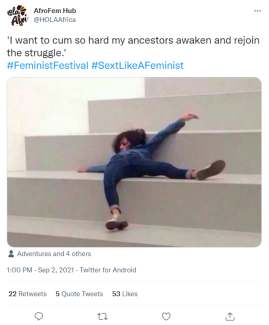
« Je veux jouir tellement fort que ça réveillera mes ancêtres, qui se joindront à la lutte. »

Como movimientos feministas y sindicales, juntxs en solidaridad, articulamos los siguientes puntos como una visión colectiva de las economías de los cuidados con los derechos de lxs trabajadorxs domésticxs como eje central.
El trabajo doméstico y de cuidado estuvo en la primera línea de fuego durante y después de la pandemia de COVID-19, al proporcionar los medios para sobrellevar las múltiples crisis globales que se intersectan. El Banco Mundial, el Fondo Monetario Internacional y otras instituciones multilaterales también reconocen la importancia del trabajo doméstico y de cuidados para el sostenimiento de la economía. Sin embargo, vemos que esta atención adopta un enfoque utilitarista (es decir, el trabajo de cuidados contribuye a sostener a la economía "productiva") centrado en el lucro, sin reconocer los cuidados como un derecho humano y un bien público, ni prestar atención a lxs trabajadorxs que realizan la mayor parte de este trabajo.

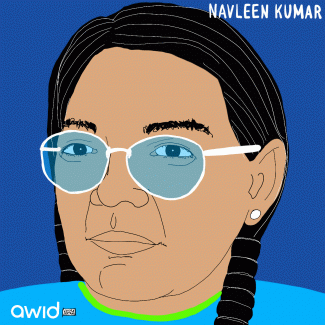
"She was not a person. She was a power."
- a fellow activist remembering Navleen Kumar
With commitment and integrity, she worked for more than a decade to protect and restore the lands of Indigenous people (adivasi) in Thane district, an area taken away by property and land developers using such means as coercion and intimidation. She fought this injustice and crime through legal interventions at different courts, realizing that manipulation of land records was a recurrent feature in most cases of land acquisition. In one of the cases, that of the Wartha (a tribal family), Navleen found out that the family had been cheated with the complicity of government officials.
Through her work, she helped restore the land back to the Wartha family and continued to pursue other cases of adivasi land transfers.
“Her paper on the impact of land alienation on adivasi women and children traces the history and complexities of tribal alienation from the 1970s, when middle class families began to move to the extended suburbs of Mumbai as the real estate value in the city spiralled.
Housing complexes mushroomed in these suburbs, and the illiterate tribals paid the price for this. Prime land near the railway lines fetched a high price and builders swooped down on this belt like vultures, to grab land from tribals and other local residents by illegal means.”
-Jaya Menon, Justice and Peace Commission
During the course of her activism, Navleen received numerous threats and survived several attempts on her life. Despite these, she continued working on what was not only important to her but contributed to changing the lives and realities of many she supported in the struggle for social justice.
Navleen was stabbed to death on 19 June 2002 in her apartment building. Two local gangsters were arrested for her murder.
Alors que les dirigeant·es du monde se réunissent au Brésil, il est vital que les mouvements féministes, en particulier les pays de la Majorité globale, aient des espaces indépendants pour se rassembler, mettre au point des stratégies et bouleverser le cours des choses.
Ces pôles remettent en cause l’élitisme des discussions climat, se concentrent sur les expériences vécues et entendent construire le pouvoir collectif au-delà des frontières. Ils constituent un contrepoids critique aux négociations internationales verticales et souvent excluantes. Les pôles visent à encourager des solutions pilotées par la communauté, amplifier les revendications féministes et veiller à ce que les principes féministes de soin et de solidarité façonnent l’agenda climat. Il ne s’agit pas seulement d’être présentes à la COP30, il faut redéfinir la conversation sur la justice climatique, dans des termes féministes.
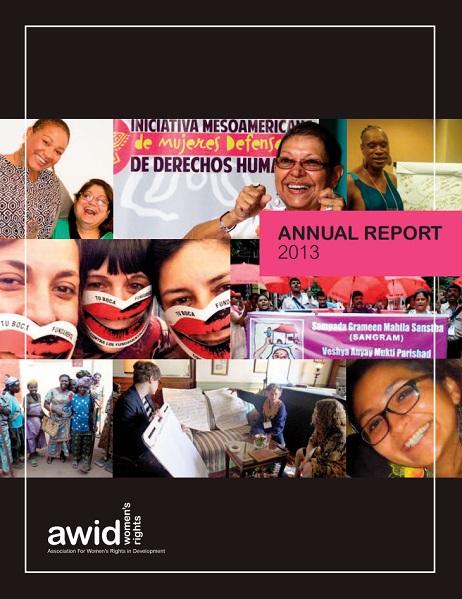
2013 marked the beginning of our 2013-2016 Strategic Plan, developed in response to the current global context. This report provides highlights of our analysis of the global context, how we position ourselves as a global feminist membership organization in this context, the outcomes we seek to achieve, and how our work is organized to achieve these outcomes.
Building Feminist Economies is about creating a world with clean air to breath and water to drink, with meaningful labour and care for ourselves and our communities, where we can all enjoy our economic, sexual and political autonomy.
In the world we live in today, the economy continues to rely on women’s unpaid and undervalued care work for the profit of others. The pursuit of “growth” only expands extractivism - a model of development based on massive extraction and exploitation of natural resources that keeps destroying people and planet while concentrating wealth in the hands of global elites. Meanwhile, access to healthcare, education, a decent wage and social security is becoming a privilege to few. This economic model sits upon white supremacy, colonialism and patriarchy.
Adopting solely a “women’s economic empowerment approach” is merely to integrate women deeper into this system. It may be a temporary means of survival. We need to plant the seeds to make another world possible while we tear down the walls of the existing one.
We believe in the ability of feminist movements to work for change with broad alliances across social movements. By amplifying feminist proposals and visions, we aim to build new paradigms of just economies.
Our approach must be interconnected and intersectional, because sexual and bodily autonomy will not be possible until each and every one of us enjoys economic rights and independence. We aim to work with those who resist and counter the global rise of the conservative right and religious fundamentalisms as no just economy is possible until we shake the foundations of the current system.
Advance feminist agendas: We counter corporate power and impunity for human rights abuses by working with allies to ensure that we put forward feminist, women’s rights and gender justice perspectives in policy spaces. For example, learn more about our work on the future international legally binding instrument on “transnational corporations and other business enterprises with respect to human rights” at the United Nations Human Rights Council.
Mobilize solidarity actions: We work to strengthen the links between feminist and tax justice movements, including reclaiming the public resources lost through illicit financial flows (IFFs) to ensure social and gender justice.
Build knowledge: We provide women human rights defenders (WHRDs) with strategic information vital to challenge corporate power and extractivism. We will contribute to build the knowledge about local and global financing and investment mechanisms fuelling extractivism.
Create and amplify alternatives: We engage and mobilize our members and movements in visioning feminist economies and sharing feminist knowledges, practices and agendas for economic justice.
“The corporate revolution will collapse if we refuse to buy what they are selling – their ideas, their version of history, their wars, their weapons, their notion of inevitability. Another world is not only possible, she is on her way. On a quiet day, I can hear her breathing”.
Arundhati Roy, War Talk
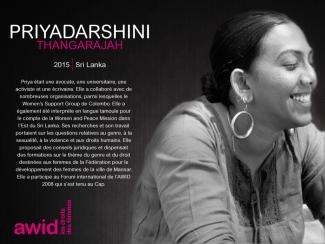
Lo personal es político, y la apasionada y valiente Nadyn Jouny personificó este mantra feminista. Nadyn experimentó de primera mano el dolor de la violencia estructural de los sistemas legales que despojan a las mujeres de sus derechos.
Cuando Nadyn decidió solicitar el divorcio, los tribunales religiosos chiítas, bajo las Leyes de Estatuto Personal Libanesas, le negaron la custodia de su joven hijo Karam. Nadyn, como tantas otras mujeres del Líbano y de otros países, se vio atrapada entre el dolor imposible de dejar una relación no deseada y abusiva y de perder a la vez los derechos sobre su hijo. Sin embargo, Nadyn se defendió, y lo habría de hacerlo hasta el último día.
Nadyn utilizó su habilidad con los medios de comunicación para convertirse en una voz franca a favor de las mujeres que luchan contra la discriminación en la legislación familiar, en el Líbano y a nivel internacional. Nadyn cofundó el grupo autofinanciado "Protecting Lebanese Women" [Protegiendo a las Mujeres Libanesas] (PLW, por sus siglas en inglés) y se unió a muchas otras madres libanesas que se enfrentaban a problemas similares de custodia. Juntas, trabajaron para crear conciencia sobre las injusticias extremas a las que se enfrentaban, a nivel nacional, protestaron ante los tribunales religiosos por sus derechos y, a nivel internacional, llamaron la atención de los medios de comunicación.
Nadyn también trabajó con ABAAD - Resource Center for Gender Equality [Centro de Recursos para la Igualdad de Género], otra organización por los derechos de las mujeres en el Líbano, para realizar campañas en favor de los derechos de las mujeres, la igualdad en la legislación familiar y relativa a las custodias y contra los matrimonios forzados y precoces.
Para muchxs de sus colegas, Nadyn llegó a "simbolizar la lucha de una madre libanesa contra la supresión y la misoginia de todo tipo" (en inglés), al utilizar "su experiencia personal y trayectoria individual de empoderamiento, dio a otras mujeres esperanza para que ellas también pudieran ser un catalizador para el cambio positivo" - ABAAD - Centro de Recursos para la Igualdad entre los Géneros, Líbano.
El 6 de octubre de 2019, Nadyn murió trágicamente en un accidente de automóvil cuando se dirigía a protestar por los injustos aumentos de impuestos en un país que ya se enfrentaba a una espiral de crisis financiera. Nadyn Jouny tenía solo 29 años en el momento de su muerte.
جديد
كمشارك/ة عبر الإنترنت، يمكنك توجيه النشاطات والتواصل والتحدث مع الآخرين/ الأخريات وتجربة الإبداع والفن والاحتفال بمنتدى جمعية حقوق المرأة في التنمية بشكل مباشر. سيستمتع المشاركون/ات المتصلون/ات عبر الإنترنت ببرنامج غني ومتنوع، بدءًا من ورشات العمل والنقاشات وحتى نشاطات الاستشفاء والعروض الموسيقية. ستركز بعض الأنشطة على التواصل بين المشاركين/ات عبر الإنترنت، وسيكون البعض الآخر هجينًا بالفعل، يركز على الاتصال والتفاعل بين المشاركين/ات عبر الإنترنت وأولئك الموجودين/ات في بانكوك.