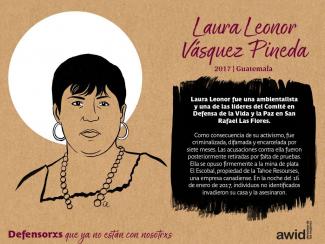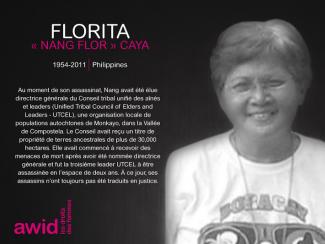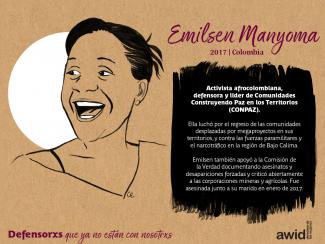
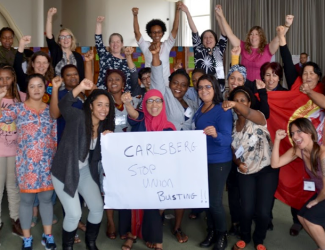
Confrontando al extractivismo y al poder corporativo
Defensoras de derechos humanos de todo el planeta defienden sus tierras, medios de subsistencia y sus comunidades ante las industrias extractivas y el poder corporativo. Ellas hacen frente a fuertes intereses económicos y políticos que promueven el robo de tierras, el desplazamiento de comunidades, la pérdida de los medios de subsistencia y la degradación del medioambiente.
¿Por qué resistir a las industrias extractivas?
El extractivismo es un modelo económico y político de desarrollo que mercantiliza la naturaleza y prioriza la ganancia por sobre los derechos humanos y el medioambiente. Arraigado en la historia colonial, refuerza las desigualdades sociales y económicas tanto a nivel local como global. Muchas veces, las mujeres negras, rurales e indígenas son las más afectadas por el extractivismo, y además son notablemente excluidas de la toma de decisiones. Desafiando estas fuerzas patriarcales y neocoloniales, las mujeres se alzan en defensa de los derechos, las tierras, las personas y la naturaleza.
Riegos críticos y violencia específica de género
Las defensoras que enfrentan a las industrias extractivas, experimentan una diversidad de riesgos, amenazas y violaciones, incluidas la criminalización, la estigmatización, la violencia y laintimidación. Sus historias dan cuenta de marcados aspectos de violencia sexual y de género. Entre los perpetradores se incluyen autoridades estatales y locales, las corporaciones, la policía, el ejército, las fuerzas paramilitares y de seguridad privada, y en algunos casos, sus propias comunidades.
Actuar juntxs
AWID y la Coalición Internacional de Mujeres Defensoras de Derechos Humanos (WHRDIC por su sigla en inglés) tienen el placer de anunciar «Defensoras de derechos humanos confrontado al extractivismo y al poder corporativo»; un proyecto interregional de investigación que documenta las experiencias vividas por las defensoras de Asia, África y América Latina.
Alentamos a activistas, integrantes de movimientos sociales, la sociedad civil organizada, donantes y responsables de políticas públicas, a leer y utilizar estas producciones para el trabajo de incidencia, con fines educativos y como fuente de inspiración:
-
«Defensoras de derechos humanos confrontando a las industrias extractivas: un panorama de los riesgos críticos y las obligaciones en materia de derechos humanos» es un informe sobre políticas desde la perspectiva de género (en inglés, pronto disponible en español). Analiza las formas de violaciones y los tipos de perpetradores, hace referencia a las obligaciones relevantes en derechos humanos e incluye recomendaciones de políticas para los estados, corporaciones, la sociedad civil y donantes.
-
«Tejiendo la Resistencia a través de la Acción: Las Estrategias de las Defensoras de Derechos Humanos contra a las Industrias Extractivas» es una guía práctica que expone formas creativas y deliberadas de acción, tácticas exitosas e inspiradoras historias de resistencias.
-
El video «Defendiendo a las Personas y al Planeta: Mujeres Confrontando a las Industrias Extractivas» está protagonizado por defensoras de derechos humanos de África, Asia y América Latina, que comparten sus luchas por la tierra y la vida, y hablan de los riesgos y desafíos que enfrentan en su activismo.
-
«Desafiar al poder corporativo: Las luchas por los derechos de las mujeres, la justicia económica y de género» es un informe de investigación que explica los impactos del poder corporativo y ofrece ideas sobre estrategias de resistencia.
¡Comparte tu experiencia y tus preguntas!
◾️ ¿De qué manera estos recursos pueden ayudarte en tu activismo y tu trabajo de defensa?
◾️ ¿Qué informaciones o conocimientos adicionales necesitas para la mejor utilización de estos recursos?
¡Gracias!
AWID reconoce con gratitud las invaluables contribuciones de cada Defensora de Derechos Humanos que ha sido parte de este proyecto. Esta guía ha sido posible gracias su generosidad y apertura al compartir sobre sus experiencias y lecciones. Su coraje, creatividad y resiliencia son una inspiración para todxs nosotrxs. ¡Muchas gracias!
Contenido relacionado
¿Necesito visa para asistir al Foro de Taipéi?
Si tienes pasaporte de alguno de los siguientes países (el tiempo de estadía permitido varía según el país), NO necesitas visa para asistir al Foro de Taipéi:
Alemania, Andorra, Australia, Austria, Bélgica, Belice, Bulgaria, Brunei, Canadá, Chile, Ciudad del Vaticano, Croacia, Chipre, Dinamarca, Eslovaquia, Eslovenia, Estados Unidos de América, Estonia, España, Esuatini, Filipinas, Finlandia, Francia, Grecia, Guatemala, Haití, Honduras, Hungría, Irlanda, Islandia, Israel, Italia, Japón*, Letonia, Liechtenstein, Lituania, Luxemburgo, Malasia, Malta, Islas Marshall, Mónaco, Nauru, Nueva Zelanda, Nicaragua, Noruega, Países Bajos, Palaos, Paraguay, Polonia, Portugal, Reino Unido, República Checa, República de Corea, República Dominicana, Rumania, Rusia, San Cristóbal y Nieves, San Marino, Santa Lucía, San Vicente y las Granadinas, Singapur, Suecia, Suiza y Tuvalu.
Las personas con cualquier otro pasaporte NECESITARÁN VISA para ir a Taipéi.
Por favor ten en cuenta:
Es probable que, una vez que te hayas inscripto para asistir al Foro, te llegue un código relacionado con el evento que te permitirá tramitar tu visa en forma electrónica, cualquiera sea tu ciudadanía.
Brindaremos más información sobre este tema cuando se abra el proceso de inscripción.
L’activisme au Moyen-Orient et en Afrique du Nord
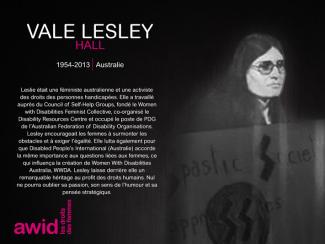
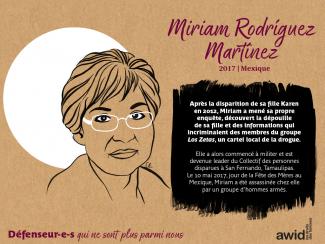
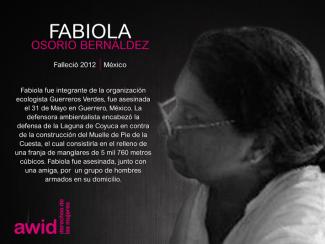
Notre hommage en ligne met à l’honneur cinq défenseuses des droits humains assassinées au Moyen-Orient ou en Afrique du Nord. Ces défenseuses étaient avocates ou militantes et ont œuvré pour les droits des femmes ou pour les droits civils. Leur mort met en évidence les conditions de travail souvent difficiles et dangereuses dans leurs pays respectifs. Nous vous invitons à vous joindre à nous pour commémorer la vie, le travail et l’activisme de ces femmes. Faites circuler ces mèmes auprès de vos collègues et amis ainsi que dans vos réseaux et twittez en utilisant les hashtags #WHRDTribute et #16Jours.
S'il vous plaît cliquez sur chaque image ci-dessous pour voir une version plus grande et pour télécharger comme un fichier


Snippet FEA argentina history cooperatives (ES)
Argentina tiene una larga historia de cooperativas autogestionadas y lugares de trabajo controlados por lxs trabajadorxs.
En 2001, el país vivió una de las peores crisis económicas de su historia.
Como respuesta a la recesión y como forma de resistencia y resiliencia, lxs trabajadorxs de todo el país comenzaron a ocupar sus lugares de trabajo.
La Cooperativa Textil Nadia Echazú fue la primera cooperativa creada por y para personas trans y travesti en busca de autonomía económica y condiciones de vida dignas.
Proporciona oportunidades de trabajo, acceso a la seguridad social, ingresos sostenibles y derechos económicos para las comunidades a las que sirve.
Snippet - WITM Who should - RU
КОМУ СТОИТ ПРОЙТИ ЭТОТ ОПРОС?
Опрос предназначен для групп, организаций и движений, работающих исключительно или главным образом по вопросам защиты прав женщин, ЛГБТКИ+, гендерной справедливости во всех контекстах, на всех уровнях и во всех регионах. Если одно из этих направлений является основным видом деятельности вашей группы, коллектива, сети или любого другого типа организации – независимо от того, зарегистрирована она или нет, недавно создана или существует уже давно, мы приглашаем вас принять участие в этом опросе.

* На данном этапе мы не ожидаем ответов от частных лиц или женских и феминистских фондов.
Узнайте больше об опросе:
загляните в часто задаваемые вопросы
Winnie Madikizela-Mandela
Winnie has been described as a “militant firebrand activist” who fought the apartheid regime in South Africa.
She was imprisoned multiple times, and on many occasions placed in solitary confinement.
Ma’Winnie, as she is affectionately remembered, was known for being outspoken about the challenges Black women faced during and after apartheid, having been on the receiving end of these brutalities herself as a mother, wife and activist during the struggle. She transcended the misconception that leadership is gender, class or race-based. Despite being a controversial figure, she is remembered by many by her Xhosa name, “ Nomzamo”, which means "She who endures trials".
Ma’Winnie continues to be an inspiration to many, particularly young South African women for whom her death has spurred a burgeoning movement, with the mantra: "She didn't die, she multiplied."
WHRDs from Sub-Saharan Africa
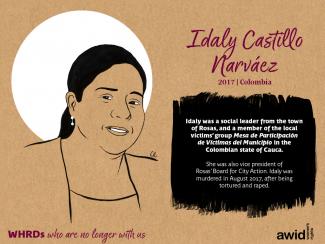
In our 2015 Online Tribute to Women Human Rights Defenders No Longer With Us we are commemorating four women from Sub-Saharan Africa, three of whom were murdered due to their work and/or who they were in their gender identity and sexual orientation. Their deaths highlight the violence LGBT persons often face in the region and across the globe. Please join AWID in honoring these women, their activism and legacy by sharing the memes below with your colleagues, networks and friends and by using the hashtags #WHRDTribute and #16Days.
Please click on each image below to see a larger version and download as a file


Snippet FEA Life expectancy of a trans and travesti (FR)

L'espérance de vie d'une personne trans et travesti en Argentine est de 37 ans - l'âge moyen de la population générale est de 77 ans.
Digna Ochoa
Snippet - WITM To make - PT

Para dar ênfase à complexidade do financiamento de várias formas de organização feminista;
Barin Kobane
Barin integraba la unidad de batalla formada íntegramente por mujeres de la Unidad de Protección del Pueblo Kurdo (YPG).
La mataron cuando estaba en servicio activo.
La periodista libanesa Hifaa Zuaiter escribió: «Barin representa todo lo que hemos oído acerca del coraje de las combatientes kurdas, y su muerte es mucho más que el matar a un rival o el resultado de una lucha política o étnica. El horror de exhibir su cuerpo sólo porque es una mujer surge del hecho de que ella se atrevió a amenazar la hegemonía masculina al convertirse en una combatiente en un campo de batalla que se suponía era solo para hombres».
Research methology
Over eight years, we did four global surveys and built a research methodology.
In 2013, we published three global reports. These reports confirm that women’s rights organizations are doing the heavy lifting to advance women’s rights and gender equality by using diverse, creative and long-term strategies, all while being underfunded.
Our 2010 global survey showed that the collective income of 740 women’s organizations around the world totaled only USD 104 million. Compare this with Greenpeace International, one organization with a 2010 budget of USD 310 million1. Imagine the impact these groups could have if they were able to access all the financial resources they need and more?
AWID’s WITM research has catalyzed increased funding for women’s rights organizing. WITM research was a driving force behind the Catapult crowdfunding platform, which has raised USD 6.5 million for women’s rights. The Dutch Government cited WITM research as a reason for its unprecedented MDG 3 Fund of EU 82 million. WITM research has also led to the creation of several new funds: FRIDA – The Young Feminist Fund, the Indigenous Women’s Fund, Fundo Elas, the Mediterranean Women’s Fund and the Rita Fund.
Funding trends analyses
While the WITM research has shed important light on the global funding landscape, AWID and partners have identified the need to dig deeper, to analyze funding trends by region, population and issue. In response, organizations are now using AWID’s WITM research methodology to do their own funding trends analyses. For example, in November 2013, Kosova Women’s Network and Alter Habitus – Institute for Studies in Society and Culture published Where is the Money for Women’s Rights? A Kosovo Case Study.
At the same time, AWID continues to collaborate with partners in Where is the Money for Indigenous Women’s Rights (with International Indigenous Women’s Forum and International Funders for Indigenous Peoples) and our upcoming Where is the Money for Women’s Rights in Brazil? (with Fundo Elas).
Several organizations have also conducted their own independent funding trends research, deepening their understanding of the funding landscape and politics behind it. For example, the South Asian Women’s Fund was inspired by AWID’s WITM research to conduct funding trends reports for each country in South Asia, as well as a regional overview. Other examples of research outside of AWID include the collaboration between Open Society Foundations, Mama Cash, and the Red Umbrella Fund to produce the report Funding for Sex Workers Rights, and the first-ever survey on trans* and intersex funding by Global Action for Trans* Equality and American Jewish World Service.
Snippet FEA Exclusion and Stigma (EN)

THE EXCLUSION, STIGMA AND INSTITUTIONAL ABUSE
that trans and travesti people continue to face on a daily basis
Esperanza Pérez Labrador
Snippet - WITM About the survey - PT
Sobre o inquérito
- GLOBAL E DIVERSO: Reflete sobre as realidades de financiamento da organização feminista em escala global e separadas por regiões
- CONTEXTUALIZADO: Dá enfâse às vozes, perspetivas e experiências vividas dos movimentos feministas com toda a sua riqueza, coragem e diversidade, nos seus respetivos contextos
- CRIADO EM COLABORAÇÃO: Desenvolvido e testado em colaboração conjunta com membres da AWID e parceires do movimento
- COMPLEMENTAR: Contribui para os testemunhos existentes e aprofunda os mesmos sobre o estado de financiamento para a organização feminista, de direitos das mulheres e de justiça de género por ativistas, financiadores feministas e aliados
- MULTILINGUE: Disponível em árabe, inglês, francês, português, russo e espanhol.
- CONFIDENCIAL: Damos prioridade à sua privacidade e ao seu anonimato. A AWID jamais divulgará informações sobre uma organização específica ou informações que permitam identificar uma organização através da respetiva localização ou características. A nossa política de privacidade detalhada está disponível aqui.
- ACESSÍVEL: Acessível para pessoas com uma variedade diversificada de habilidades auditivas, de movimento, visuais e cognitivas, sendo que demora aproximadamente 30 minutos a ser realizado.
- REPRODUZÍVEL: Pode ser reproduzido através dos movimentos nos seus respetivos contextos; ferramentas de inquérito e conjuntos de dados estarão disponíveis publicamente para abranger mais inquéritos e advocacia coletiva.
Jacqueline Coulibaly Ki-Zerbo
Jacqueline était une éducatrice malienne pionnière de la cause féministe et nationaliste.
Elle a d’abord enseigné l'anglais au Sénégal avant d'être recrutée en 1961 par le Lycée Philippe Zinda Kaboré à Ouagadougou, au Burkina Faso. Etant donné son engagement militant, elle a pris part au soulèvement populaire du 3 janvier 1966. Entre 1961 et 1966, Jacqueline était par ailleurs responsable de la presse syndicale, La voix des enseignants. Elle a été nommée directrice du Cours normal des jeunes filles (aujourd’hui connu sous le nom de lycée Nelson Mandela) jusqu'en 1974 et s'est consacrée à l'éducation des filles et à la promotion des droits des femmes.
En 1984, elle a reçu le prix Paul G. Hoffmann pour sa contribution remarquable en matière de développement national et international.
7. Synthesize your research findings
Now that you have analyzed all your data – from your survey, interviews, desk research and potentially other sources – you can create your final product.
In this section:
- Create your final product
1. Write clearly
2. Make it pretty- Gather review and inputs
1. Polish your results
2. Facilitate the feedback
Create your final product
Your final product will be the document that will summarize, analyze and criticize your data. That will be the piece that you will share with your community to present and explain your research to your audience.
At AWID, we often write a comprehensive written report that analyzes each set of data and synthesizes all of our findings, then later create smaller products, such as infographics and summaries (explained in the subsequent section “Finalize and format”).
1. Write clearly
- Organize your data as you would like to tell a story. You can follow the order of your survey. Or you can regroup some questions to lead to your conclusion in a smooth and progressive way.
- Adapt your language to your audience. Use universal language and avoid jargon or too technical terms.
Importance of the editor
An editor will proofread, ensure concise writing, conduct fact-checking, point out inconsistencies that need to be resolved, arrange the flow of the document and possibly suggest titles.
Your editor should preferably be someone who understands and knows your WITM work but who was not directly involved in the research. This will bring in a fresh perspective.
2. Make it pretty
-
Use the data collected to create graphs and tables. These type of visuals are a compelling way to highlight the main findings of your research and validate your analysis.
-
Source relevant images that can illustrate your report.
-
Highlight key-numbers and/or powerful testimonials.
Remember: The more accessible your product is, the more people will want to read (and share!) it.
Gather review & inputs
At this point, you have collected all your data, analyzed it and transformed it into your final product, likely in a long report.
1. Polish your results
Before moving on to the next steps – you should share your final research product with your advisor organizations, activists, and donors.
This is a great moment to check the following points:
- Are there any key points missing in your analysis of the present funding landscape and trends?
- Are there any key points missing in your conclusions?
- Are there any inaccuracies in the data that need to be corrected?
- General suggestions on strengthening the report to achieve your goals as listed in your research framing.
Once you have inputted all feedback from your advisors, be sure to run it by your editor once more.
This will now be the final, completed version of your report. If you intend to publish the final report in other languages, now is the time to send it for translation.
2. Facilitate the feedback
- Your advisors are likely busy with their regular responsibilities. Be sure to request feedback within a reasonable deadline.
- Keep your request for feedback brief and specific, so it is easy for them to respond. If you like, you can simply copy and paste the bullet points we have provided.
- If you are publishing in multiple languages, ensure you have advisors who can also review the final translated versions of your product(s).
This is a significant contribution from your advisors. Consider offering them some form of recognition.
Previous step
Next step

Estimated time:
• 2 - 5 months
People needed:
• 1 or more research person(s)
• 1 Editor (or web-editor if you create an online product)
• Translator(s), if done in more than one language
Resource needed:
• List of advisor organizations, activists, and donors.
• Concept note (from “Frame your research” section)
• Survey topline results
• Prepared interview questions
• Interview results
• Desk research data
• All other data used in report