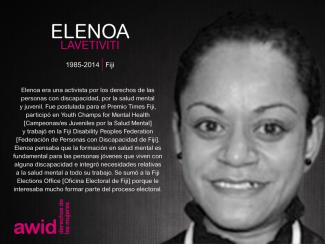
Elenoa Lavetiviti
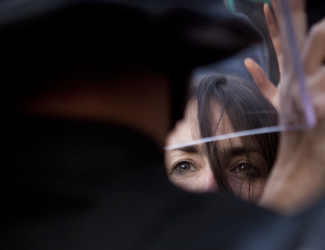
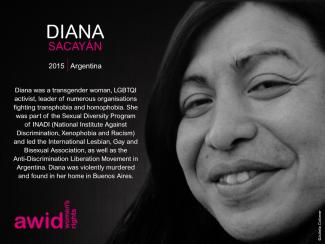
WHRDs are self-identified women and lesbian, bisexual, transgender, queer and intersex (LBTQI) people and others who defend rights and are subject to gender-specific risks and threats due to their human rights work and/or as a direct consequence of their gender identity or sexual orientation.
WHRDs are subject to systematic violence and discrimination due to their identities and unyielding struggles for rights, equality and justice.
The WHRD Program collaborates with international and regional partners as well as the AWID membership to raise awareness about these risks and threats, advocate for feminist and holistic measures of protection and safety, and actively promote a culture of self-care and collective well being in our movements.
WHRDs are exposed to the same types of risks that all other defenders who defend human rights, communities, and the environment face. However, they are also exposed to gender-based violence and gender-specific risks because they challenge existing gender norms within their communities and societies.
We work collaboratively with international and regional networks and our membership
We aim to contribute to a safer world for WHRDs, their families and communities. We believe that action for rights and justice should not put WHRDs at risk; it should be appreciated and celebrated.
Promoting collaboration and coordination among human rights and women’s rights organizations at the international level to strengthen responses concerning safety and wellbeing of WHRDs.
Supporting regional networks of WHRDs and their organizations, such as the Mesoamerican Initiative for WHRDs and the WHRD Middle East and North Africa Coalition, in promoting and strengthening collective action for protection - emphasizing the establishment of solidarity and protection networks, the promotion of self-care, and advocacy and mobilization for the safety of WHRDs;
Increasing the visibility and recognition of WHRDs and their struggles, as well as the risks that they encounter by documenting the attacks that they face, and researching, producing, and disseminating information on their struggles, strategies, and challenges:
Mobilizing urgent responses of international solidarity for WHRDs at risk through our international and regional networks, and our active membership.
Thanks to our global feminist community! From May to August 2024, nearly 1,200 organizations working for Women's rights, gender justice, and LBTQI+ equality shared their experiences in the WITM survey. The results offer a unique picture of how feminist movements are resourced and where gaps remain.
En todo el mundo lxs defensorxs feministas, por los derechos de las mujeres y por la justicia de género están enfrentándose a las agendas fascistas y fundamentalistas. Estas fuerzas opresivas atacan a las mujeres, a las personas que tienen una identidad o expresión de género y/u orientación sexual no convencional y a otras comunidades oprimidas.
Las ideologías discriminatorias están socavando y cooptando nuestros sistemas y estándares de derechos humanos, para convertirlos en dominio de unxs pocxs.. Por esto, la iniciativa Promoción de los Derechos Universales y la Justicia (PDUJ) promueve la universalidad de los derechos, el principio fundante según el cual los derechos humanos les pertenecen a todxs sin excepción, sin importar quién sean.
Creamos un espacio para que los movimientos feministas, de derechos de las mujeres y de justicia de género y sus aliadxs puedan reconocer la influencia y el impacto de lxs actorxs anti-derechos., pensar estrategias y realizar acciones colectivas para contrarrestarlos También buscamos promover los derechos de las mujeres y los marcos, las normas y las propuestas feministas así como proteger y promover la universalidad de los derechos.
Construimos conocimiento: Apoyamos a los movimientos feministas, de derechos de las mujeres y de justicia de género difundiendo y divulgando conocimiento y mensajes clave sobre lxs actorxs anti-derechos, sus estrategias y el impacto que tienen sobre los sistemas internacionales de derechos humanos a través del liderazgo de AWID en el Observatorio sobre la Universalidad de los Derechos (OURs)*.
Promovemos agendas feministas: Nos aliamos con diversos actores en espacios internacionales de derechos humanos, incluyendo el Consejo de Derechos Humanos, la Comisión sobre Población y Desarrollo, la Comisión sobre la Condición Social y Jurídica de las Mujeres y la Asamblea General de la ONU. .
Generamos y amplificamos alternativas: Junto con nuestra membresía, buscamos que los movimientos que se organizan a nivel local, nacional y regional en distintos espacios conozcan y exijan que se apliquen los compromisos, resoluciones y normas internacionales.
Movilizamos la acción solidaria: Actuamos junto a las defensoras de derechos humanos, incluyendo a activistas trans e intersex, así como a lxs jóvenes feministas, para enfrentar los fundamentalismos y fascismos y para llamar la atención sobre situaciones de peligro.
Nuevo
Como participante en línea, puedes facilitar actividades, conectarte y conversar con otras personas, y experimentar de primera mano la creatividad, el arte y la celebración del Foro de AWID. Lxs participantes que se conecten en línea disfrutarán de un programa rico y diverso: desde talleres y conversaciones hasta actividades de sanación y espectáculos musicales. Algunas actividades estarán centradas en la conexión entre participantes en línea, y otras serán verdaderamente híbridas, centradas en la conexión y la interacción entre lxs participantes en línea y quienes estén en Bangkok.

Desde siempre el feminismo sostiene que lo personal es político. El Festival Crear, Resister, Transform generó espacios en los que el feminismo pudo discutir las cuestiones relativas al cuerpo, el género y las sexualidades, y analizar las interconexiones de estos asuntos entendidos como experiencias profundas del cuerpo y, a la vez, un terreno en los que los derechos están en constante disputa y riesgo en la sociedad.
El poder de los movimientos feministas radica en el modo de organizarnos y emprender acciones coordinadas, no solo en nuestras propias comunidades y movimientos, sino también con otras causas y grupos aliados por la justicia social. El espacio brindó la oportunidad de que los movimientos compartieran y reforzaran los procesos de organización y las estrategias tácticas de forma mutua.
La pandemia mundial sanitaria del COVID-19 ha puesto de manifiesto como nunca antes el fracaso del capitalismo neoliberal, expuesto las fallas de nuestros sistemas y acentuado la necesidad de construir nuevas realidades y las oportunidades para ello. Una recuperación económica y social feminista exige el trabajo conjunto. Esta edición, en alianza con Kohl: una publicación para la investigación sobre cuerpo y género, analizará soluciones, propuestas y realidades feministas para transformar nuestro mundo actual, nuestros cuerpos y nuestras sexualidades.
Puedes explorar los artículos en línea o
Descargar en PDF
With 1,773 fossil fuel lobbyists at last year's COP29, we're heading alongside other feminists to Belém, Brazil for COP30, from 10 November – 21 November 2025, where we will continue to denounce false solutions, call out corporate capture, demand that States uphold their commitments under the Common but Differentiated Responsibilities and Respective Capabilities and push for feminist economic alternatives.
$2.7 trillion for the military. $300 billion for climate justice. We're here to flip the script.

Apreciaremos propuestas de actividades referidas a todo el rango de áreas temáticas e intersecciones que son importantes para los movimientos feministas y por la justicia de género. En el formulario de propuesta podrás marcar más de un tema que se adecúe a tu actividad.
por Chinelo Onwualu
El 2 de septiembre de 2021 lxs increíbles activistas feministas y por la justicia social del festival Crear | Résister | Transform de AWID nos juntamos no solo para compartir estrategias, crear juntxs y transformar al mundo sino también para decir cosas sucias en Twitter.
Panels, workshops, plenaries and spaces for exchange between collectives, activists and organizations in struggle to collectively walk the path towards an agenda and a program of struggle for ecosocialism.
📅 November 8 - November 11, 2025
📍 Buenos Aires, Argentina

Por primera vez, el Foro de AWID ofrece tres modos de participación:
Lxs participantes se reunirán en Bangkok, Tailandia. ¡No podemos esperar!
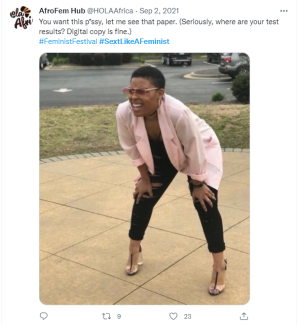
Tu veux cette ch*tte? Montre-moi ton doc. (Mais vraiment, où sont tes résultats de tests? En numérique ça ira.)

Nuestro informe anual 2012 destaca los momentos clave de nuestro trabajo durante el año para contribuir al avance de los derechos de las mujeres y la igualdad de género de manera audaz, creativa y efectiva en todo el mundo.
*Sitios web en inglés
**Sitio web en francés
جديد
سيجتمع المشاركات/ون فعليًا في عدد من المواقع خارج مكان انعقاد المنتدى في بانكوك، في أجزاء مختلفة من العالم، في كل يوم من أيام المنتدى. وستكون جميع هذه المواقع ذاتية التنظيم مرتبطة افتراضيًا لموقع انعقاد المنتدى في بانكوك. كما هو الحال مع الأفراد المتواصلون عبر الإنترنت، سيتمكن المشاركون/ات من تسيير النشاطات والمشاركة في المحادثات والاستمتاع ببرنامج غني ومتنوع.
سيتم الإعلان عن مواقع التجمعات في عام 2024.