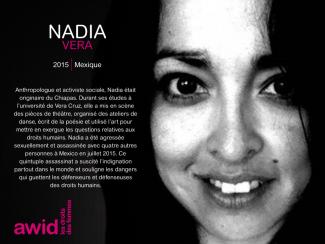
Nadia Vera
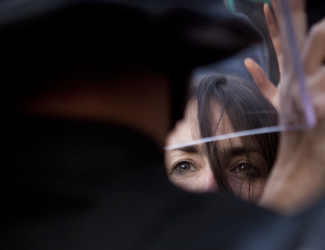
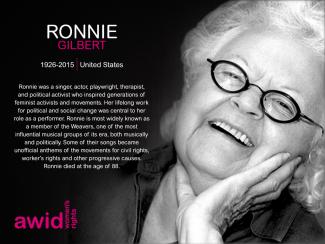
WHRDs are self-identified women and lesbian, bisexual, transgender, queer and intersex (LBTQI) people and others who defend rights and are subject to gender-specific risks and threats due to their human rights work and/or as a direct consequence of their gender identity or sexual orientation.
WHRDs are subject to systematic violence and discrimination due to their identities and unyielding struggles for rights, equality and justice.
The WHRD Program collaborates with international and regional partners as well as the AWID membership to raise awareness about these risks and threats, advocate for feminist and holistic measures of protection and safety, and actively promote a culture of self-care and collective well being in our movements.
WHRDs are exposed to the same types of risks that all other defenders who defend human rights, communities, and the environment face. However, they are also exposed to gender-based violence and gender-specific risks because they challenge existing gender norms within their communities and societies.
We work collaboratively with international and regional networks and our membership
We aim to contribute to a safer world for WHRDs, their families and communities. We believe that action for rights and justice should not put WHRDs at risk; it should be appreciated and celebrated.
Promoting collaboration and coordination among human rights and women’s rights organizations at the international level to strengthen responses concerning safety and wellbeing of WHRDs.
Supporting regional networks of WHRDs and their organizations, such as the Mesoamerican Initiative for WHRDs and the WHRD Middle East and North Africa Coalition, in promoting and strengthening collective action for protection - emphasizing the establishment of solidarity and protection networks, the promotion of self-care, and advocacy and mobilization for the safety of WHRDs;
Increasing the visibility and recognition of WHRDs and their struggles, as well as the risks that they encounter by documenting the attacks that they face, and researching, producing, and disseminating information on their struggles, strategies, and challenges:
Mobilizing urgent responses of international solidarity for WHRDs at risk through our international and regional networks, and our active membership.
Lorsque notre travail incarné devient un profit entre les mains de systèmes que nous cherchons à démanteler, il n’est pas étonnant que nos sexualités et nos plaisirs soient une fois de plus relégués à la marge – surtout lorsqu’ils ne sont pas assez rentables. À plusieurs reprises au cours de la production de ce numéro, nous nous sommes demandé ce qui se passerait si nous refusions de nous plier aux services essentiels du capitalisme. Mais pouvons-nous oser poser cette question, lorsque nous sommes épuisé·e·s par le monde? Peut-être que nos sexualités sont si facilement rejetées parce qu’elles ne sont pas considérées comme des formes de soins. Peut-être que ce dont nous avons besoin, c’est de réimaginer le plaisir comme une forme de soin radical – un soin qui est également anticapitaliste et anti-institutionnel.
This policy governs all pages hosted at www.awid.org, and any other websites under the control of the AWID (the “Website”) and registrations for these sites. It does not apply to pages hosted by organisations other than AWID, to which we may link and whose privacy policies may differ. Please read the following policy to understand our privacy policy regarding nature, purpose, using and sharing of your personal identifiable information that is collected via this website.
Generally, you can browse this website without submitting your personal information to us. However, in some circumstances, we will ask for your personal information.
When you are on the website and are asked for personal information, you are sharing that information only with AWID.
When you register to use the website – for example, subscribe to receive emails from us or apply to become a member - you provide us with the mandatory information about you like Name, country, language to receive email updates and email address. This information is provided by you through secure forms and is stored on secure servers.
Also, while becoming a member or registering for events, you may need to provide payment information. AWID doesn’t store any credit card information on its servers and uses payment gateway to process the payment information.
When you communicate with AWID, provide optional information through forms on the website or use the site to communicate with other members, we collect information about your communication and any information you choose to provide.
When you communicate with us, we collect your communication and any other information you choose to provide us.
In addition, when you interact with the Website, our servers may keep an activity log that does not identify you individually (“Non-Personal Information”). Generally, we collect the following categories of Non-Personal Information:
For more information about cookies, please see www.allaboutcookies.org.
If you do not wish to receive cookies you can easily modify your web browser to refuse cookies, or to notify you when you receive a new cookie, see how here.
AWID uses the information we collect about you to:
If you have subscribed to AWID´s e-newsletters or email updates or you have become a member, we will send you regular communications as specified in the relevant area of the website. You are able to unsubscribe from any of the e-newsletters or email updates at any time by using the unsubscribe information provided in our emails.
The accuracy of your individual identifying information is important to AWID. We are always looking for ways to make it easier for you to review and correct the information that AWID maintains about you through our website. If you change your email address, or if any of the other information we hold is inaccurate or out of date, please write to us here.
Except as explained below, AWID will not disclose any of your personally identifiable information, and will not sell or rent lists containing your information to third parties. AWID may disclose information when it has your permission to do so or under special circumstances, such as when it believes in good faith that the law requires it.
We are continuously implementing and updating administrative, technical, and physical security measures to help protect your information against unauthorized access, loss, destruction, or alteration. Some of the safeguards we use to protect your information are firewalls and data encryption, and information access controls. If you know or have reason to believe that your AWID membership credentials have been lost, stolen, misappropriated, or otherwise compromised or in case of any actual or suspected unauthorized use of your AWID membership account, please contact us through on Contact Us.
This policy may change from time to time. The changed policy will be posted on this website and Last updated date at the end of the policy will be updated. There will be an email update sent to you for the revised policy and if you do not agree with the revised policy, you will have the option to cancel you registration(s) with us. You can also write to us here. We welcome your feedback!
Last updated: May 2019
The rising power of anti-rights actors is not happening in a vacuum. Understanding the rise of ultra-nationalism, unchecked corporate power, growing repression, and diminishing civic space is key to contextualize the anti-rights threats we face today.
Avec Dre Vandana Shiva, Dre Dilar Dirik et Nana Akosua Hanson..

Como movimientos feministas y sindicales, juntxs en solidaridad, articulamos los siguientes puntos como una visión colectiva de las economías de los cuidados con los derechos de lxs trabajadorxs domésticxs como eje central.
El trabajo doméstico y de cuidado estuvo en la primera línea de fuego durante y después de la pandemia de COVID-19, al proporcionar los medios para sobrellevar las múltiples crisis globales que se intersectan. El Banco Mundial, el Fondo Monetario Internacional y otras instituciones multilaterales también reconocen la importancia del trabajo doméstico y de cuidados para el sostenimiento de la economía. Sin embargo, vemos que esta atención adopta un enfoque utilitarista (es decir, el trabajo de cuidados contribuye a sostener a la economía "productiva") centrado en el lucro, sin reconocer los cuidados como un derecho humano y un bien público, ni prestar atención a lxs trabajadorxs que realizan la mayor parte de este trabajo.
New
Participants will physically gather at a number of sites outside the Bangkok venue, in different parts of the world, on each day of the Forum. All of these self-organized sites will be virtually connected to the Forum venue in Bangkok. As with individuals connecting online, Hub participants will be able to facilitate activities, participate in conversations and enjoy a rich and diverse program.
Hub locations to be announced in 2024!
قضايا تتعلق بالجسد والجندر ومختلف أنواع الجنسانية، واستكشف الروابط المتشابكة بين القضايا هذه وكونها تجاربَ مجسّدة بعمق ومكانًا يُعترض فيه على الحقوق تكون فيه الأخيرة مهدّدة في المجتمع.
تكمن قوّة الحركات النسوية في طريقة تنظيمنا وتنسيق نشاطنا، ليس ضمن مجتمعاتنا وحركاتنا فحسب إنما بالتعاون مع قضايا ومجموعات حليفة في مجال العدالة الاجتماعية. وفّرت المساحة هذه فرصًا للحركات لمشاركة طرق التنظيم واستراتيجيات تكتيكية مع بعضنا البعض وتعزيزها.
لقد أوضحت جائحة كوفيد-١٩ العالمية فشل الرأسمالية النيوليبرالي فبدا أكبر من قبل وكشفت عن التفكك الموجود في أنظمتنا أكثر من أي وقت سابق، فشددت على ضرورة بناء أنواع واقع جديد وفرص بنائها. يتطلّب التعافي النسوي الاقتصادي والاجتماعي منّا جميعًا أن ننجح كلّنا معًا. نصدر النسخة هذه من المجلة بالشراكة مع «كحل: مجلة لأبحاث الجسد والجندر»، وسنستكشف عبرها الحلول والاقتراحات وأنواع الواقع النسوية لتغيير عالمنا الحالي وكذلك أجسادنا وجنسانياتنا.
يمكنك تصفح المقالات عبر الإنترنت أو
قم بتنزيل ملف PDF

L’AWID a le plaisir de partager son rapport annuel 2014.
Du renforcement des connaissances sur les enjeux liés aux droits des femmes à l’élaboration de réponses plus efficaces aux violences perpétrées contre les défenseuses des droits humains, nos efforts de l’an dernier n’ont cessé de poursuivre la consolidation des mouvements féministes et de droits des femmes du monde entier.
Consultez le rapport pour en apprendre davantage sur la façon dont nous avons renforcé les capacités de nos membres et plus largement de notre public , exercé de fortes pressions pour que les droits des femmes demeurent au premier plan des principaux processus internationaux relatifs au développement et aux droits humains, et contribué à améliorer la couverture médiatique des problématiques des droits des femmes et des processus organisationnels qui y sont liés. Le rapport propose une vue panoramique de nos projets ainsi que certains chiffres qui témoignent concrètement de notre impact.
La collaboration est au cœur de toutes nos actions et nous anticipons avec enthousiasme une autre année de travail ensemble afin de mener nos mouvements vers un niveau supérieur.
Dans un contexte de plus en plus exigeant, nous pouvons néanmoins discerner d’importants signes d’espoir de voir les priorités relatives aux droits des femmes progresser. Les activistes des droits des femmes jouent toujours un rôle crucial dans la création d’espaces au sein desquels il est possible d’exiger des changements structurels, de soutenir les communautés, de s’opposer à la violence et de préserver les acquis essentiels/ importants/majeurs. Il y a en effet des occasions à saisir pour influencer les nouveaux acteurs et mobiliser des ressources plus abondantes en faveur des organisations de droits des femmes.
Pour ce faire, il est essentiel de mener de solides actions collectives et de renforcer le processus d’organisation des activistes des droits des femmes.

Je suis sincèrement enchantée par tout ce qu’a réalisé l’AWID depuis 1982 et j’espère être en mesure d’apporter ma contribution, même modeste, à ce dur labeur en faveur des femmes et de l’égalité de genre. » — Aleksandra Miletic-Santic, Bosnie Herzégovine

Building Feminist Economies is about creating a world with clean air to breath and water to drink, with meaningful labour and care for ourselves and our communities, where we can all enjoy our economic, sexual and political autonomy.
In the world we live in today, the economy continues to rely on women’s unpaid and undervalued care work for the profit of others. The pursuit of “growth” only expands extractivism - a model of development based on massive extraction and exploitation of natural resources that keeps destroying people and planet while concentrating wealth in the hands of global elites. Meanwhile, access to healthcare, education, a decent wage and social security is becoming a privilege to few. This economic model sits upon white supremacy, colonialism and patriarchy.
Adopting solely a “women’s economic empowerment approach” is merely to integrate women deeper into this system. It may be a temporary means of survival. We need to plant the seeds to make another world possible while we tear down the walls of the existing one.
We believe in the ability of feminist movements to work for change with broad alliances across social movements. By amplifying feminist proposals and visions, we aim to build new paradigms of just economies.
Our approach must be interconnected and intersectional, because sexual and bodily autonomy will not be possible until each and every one of us enjoys economic rights and independence. We aim to work with those who resist and counter the global rise of the conservative right and religious fundamentalisms as no just economy is possible until we shake the foundations of the current system.
Advance feminist agendas: We counter corporate power and impunity for human rights abuses by working with allies to ensure that we put forward feminist, women’s rights and gender justice perspectives in policy spaces. For example, learn more about our work on the future international legally binding instrument on “transnational corporations and other business enterprises with respect to human rights” at the United Nations Human Rights Council.
Mobilize solidarity actions: We work to strengthen the links between feminist and tax justice movements, including reclaiming the public resources lost through illicit financial flows (IFFs) to ensure social and gender justice.
Build knowledge: We provide women human rights defenders (WHRDs) with strategic information vital to challenge corporate power and extractivism. We will contribute to build the knowledge about local and global financing and investment mechanisms fuelling extractivism.
Create and amplify alternatives: We engage and mobilize our members and movements in visioning feminist economies and sharing feminist knowledges, practices and agendas for economic justice.
“The corporate revolution will collapse if we refuse to buy what they are selling – their ideas, their version of history, their wars, their weapons, their notion of inevitability. Another world is not only possible, she is on her way. On a quiet day, I can hear her breathing”.
Arundhati Roy, War Talk

Panel: In Panel discussions, explore an issue or challenge from different perspectives, or share a learning or experience, followed by audience questions if time allows.
Talk Show: Have a more spontaneous conversation in Talk-Show style. Talk Shows can be a conversation among several people, facilitated by a talk-show host. Audience questions can determine the conversation’s direction.
Discussion: These can take the form of world cafes, fishbowls, and other methodologies that facilitate participants’ active involvement in conversations. Highly participatory.
Workshop: Interactive sessions that invite participants to build new skills in any and all areas of life and activism.
Strategy Session: This is an invitation to think through an issue or strategy, in depth, with others. A space to learn from each other: what works, what doesn’t, and how do we develop new and collective strategies to create the worlds we dream of.
Sharing Circle (also known as “Birds of a Feather”): Ideal for small groups, in a more intimate setting, to hear from each other, spark discussion and carefully address topics that may be specific, sensitive and complex.
Arts – Participatory Workshop: Participatory activities involving arts and creative expression. Whether through visual art, theater, film, mural, dance, music, collective craft or artmaking, etc., we welcome all ideas celebrating feminist art and creativity as forms of social change, healing, expression and transformation.
Arts – Performances, Installations and Exhibitions: We welcome submissions that offer Forum participants new experiences and perspectives, expand our horizons, and challenge and inspire us to think, feel and organize in new ways.
Healing: Diverse activities tailored both for groups and individuals, from learning relaxation techniques to discussing burnout prevention, from trauma-informed practices of care for our body, mind and soul to healing rifts within our movements.
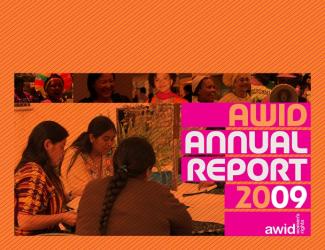
Our 2009 Annual Report includes highlights of another busy year of action and reflection at AWID as we implement our commitment to boldly, creatively and effectively contribute to the advancement of women’s rights and gender equality worldwide.
In the report you can find out about our programmatic achievements, membership, finances, what to watch out for in 2010, as well as information about our Board and Staff.
For the first time, the AWID Forum offers three modes of participation